July in Jeju is when the tail end of the monsoon season overlaps with intense heat, so how well you prepare can make a big difference to the quality of your trip. Here’s everything organized in the same order you’ll prepare for your journey, from checking the weather to planning your route, booking accommodation and a rental car, saving money, and packing.
📌 What this guide covers
Weather and UV checks → Route planning and swimming spots → Accommodation and rental car checklist → Money-saving tips → Packing checklist.
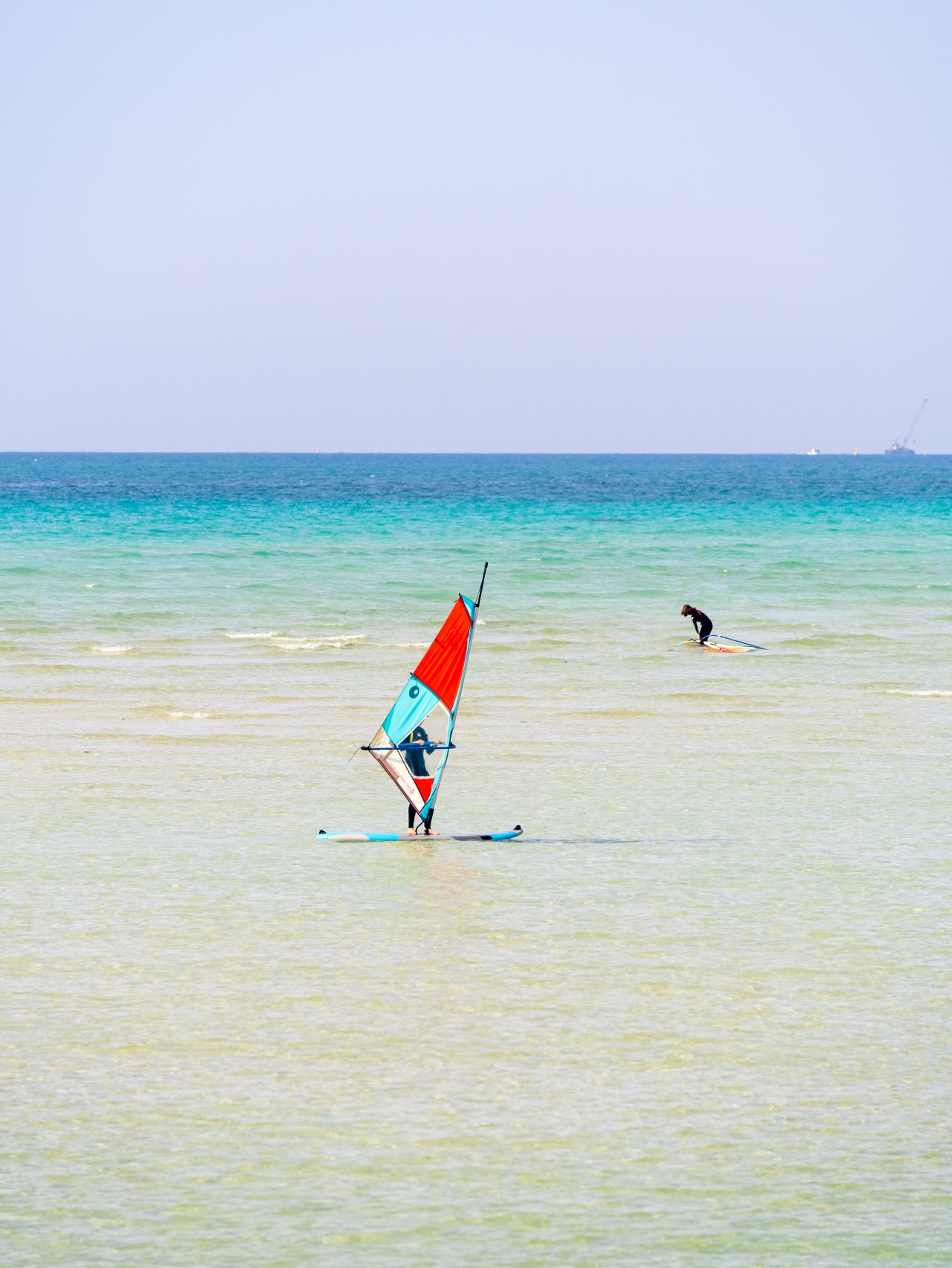
① Check the weather before setting your itinerary
The weather can be completely different across Jeju’s eastern, western, southern, and northern areas, and it can change in as little as 30 minutes. Instead of broadly searching for “Jeju weather,” search by the specific eup, myeon, or dong of your destination for an accurate forecast.
☀️ Check the UV index too
You can view detailed regional forecasts in the Korea Meteorological Administration’s “Weather Alert” app. The UV index often reaches “very high” around noon, so it’s best to minimize outdoor activities during this period and schedule indoor activities or café time instead.
② Travel in one direction and choose swimming spots along your route
Jeju is about 3 times the size of Seoul, so even reaching a neighboring area can take 20 minutes by car, while driving to the opposite end of the island takes more than 2 hours. Avoid routes that cross between the east and west in a single day. The basic rule is to travel around the island in one direction, either clockwise or counterclockwise. If your trip is short, such as 1–2 nights, stay in just one area in the east or west. If you want to visit several regions, we recommend splitting your accommodation along the route or choosing one centrally located base and exploring the surrounding areas.
It’s also convenient to include swimming spots when planning your route. We’ve selected places with parking, restrooms, and shower facilities for an easy visit.
| Route | Beach | Highlights |
|---|---|---|
| East | Sehwa Beach | Calm, shallow water and a silvery sandy beach. It’s a great place to relax while looking out at the sea from the café street in front. |
| West | Geumneung Beach | The gently sloping white beach has clear, transparent water. Biyangdo Island floats offshore, creating a beautiful view, and nearby Hyeopjae Beach makes it easy to visit both together. |
| South | Pyoseon Beach | One of Jeju’s widest sandy beaches. At low tide, the water recedes far into the distance, making it ideal for safely playing in shallow water. |
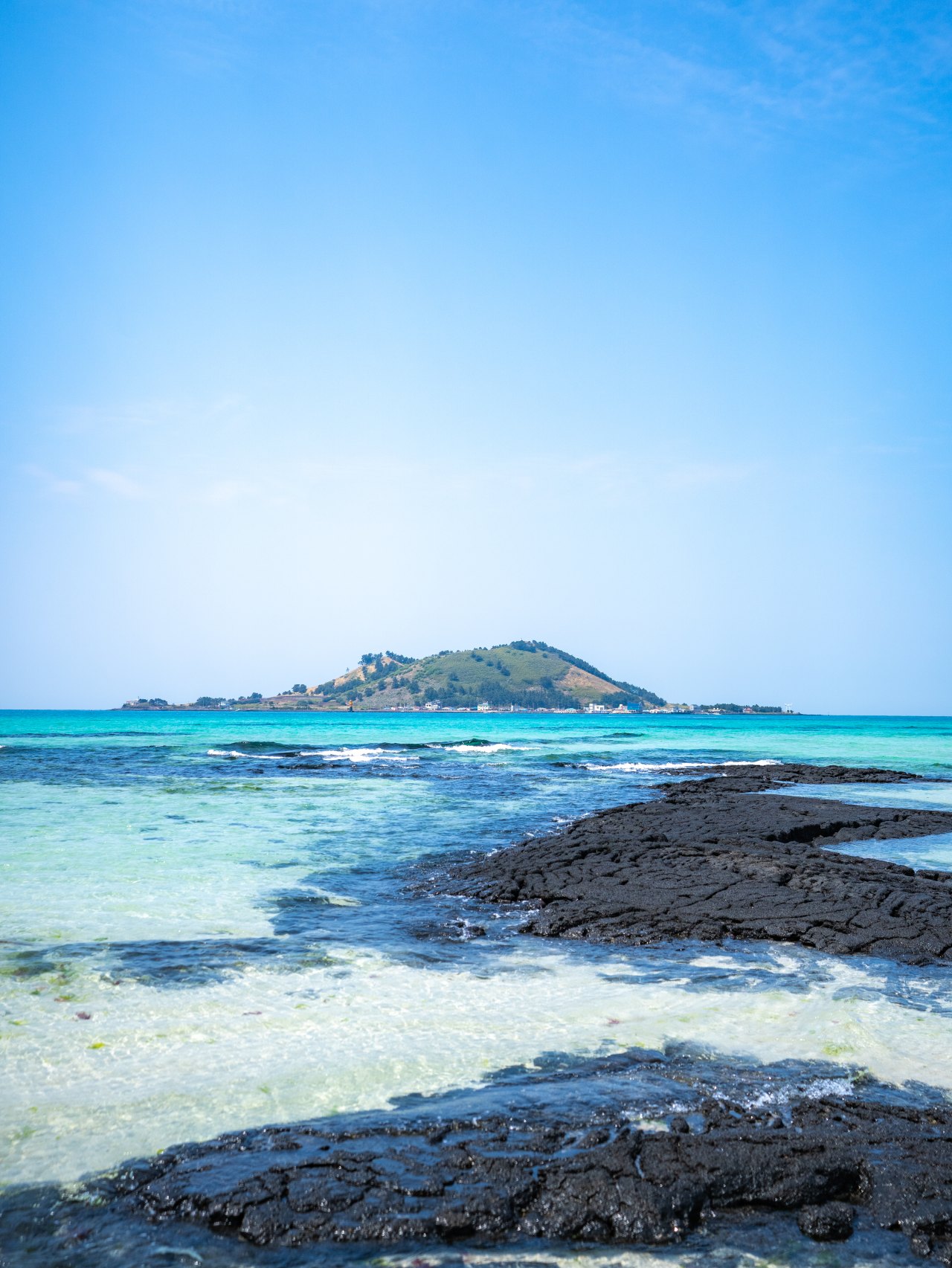
🌊 Check the tides in advance
For snorkeling or swimming in deeper water, the best time is within 2 hours before or after high tide. If you plan to play with children in shallow water, it’s better to visit around low tide. You can check regional tide times on the “Badatime” website or app.
When driving, use flatter bypass roads such as Pyeonghwa-ro or Beonyeong-ro rather than 1100-ro or 516-ro, which cross Hallasan Mountain. The mountain roads have many curves and are often foggy, making them challenging for inexperienced drivers. If renting a car feels daunting, you can also use express bus routes connecting the airport with major attractions in eastern and western Jeju. Buses run every 30 minutes to 1 hour, so check the timetable before setting out.
③ Accommodation & rental car checklist before booking
🏨 If your itinerary is focused on sightseeing, an affordable place used mainly for sleeping is enough. Guesthouse dormitories can cost around KRW 30,000–50,000 per night, and exchanging information with other travelers is part of the fun.
🛋️ If your goal is a stylish stay or hotel staycation, reduce your itinerary substantially and spend more time at the accommodation to get your money’s worth.
⭐ Check reviews before booking Recent visitor reviews on KakaoMap and Naver Map can help you avoid discrepancies between photos and the actual condition. During peak season, many properties require a minimum stay of 2 nights or more, so check when searching your dates.
🔋 Electric car rentals tend to be affordable, but charging stations are sparse in some areas. First check whether charging is available along your route.
🛡️ We recommend choosing the highest level of insurance (full collision coverage or super unlimited coverage). Jeju has a relatively high accident rate.
📞 Check before visiting popular restaurants Jeju restaurants and cafés often close unexpectedly or stop serving when ingredients run out. Especially for famous photo spots, make a habit of calling or checking recent Instagram posts to confirm they are open.
④ Money-saving tips
💳 Tamna Jeon (Jeju’s local currency) offers cashback when used at participating businesses. You can top it up online or have it issued offline at Jeju Bank on the 1st floor of Jeju Airport.
🎫 Look for combined passes If you plan to visit several attractions, search in advance for combined passes or package tickets. They are often cheaper than purchasing individual admission tickets.
🥬 Use traditional markets Having breakfast or snacks at places such as Dongmun Market and Seogwipo Maeil Olle Market can significantly reduce your spending compared with cafés and restaurants.
🏖️ Buy swimming gear locally Tubes and aqua shoes are often cheaper at local Daiso stores or supermarkets than in Seoul. There’s no need to buy and bring them in advance.
⑤ Packing checklist before departure
✅ Clothing — In addition to basic summer clothes, a light cardigan or windbreaker is essential for air-conditioned indoor spaces. If you plan to walk on oreum trails or forest paths, pack long pants to protect against insects and irritating plants.
✅ Cooling items — A portable mini fan or cooling arm sleeves will make outdoor travel much more comfortable.
✅ Insect repellent — Essential when walking oreum or Gotjawal trails.
✅ Waterproof pouch and spare zip bags — These will keep your phone and wallet safe while swimming.
✅ Foldable picnic mat — Perfect for stopping and settling down at a coastal spot you like during a drive.
✅ Shoes — Considering that you may walk on oreum trails or pebble beaches, we recommend comfortable, non-slip sandals or water shoes.
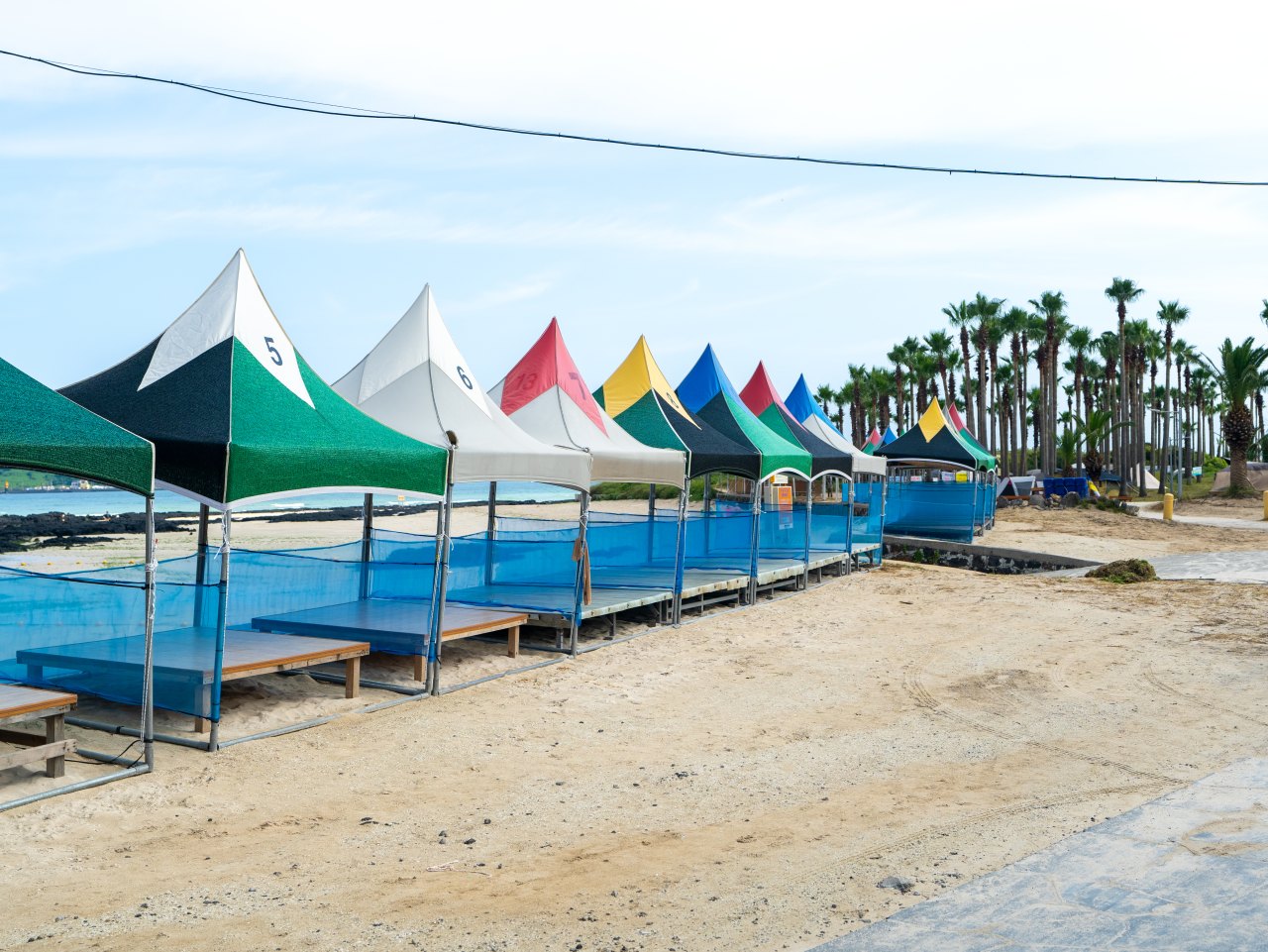
A summer in Jeju becomes easier with every bit of preparation
Checking the weather and UV index, traveling in one direction, and checking the tides—just these 3 steps will make your trip much easier. You can take care of everything else flexibly after you arrive.
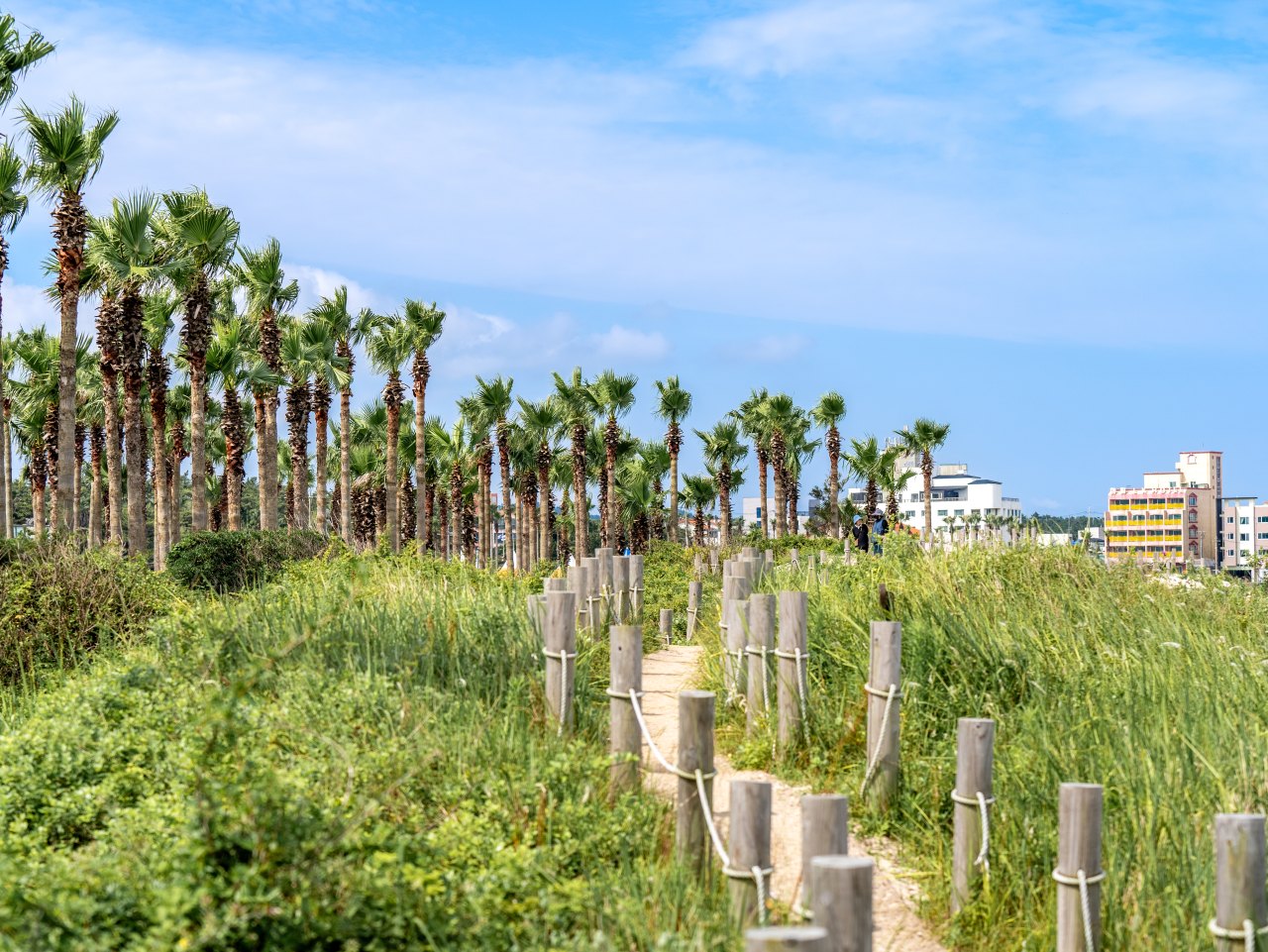


제주의 사계절을 글과 사진으로 담아내는 로컬 크리에이터, 제주 쏭입니다. 도민의 시선으로 직접 검증한 알짜 정보와 따뜻한 일상을 기록합니다. 여행자에게는 유용한 팁을, 이웃에게는 공감을 전하며 머무는 모든 순간이 특별해지는 깊이 있는 여정을 제안합니다.

Comments
0No comments yet.