Jeju Island is an amazing place in all four seasons—spring, summer, autumn, and winter.
Jeju welcomes you with beautiful scenery no matter when you visit,
but autumn, with the heat gone and the crisp, mild weather, is the best season for travel—so many people are heading to Jeju right now.
Here are some destinations where you can truly feel Jeju’s autumn, which so many travelers come to experience.
Manor Blanc
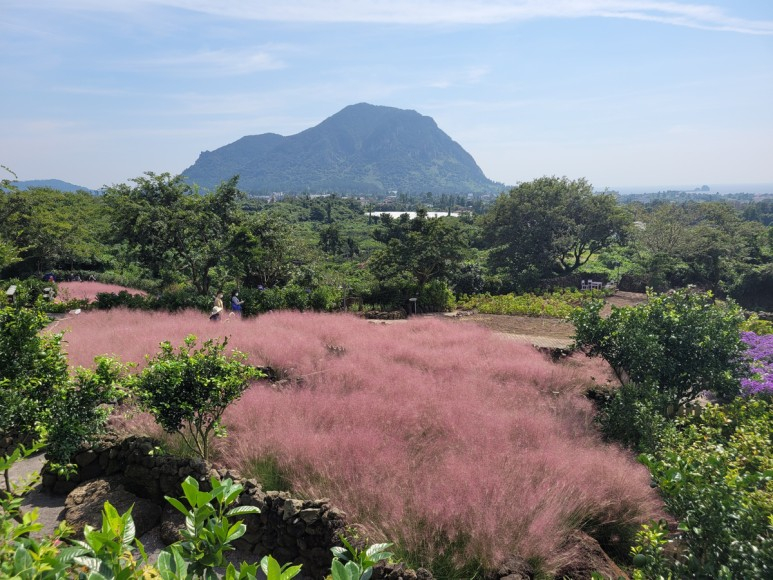
Manor Blanc is a café already famous for its stunning gardens.
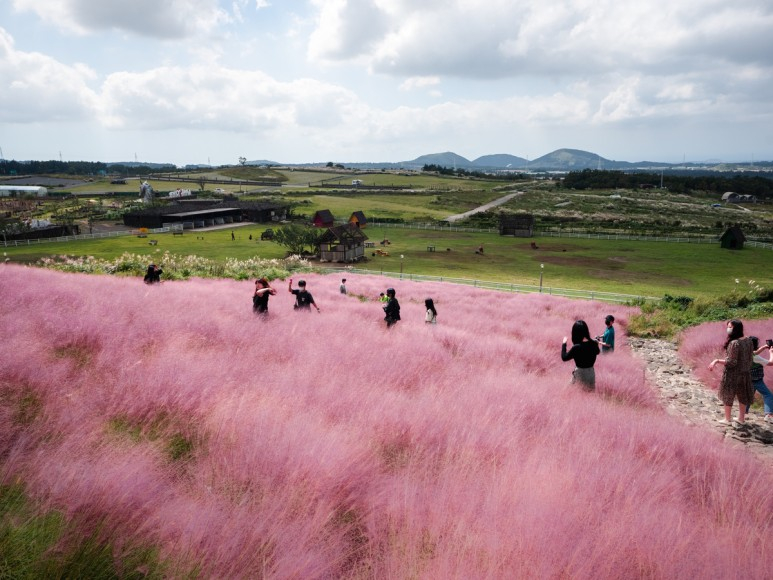
Camellias, hydrangeas, pink muhly, and more—each season delights visitors with a different, vibrant look.
And now it’s autumn! With Sanbangsan in the background, the waves of pink muhly are incredibly beautiful.
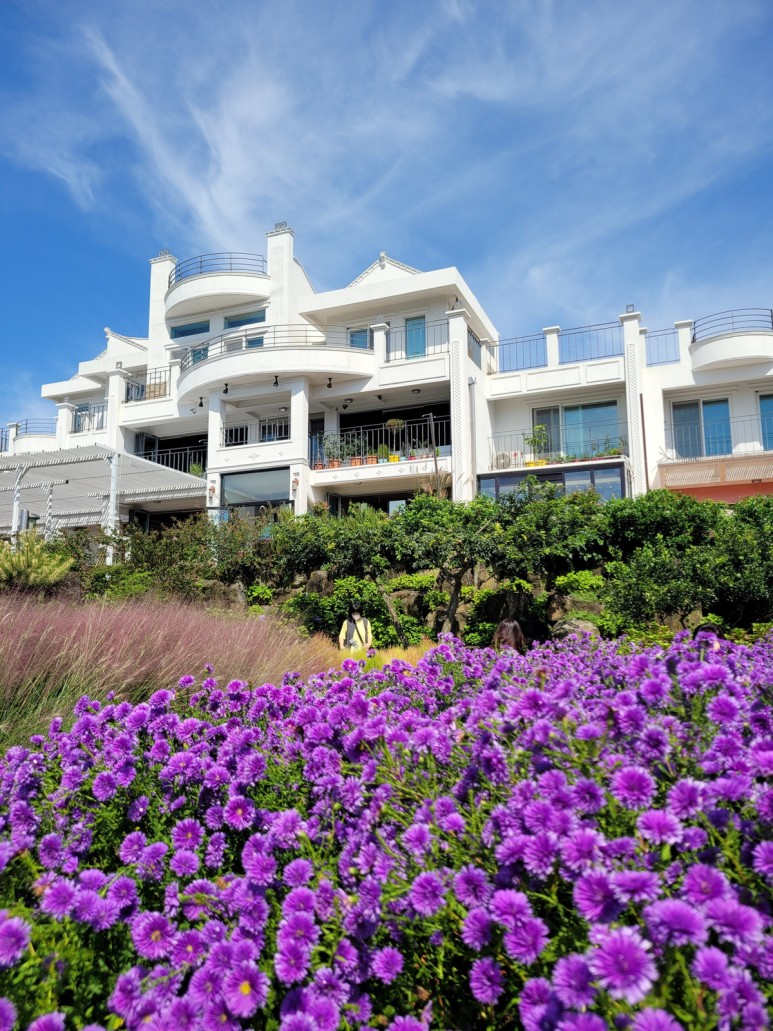
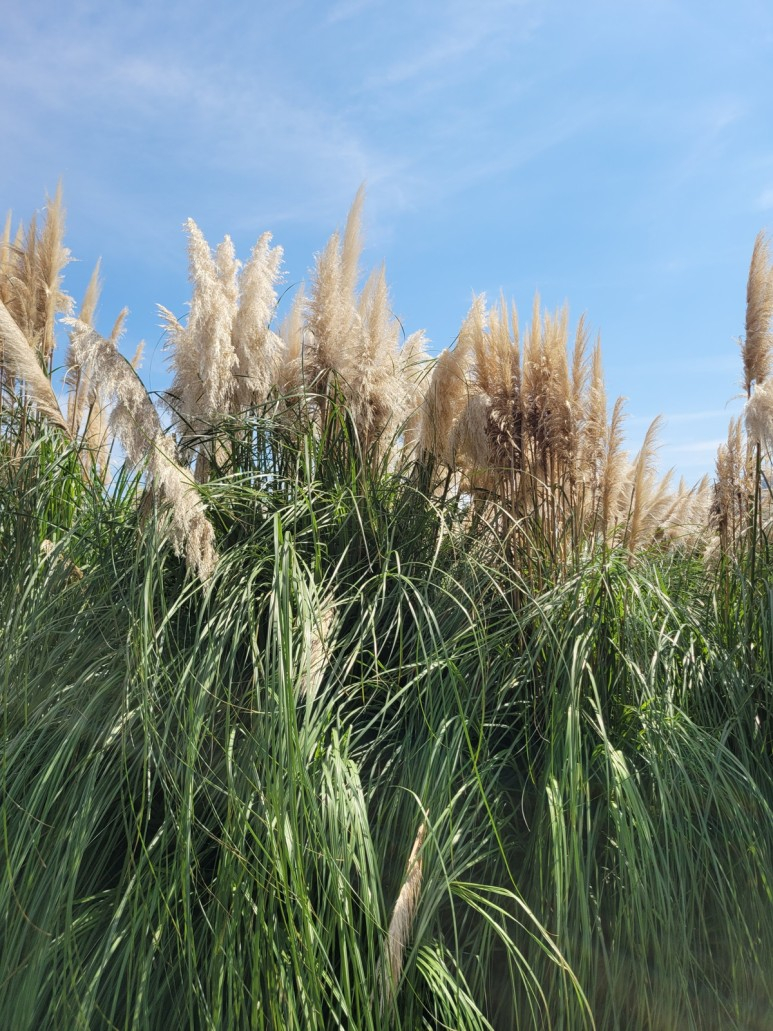
In one corner of the garden, you’ll also find pretty purple asters and pampas grass, which you see a lot these days.
The sunlit purple asters sparkle and show off a mysterious tone.
It used to be that entry was covered by the “one person, one order” policy,
but on this visit there was an admission fee of 4,000 won.
Once you pay to enter, you can buy drinks or desserts only if you want.
The road into the café only fits one car, and the entrance and exit routes are different (one-way), so be sure to follow it.
Boromwat
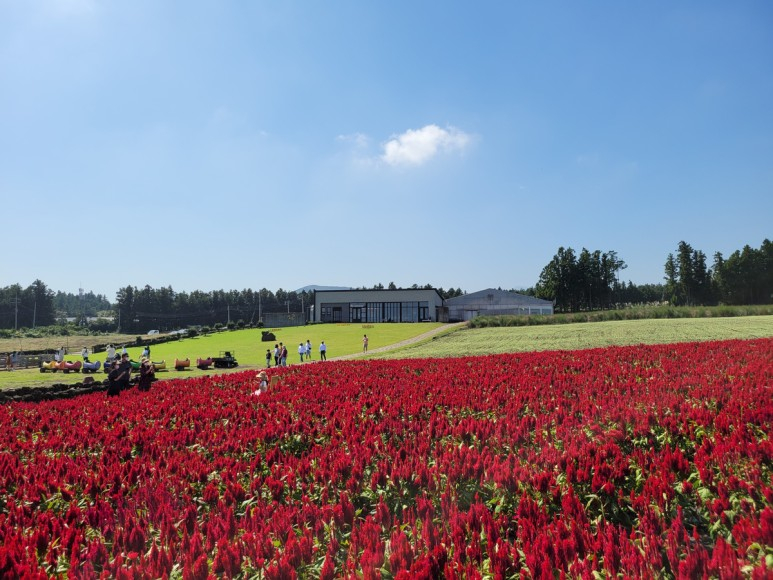
Boromwat means “a windy field” in Jeju dialect.
Along with Manor Blanc introduced above, it’s a garden-pretty café—often mentioned as the 대표 (go-to) spots for the east and west, side by side.
If Manor Blanc feels like a garden with lots of trees, Boromwat is a “wat”—true to the word, it’s a wide field turned into a flower garden.
The flower fields are decorated with different blooms each season—tulips, canola flowers, barley, buckwheat, lavender, hydrangeas, cockscomb, pink muhly, and more—so it’s satisfying no matter when you visit.
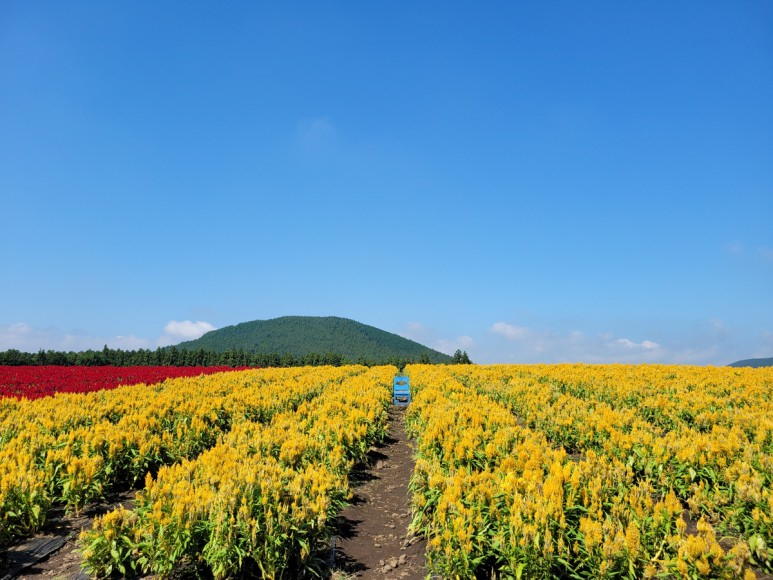
Right now, the main feature is cockscomb, filling the fields with vivid reds and yellows.
Blue sky, green oreum, and bright flowers—just looking at it feels healing.
It’s the kind of flower field where you can snap photos casually and still get a “best-ever” shot.
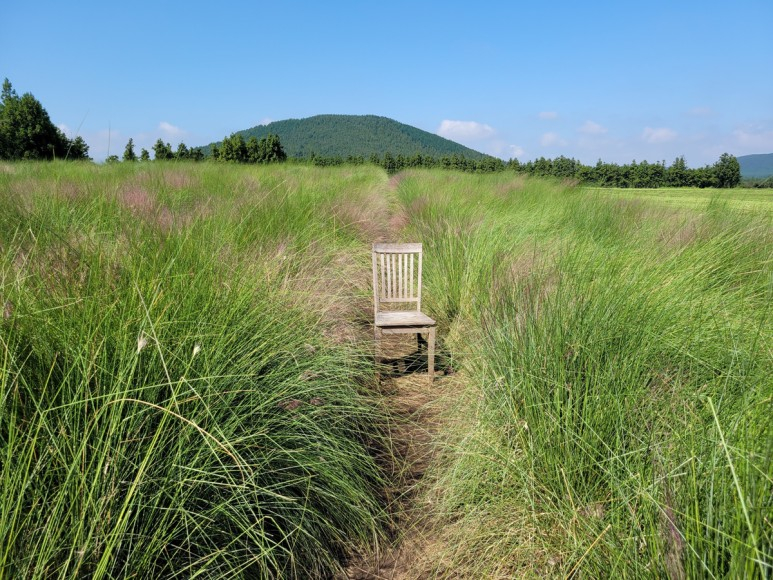
And of course, there’s pink muhly—an autumn essential.
When I visited in early October, it hadn’t turned fully pink yet, but now, two weeks later, I’m hearing it’s gone very pink.
If you go now, this is a place where you can see both cockscomb and pink muhly.
Saebyeol Oreum
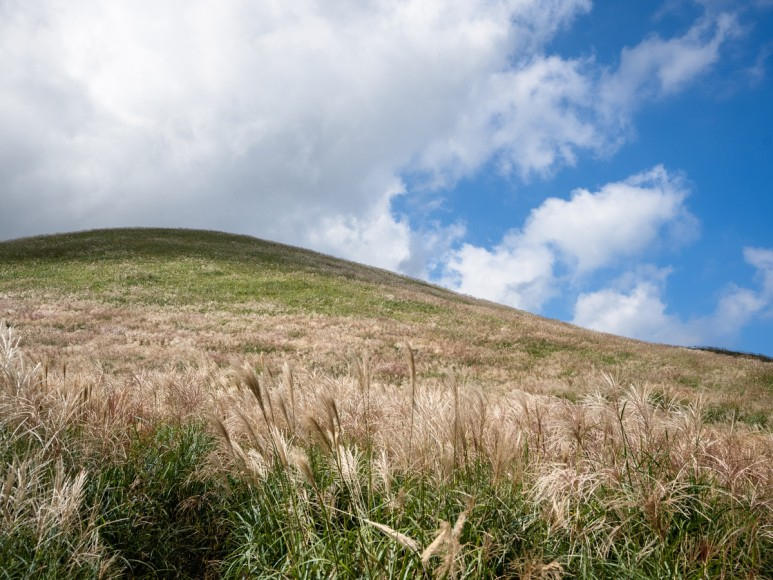
Saebyeol Oreum is one of the must-visit spots when you think of Jeju in autumn.
The hike takes about 30 minutes, so it’s a short route, but the difficulty is fairly high.
Most people go up on the left side and come down on the right, and the left route is quite steep.
Now that the ground and handrails have been improved, it’s become easier to climb, so you don’t need to worry too much.
It’s challenging, but the view from the top is just as rewarding.
On a clear day, you can see the open sea and Hallasan in a full 360-degree view.
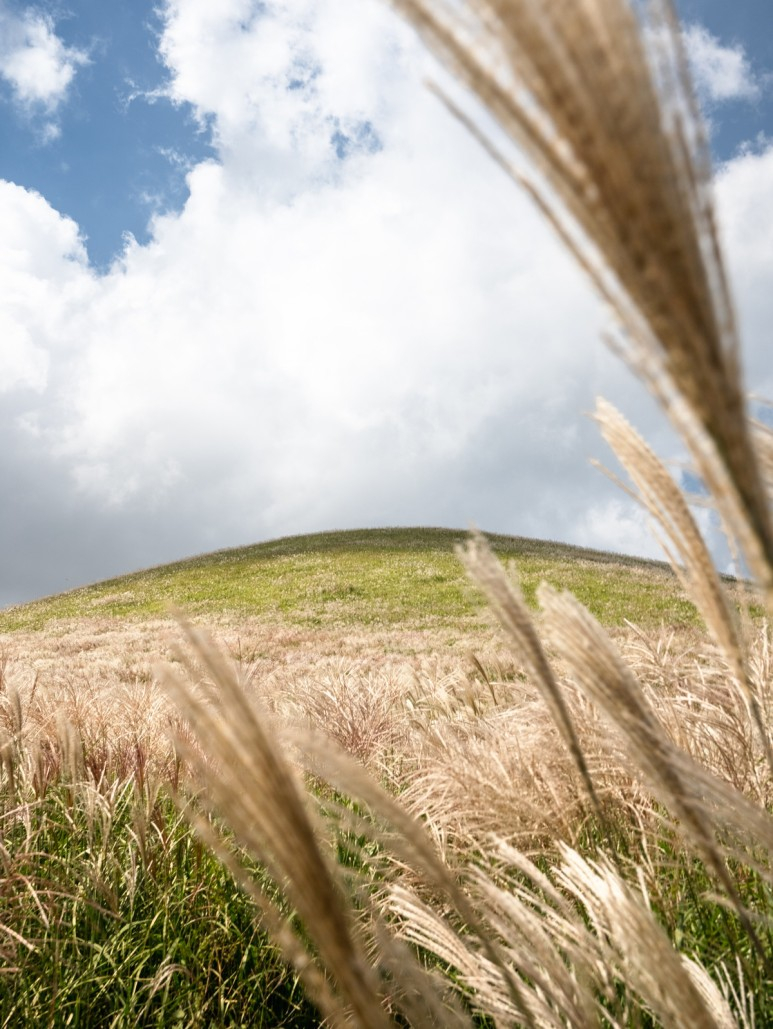
If you don’t want to hike up the oreum and only want to enjoy the silver grass, head to the right when looking from the parking lot.
Even after walking just a little, you’ll find lots of silver grass—great for photos.
This is Cafe Saebil, located in front of Saebyeol Oreum.
These days it’s gaining attention as a hot spot for pink muhly.
Sangumburi
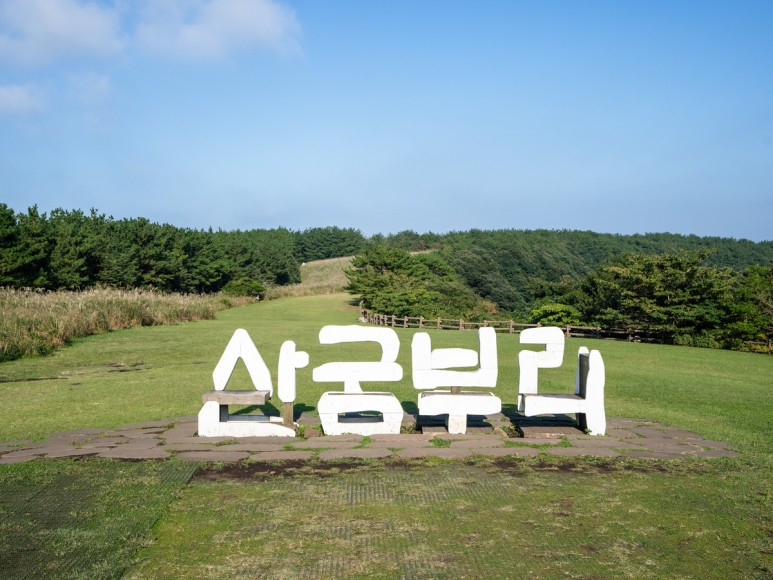
If you want to see silver grass while traveling in eastern Jeju, I recommend Sangumburi.
“Gumburi” is a Jeju dialect word referring to a volcanic crater.
This place has a crater that’s deeper and wider than Baengnokdam, the crater on Hallasan.
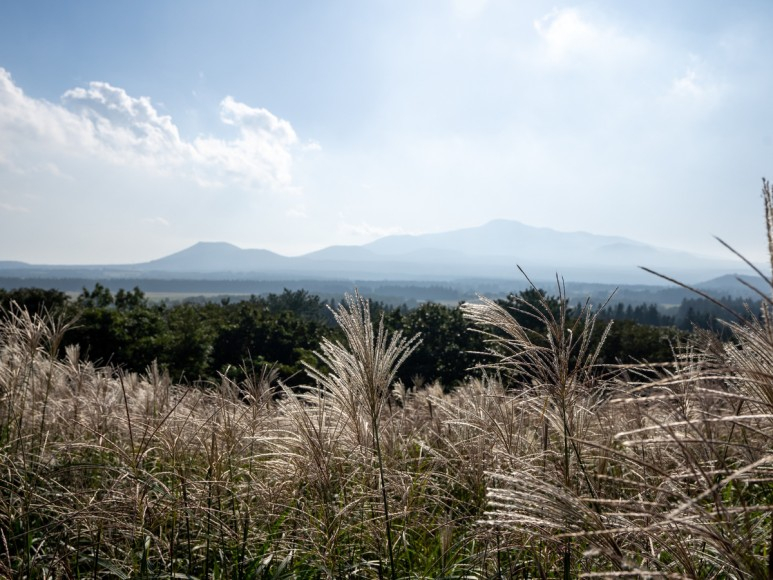
It’s a lovely place for a quiet walk along the paths lined with silver grass.
There are stairs and some gentle slopes, but strollers and wheelchairs can also get around.
There are benches to sit and rest here and there, plus swings, so it’s great to take your time—walk, relax, and feel the autumn season.


제주의 사계절을 글과 사진으로 담아내는 로컬 크리에이터, 제주 쏭입니다. 도민의 시선으로 직접 검증한 알짜 정보와 따뜻한 일상을 기록합니다. 여행자에게는 유용한 팁을, 이웃에게는 공감을 전하며 머무는 모든 순간이 특별해지는 깊이 있는 여정을 제안합니다.

Comments
3세곳 모두 너무 좋아보여요~
@하로 가세요~~
와! 보롬왓 꼭 가보고 싶어요,,