In Wimi-ri, Seogwipo City on the southern side of Jeju, there are many famous camellia spots. No one really knows why Wimi-ri, in particular, has so many. But at the camellia grove, it felt like we found at least a small clue.
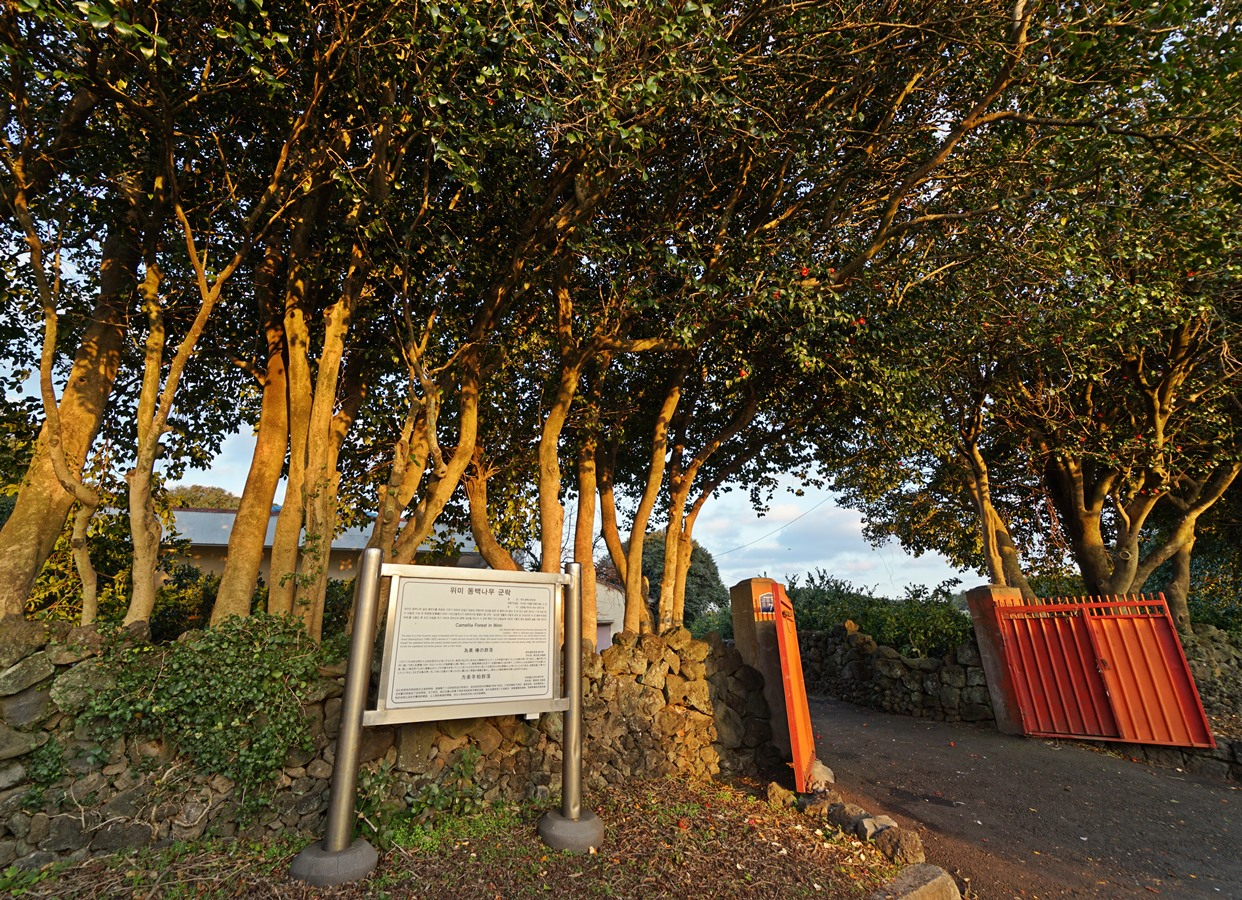
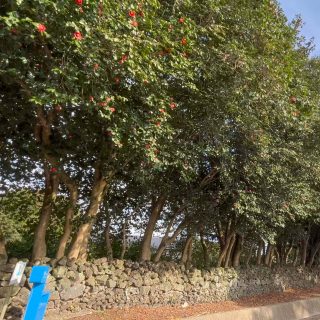
A natural camellia grove located in Wimi-ri, Namwon-eup, Seogwipo-si, this is one of Jeju’s signature winter attractions, with centuries-old camellia trees forming a dense forest. From November to February each year, red camellias fill the woodland paths, drawing many travelers and photographers with their beautiful scenery. Another highlight is the carpet of fallen camellias that creates a striking red “flower path.” It’s a peaceful place to stroll through quiet forest trails and fully enjoy Jeju’s nature—an essential stop for a winter trip to Jeju.
플레이스 보기
A legend about Grandma Hyeon Maeng-chun has been passed down at the camellia grove.
Wimi used to be the countryside of the countryside within Jeju—so remote it was practically the middle of nowhere. According to older Jeju sayings, when people looked for a marriage match, they wouldn’t even consider someone from Wimi. I can’t help but think camellia trees are the kind of fruit born from people who grew up on such harsh land and found ways to survive.
The camellia trees in the grove are native camellias brought from Hallasan. That’s why they bloom rather late—you need to wait until January to see them in full bloom. Leaving the large trees still without flowers behind, we headed to the Camellia Arboretum.
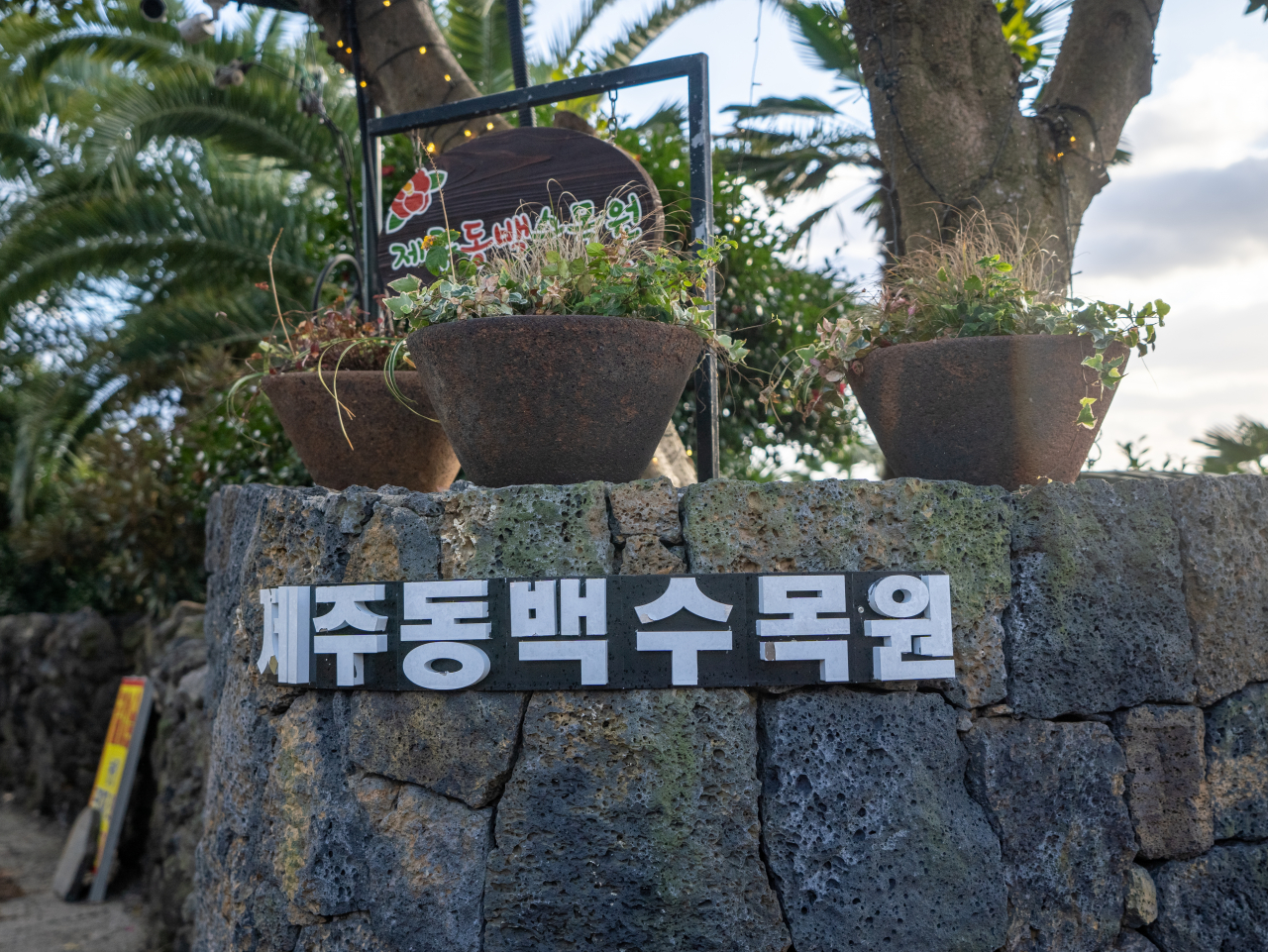
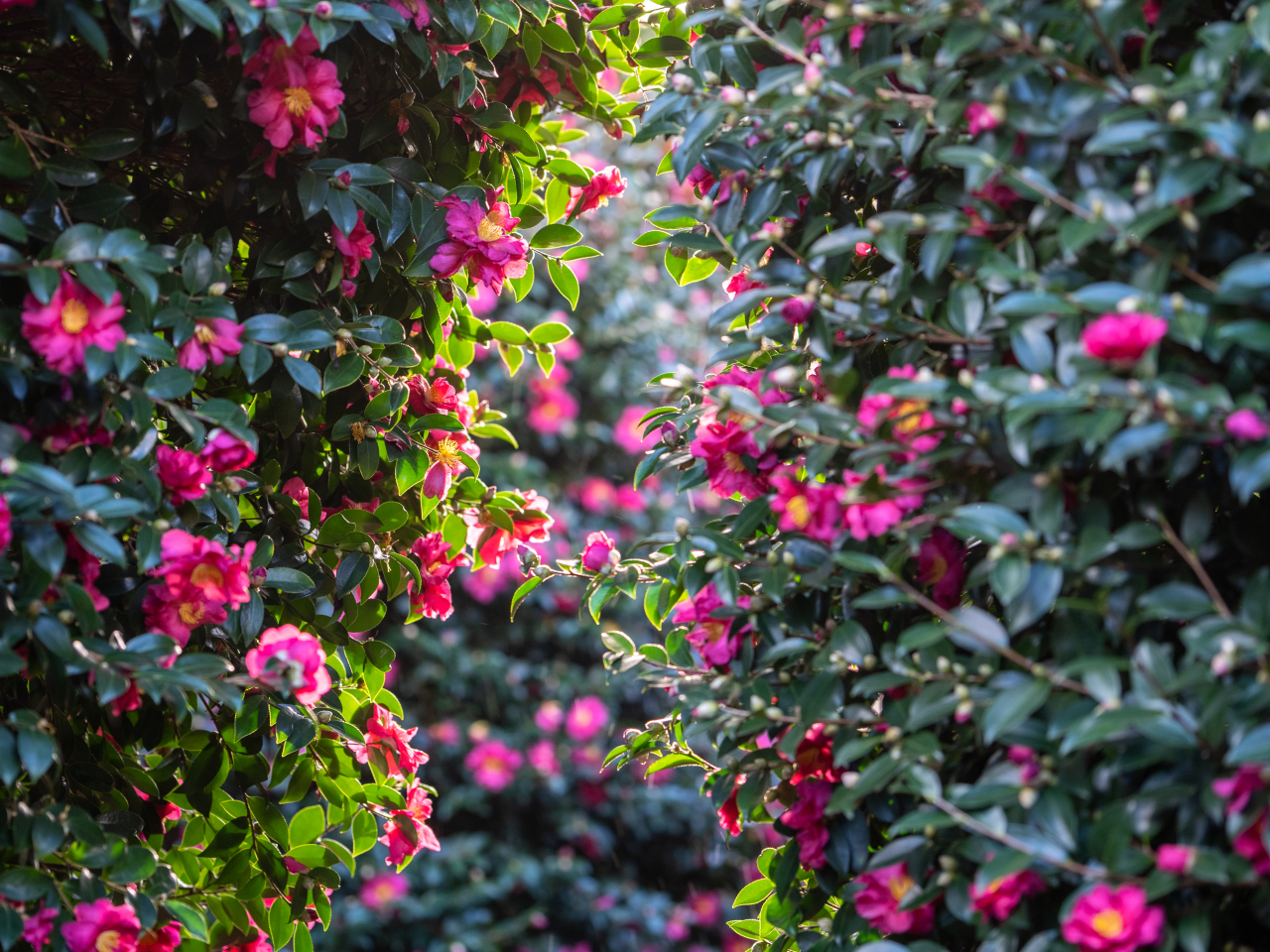
The Camellia Arboretum is striking for its camellia trees, each with a consistently rounded silhouette. Because it sits right in the middle of Wimi village, I assumed it was a community project run by the village—but it isn’t; it’s private land. The admission used to be 4,000 won, but it was recently raised to 5,000 won.
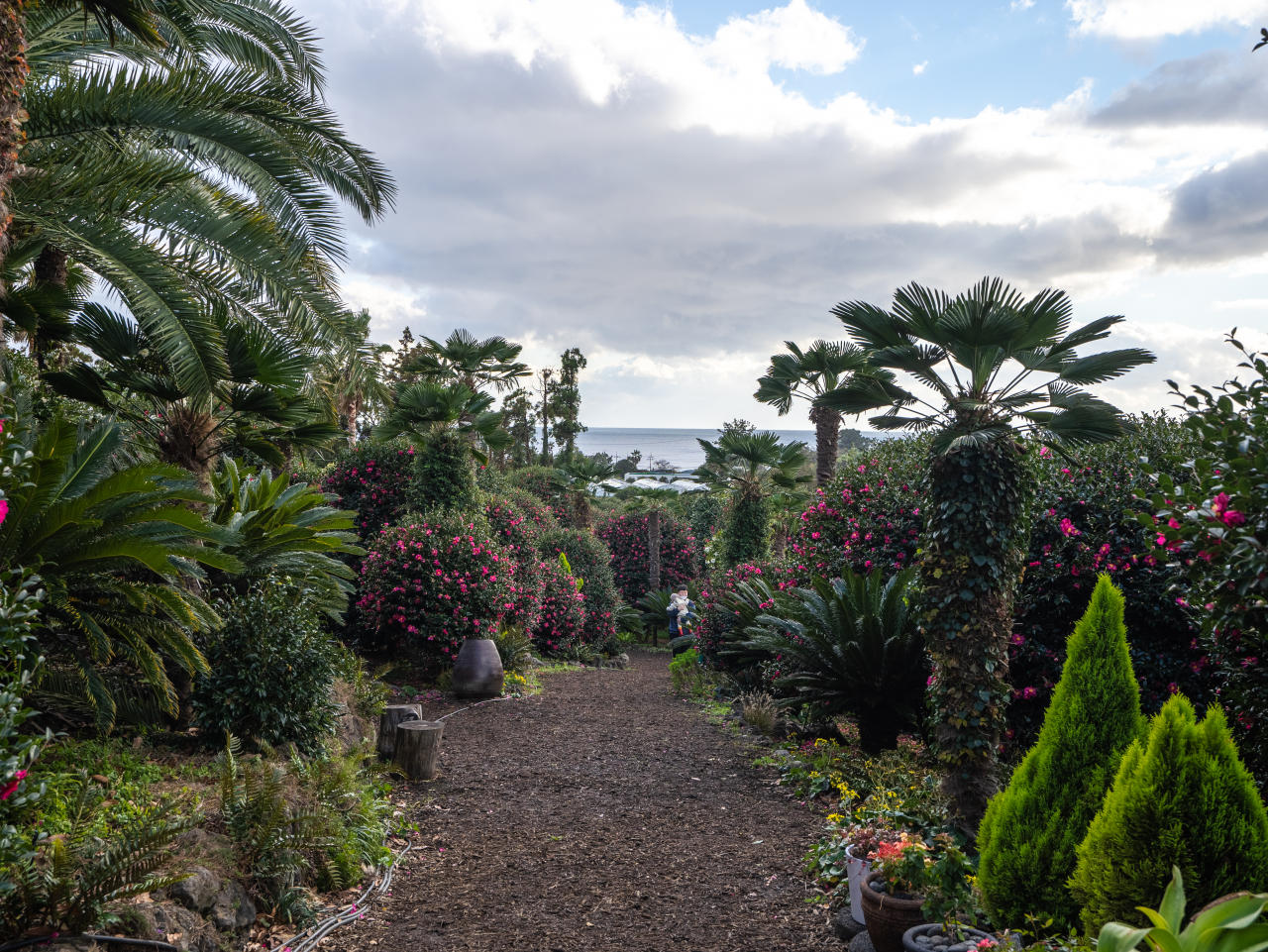
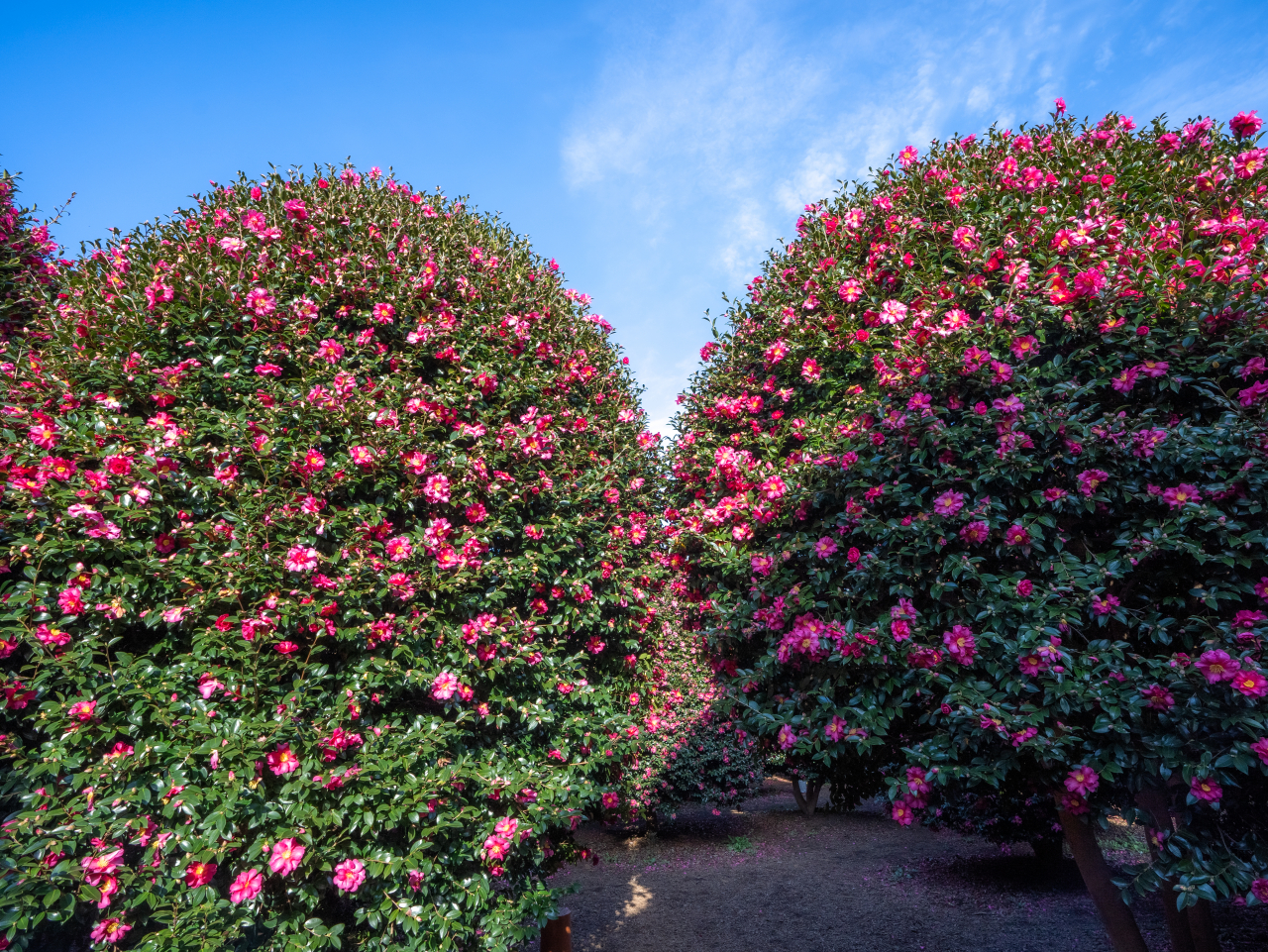
The further you go inside the Camellia Arboretum, the more camellia trees you’ll see. The camellias here are sasanqua camellias (often called sanda-hwa). Because they start blooming from November, they’re the trees that announce the beginning of camellia season. Many people confuse them with native camellias and just call everything “camellia,” but the trees we saw earlier at the camellia grove are native camellias (trees), while the camellias here are the introduced sasanqua camellias (shrubs).
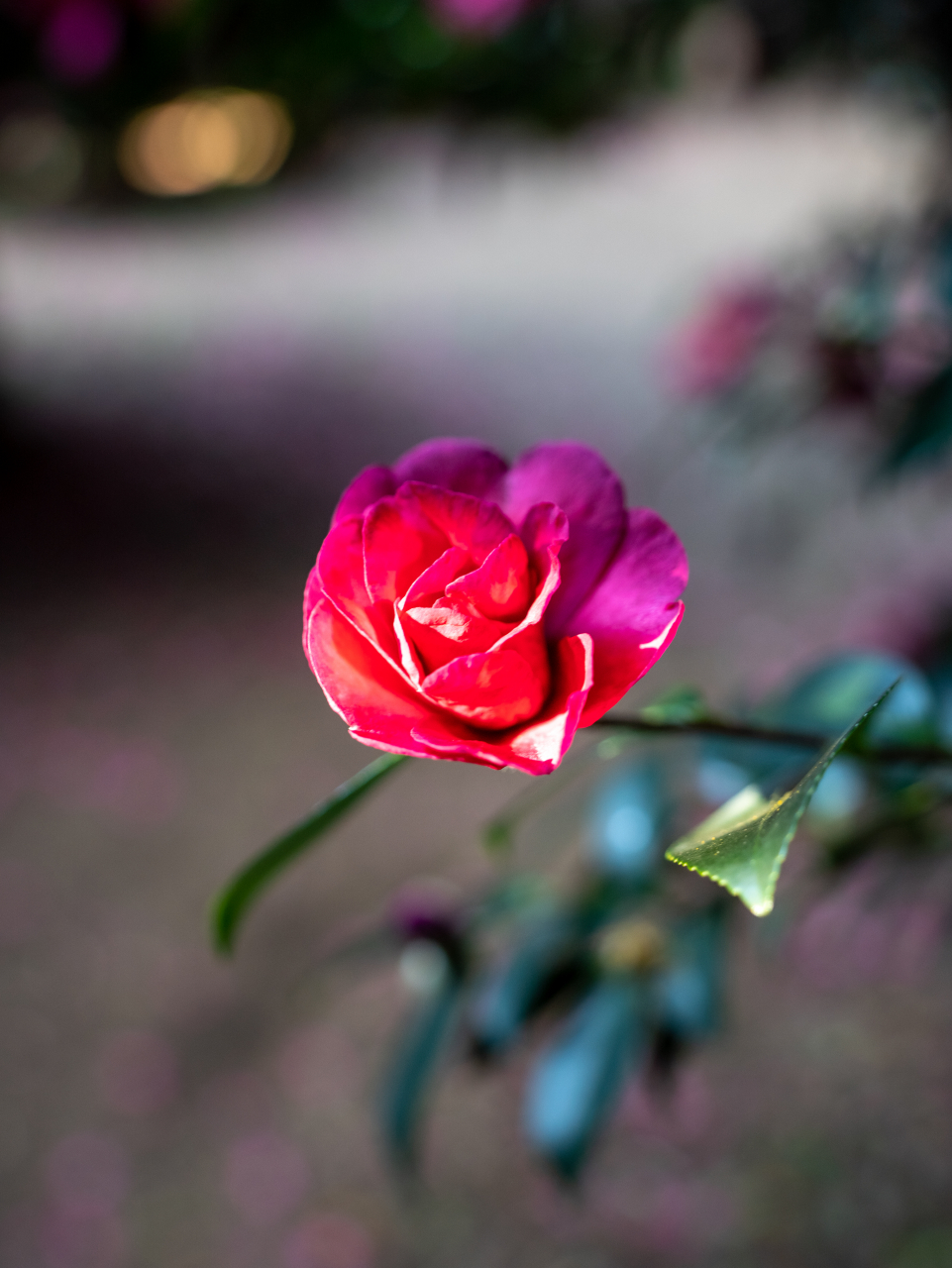
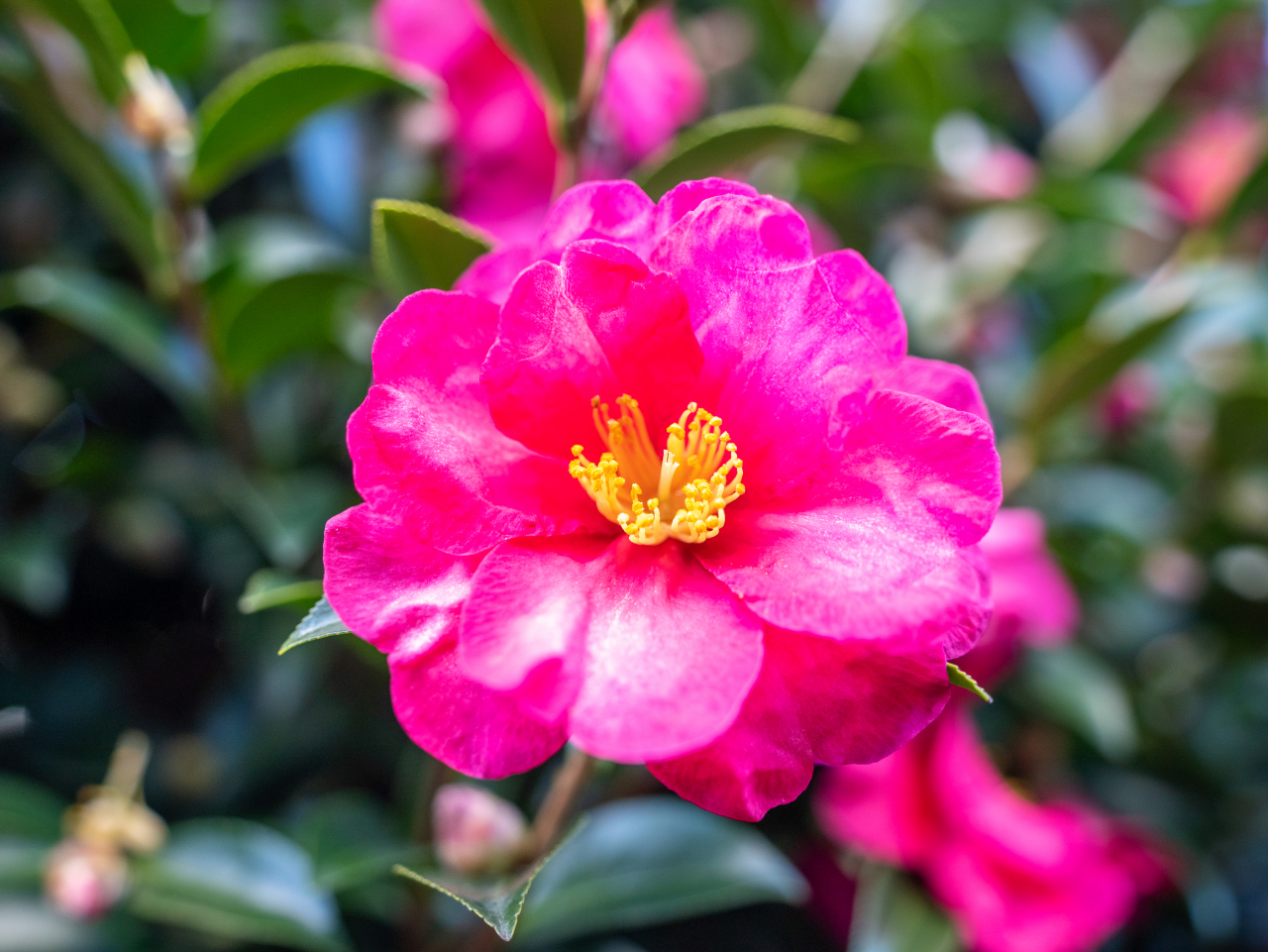
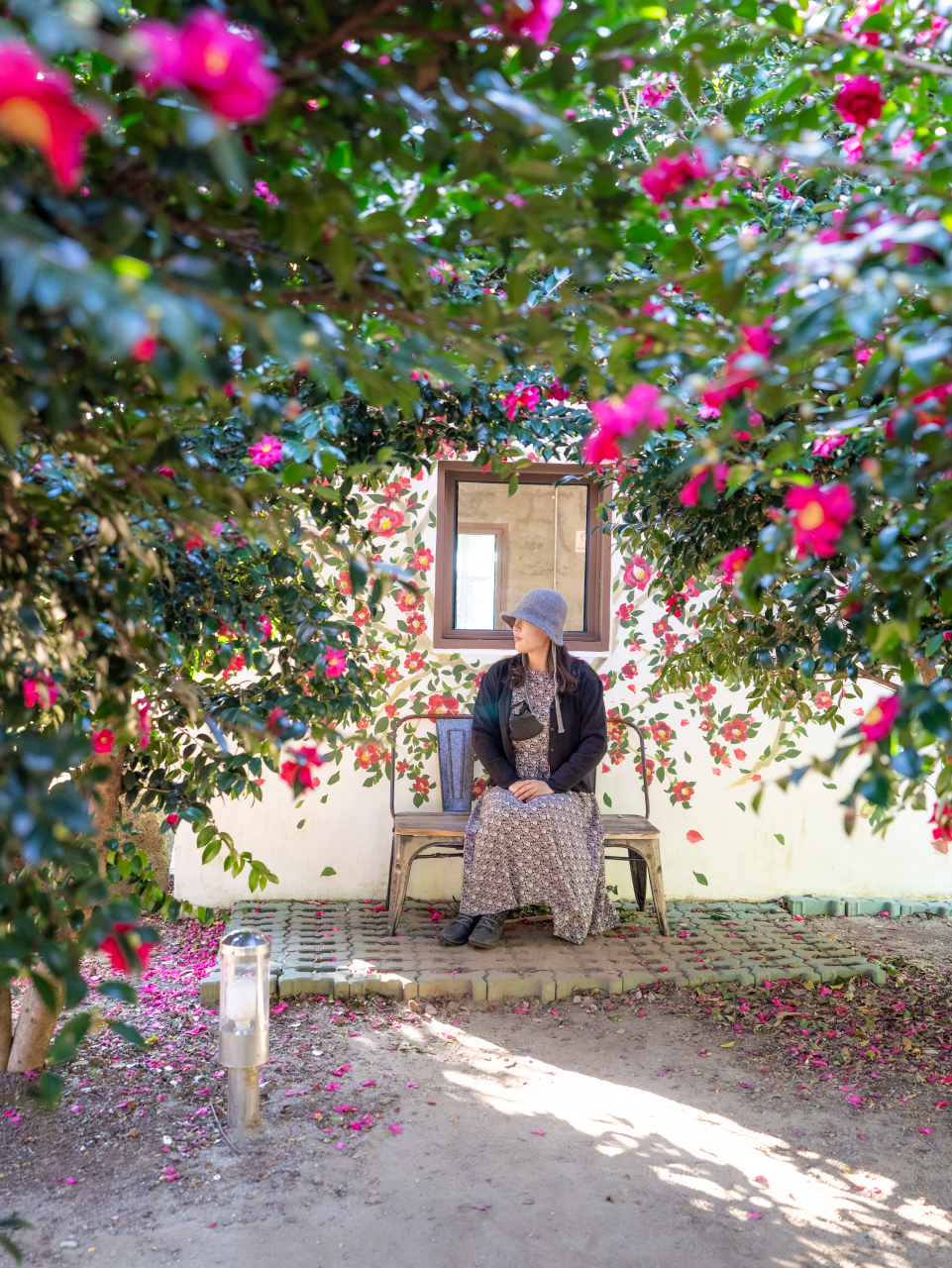
There’s an easy way to tell native camellias from sasanqua camellias (sanda-hwa). If you see whole flowers dropped intact under the tree, it’s a native camellia. If you see scattered petals, it’s a sasanqua camellia. At camellia “photo zones,” you’ll often find sasanqua camellias because they’re easier to shape neatly, while around old Jeju house sites you’ll often see native camellias planted as windbreaks.
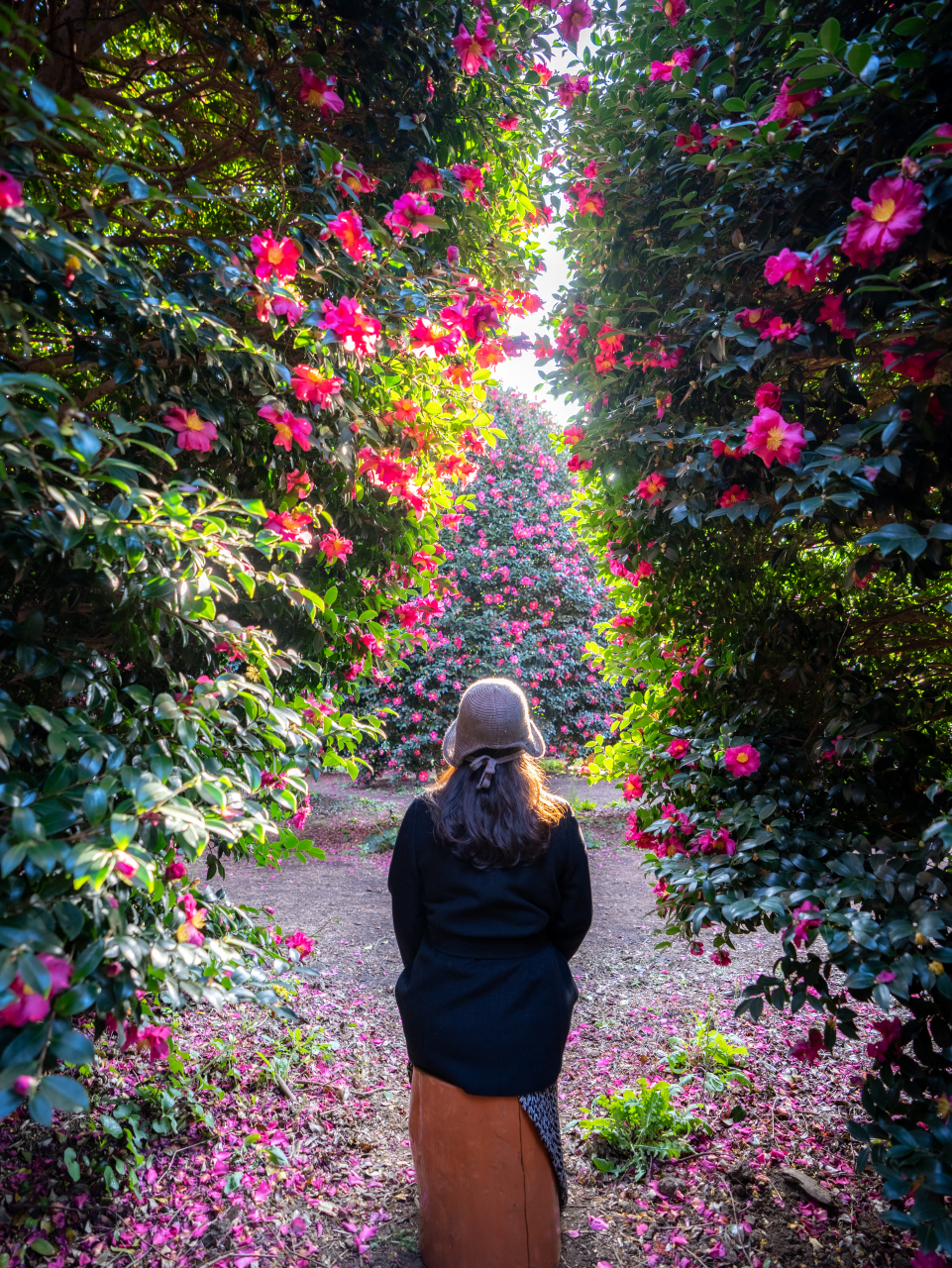
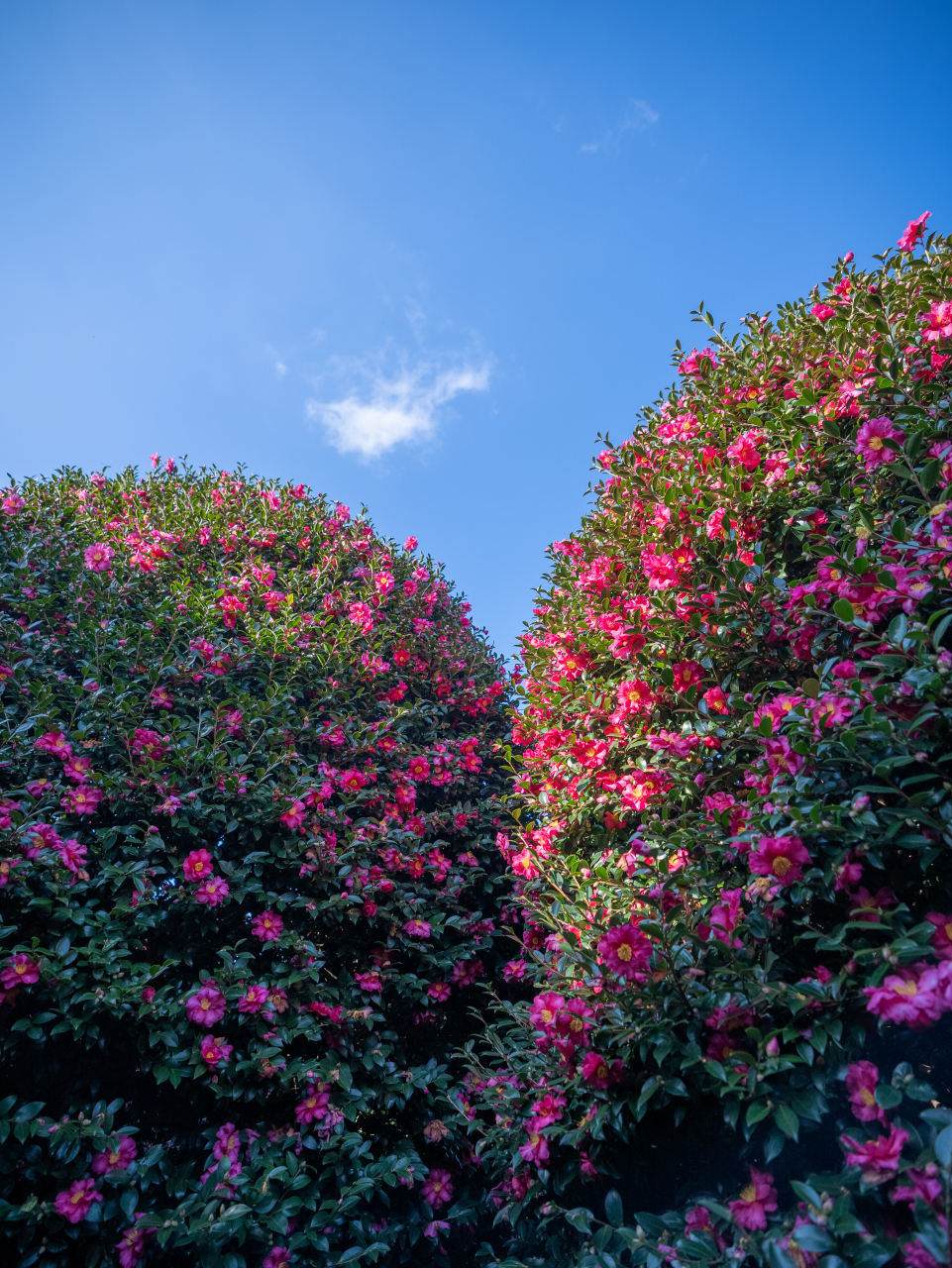
The Camellia Arboretum was filled with camellia trees—and with travelers. Between the trees, we saw groups huddled together to take photos, and even engaged couples doing wedding snaps, something you can only do at this time of year.
After leaving the breathtaking arboretum, we were desperate for a rest. If there was one downside, it was that we couldn’t really find that kind of quiet romance—sitting off to the side, feeling the passing breeze, listening to birdsong, and watching people go by.
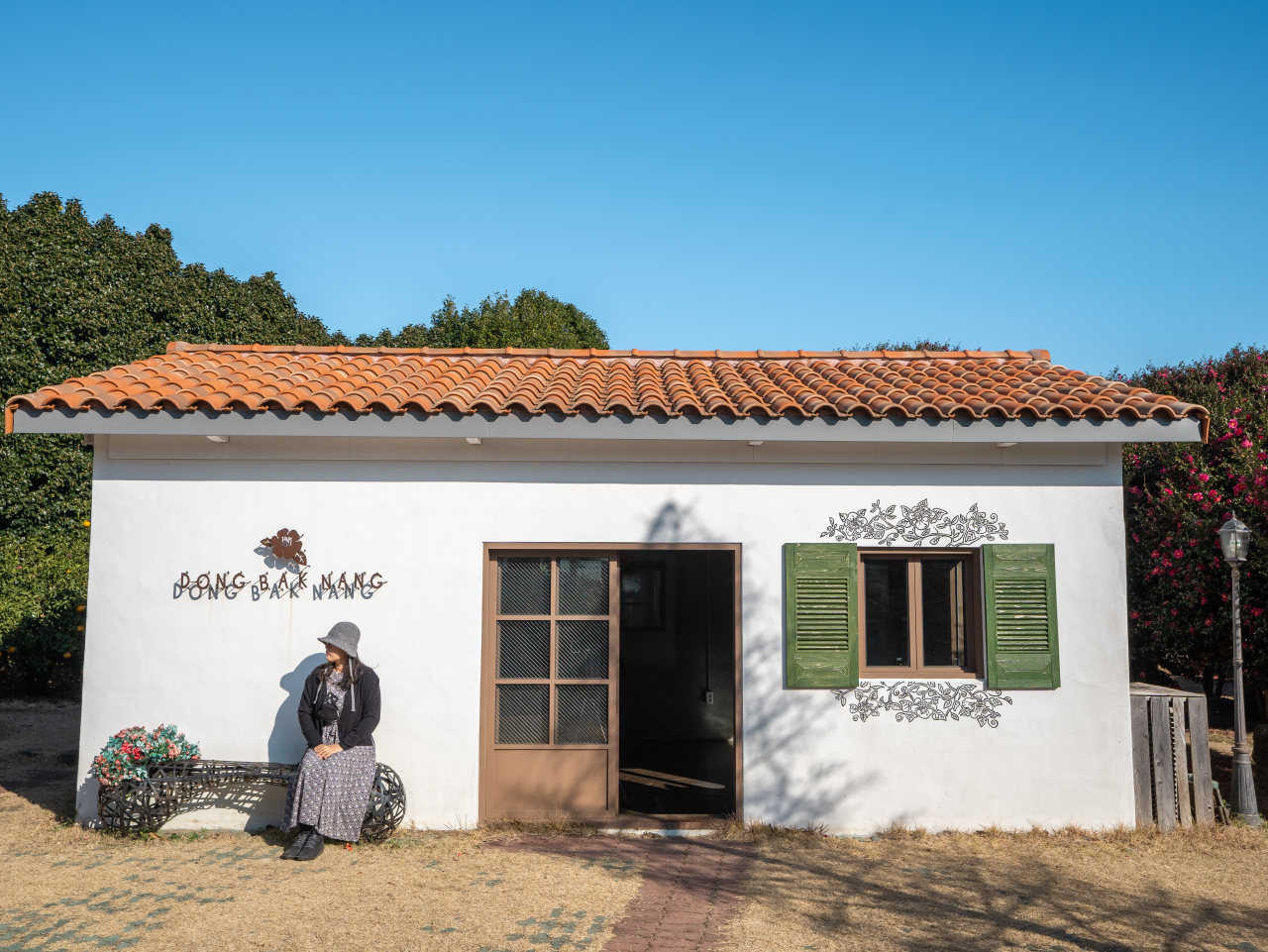
Looking for somewhere to slow down, we stepped into a cafe called Dongbaknang, located right in front of the arboretum.
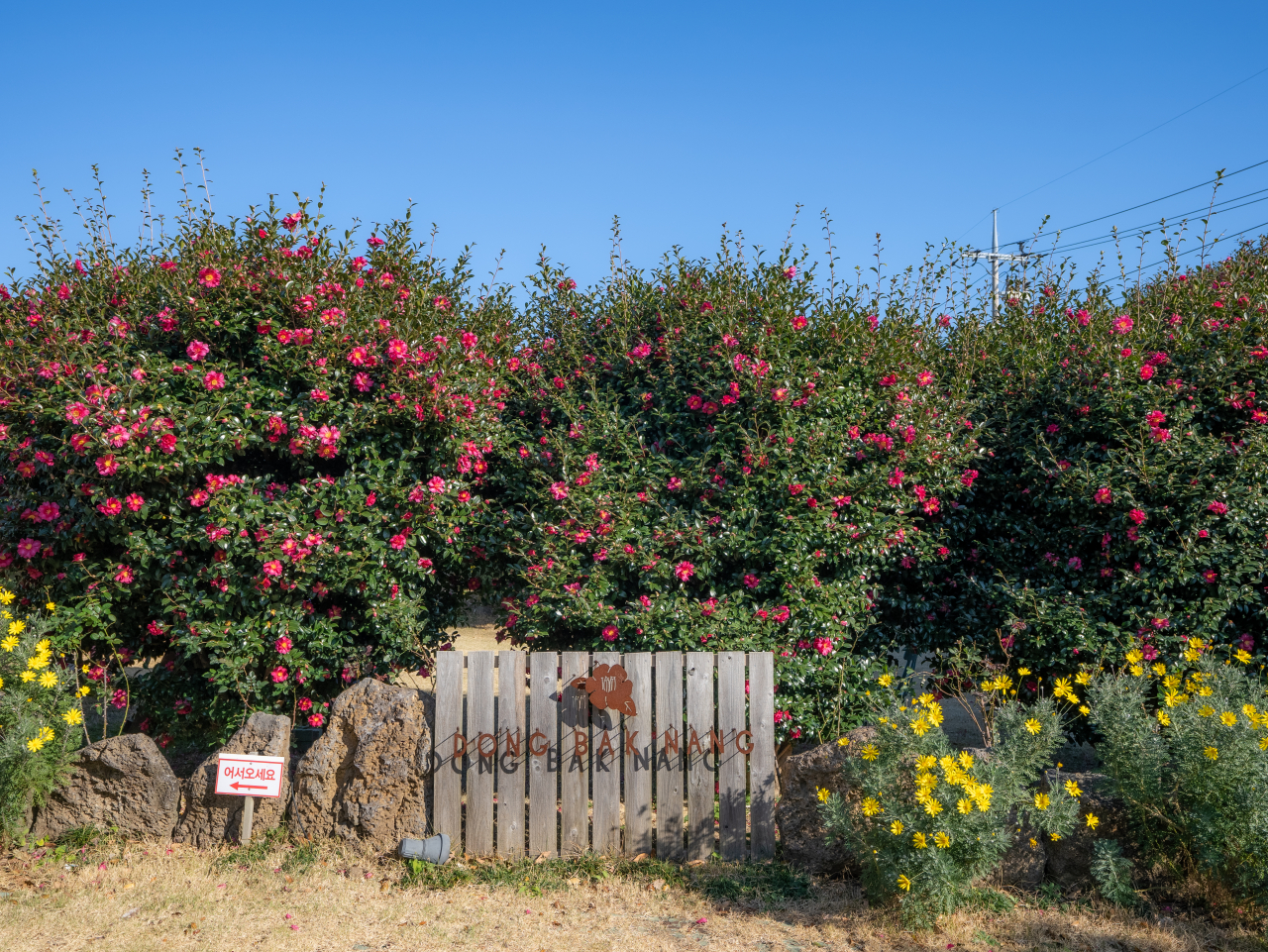
Dongbaknang Cafe has been getting a lot of love lately as a unique camellia photo spot.
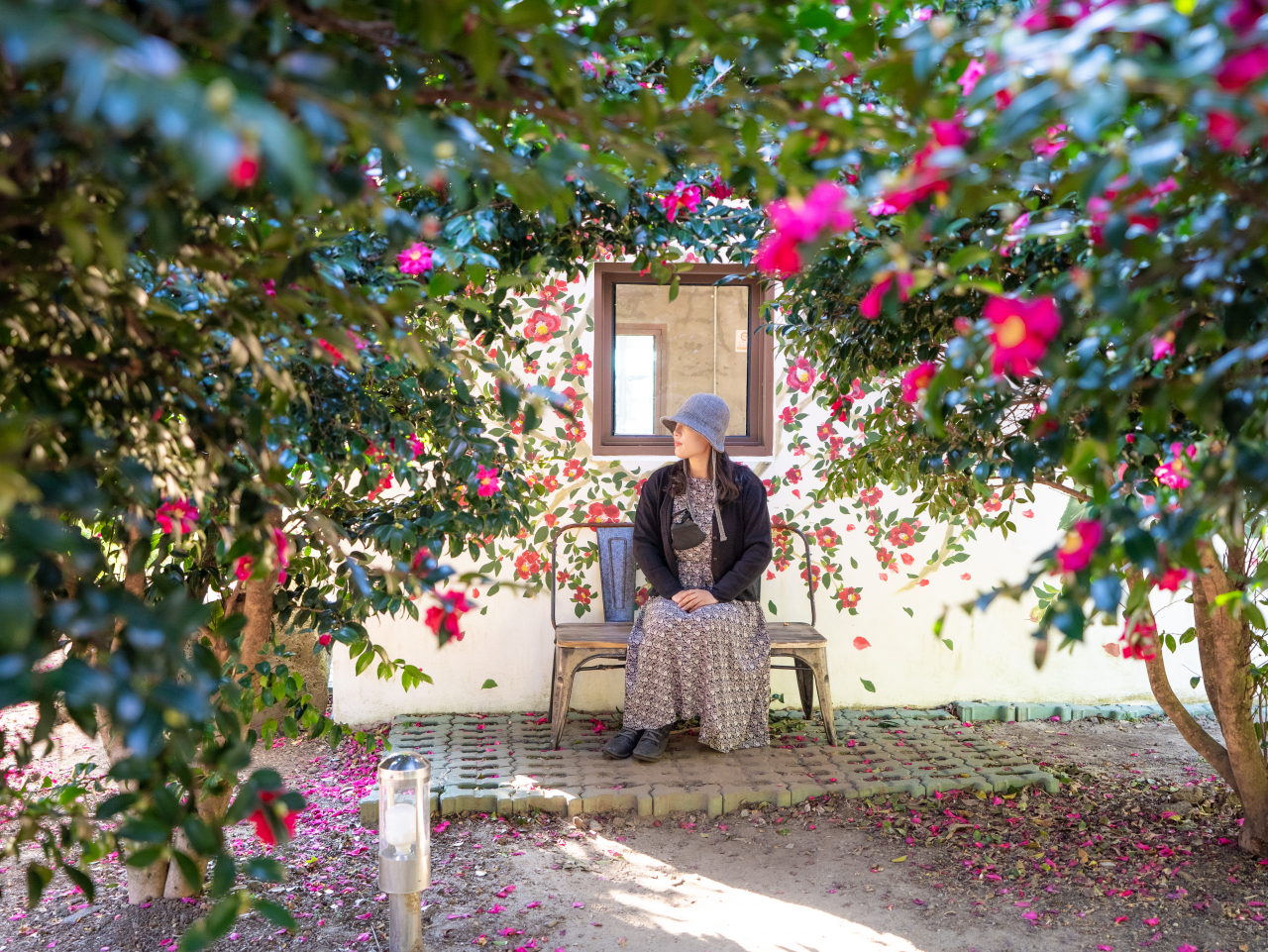
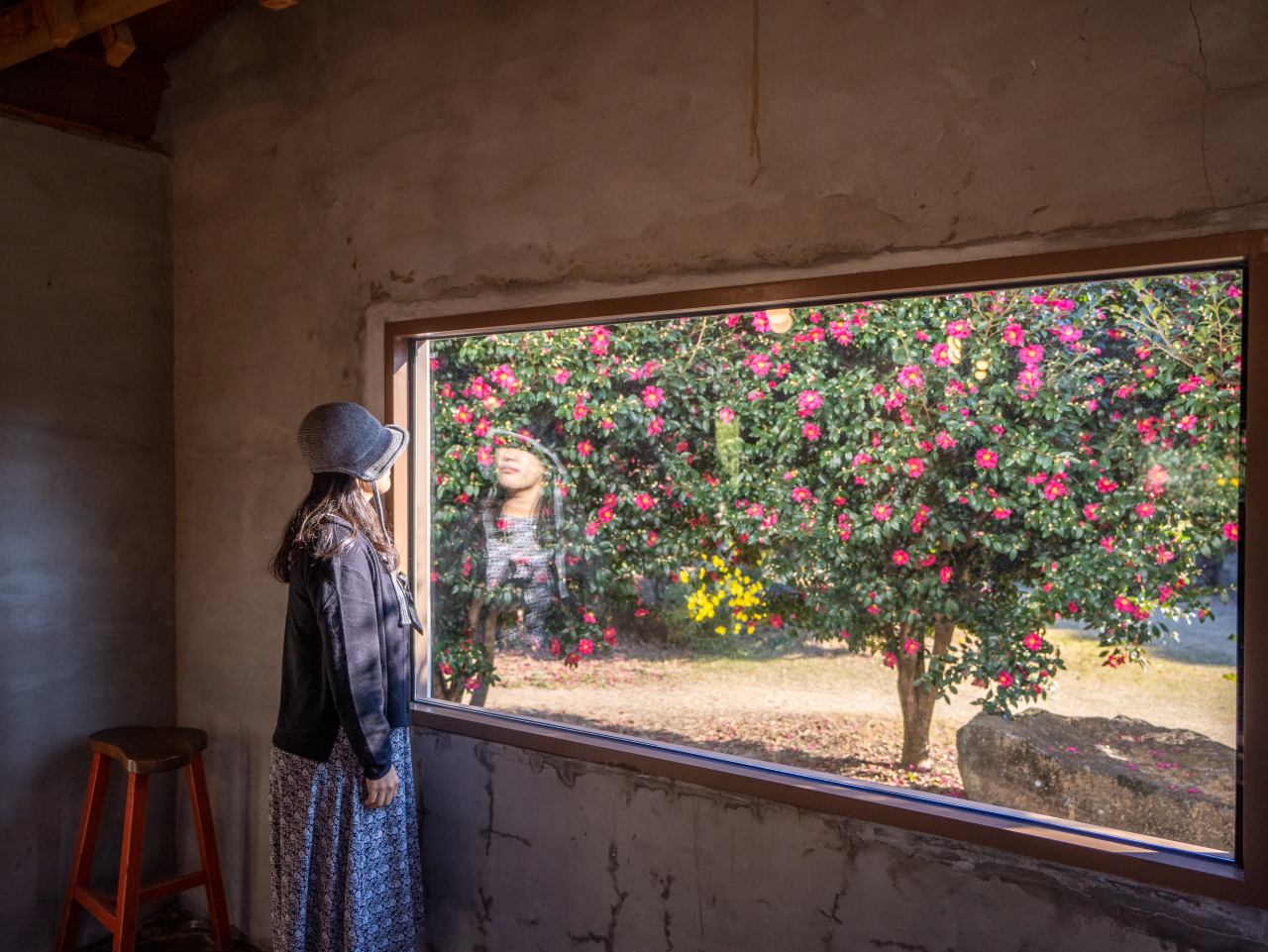
There’s a photo you can take only here at Dongbaknang—nowhere else. That single shot alone is a good enough reason to visit.
In Jeju dialect, a camellia tree is called dombaknang. “Dongbaknang” isn’t perfectly pure Jeju dialect, but it’s not wrong either.
When we walked in, the enthusiastic owner greeted us. They explained that although it’s a cafe, it’s self-serve. If you pay the 2,000 won entry fee, you can get coffee from the machine.
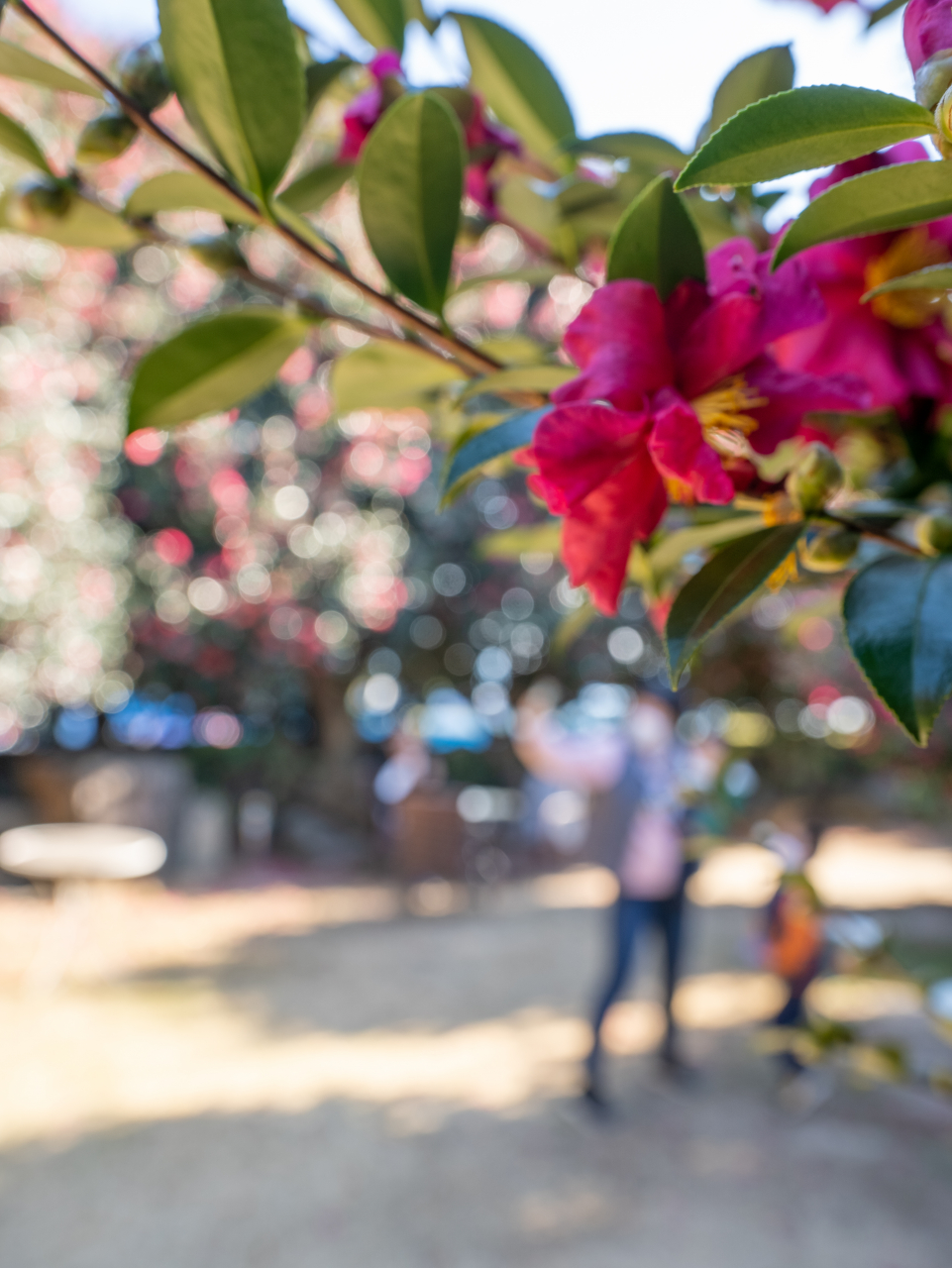
There were places to sit and rest throughout the garden and inside the building. Under the warm afternoon sun, we lingered in quiet, cozy Dongbaknang—leaving a little piece of time there. And we left with photos too, from one warm afternoon in December.

제주살이 10년 차, 일상 속 여행을 기록하는 크리에이터입니다. 바다와 바람, 낯선 골목에 스며든 제주를 좋아하고, 그 안에서 느꼈던 순간들을 글과 사진으로 전하고 있어요. 여행지보다는 여행의 온도를 담는 일을 합니다.

Comments
2잘보고가요~^^
@💖은희님💖 감사합니다. 행복한 여행되세요 😊