The weather has turned pleasantly cool these days—perfect for walking. Today, I went for a morning workout walk around Sanyang Gotjawal.
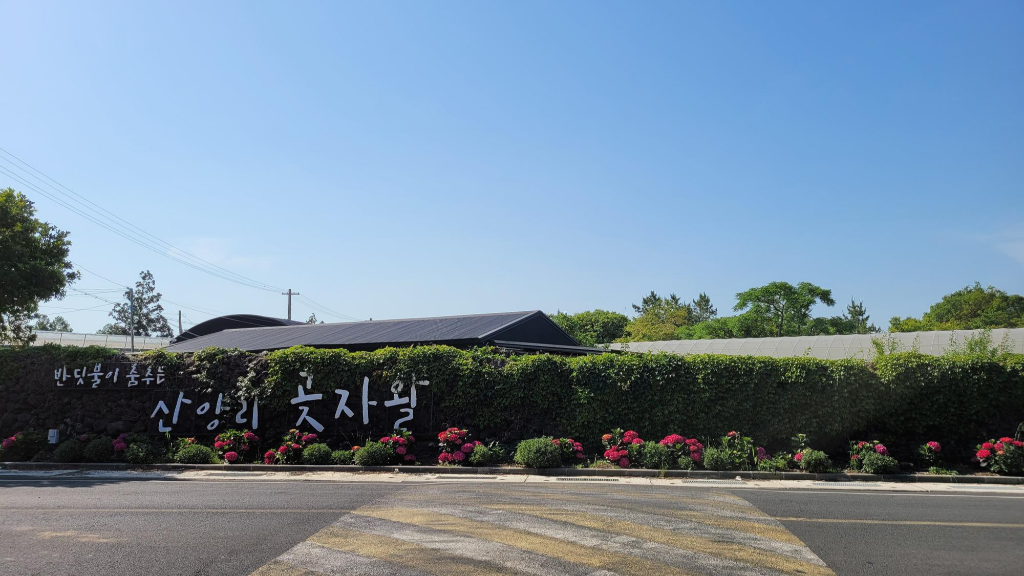
Sanyang Gotjawal is, of course, in Sanyang-ri. This Sanyang-ri sits right on the boundary between Seogwipo-si and Jeju-si. It looks like it should be in Seogwipo-si, but the official address is actually Sanyang-ri, Hangyeong-myeon, Jeju-si. So when you’re navigating here, your GPS may keep announcing directions that jump back and forth between Jeju-si and Seogwipo-si.
Sanyang-ri Gotjawal is a local-only walking route that most tourists don’t really know about. Unless you live nearby, you probably wouldn’t realize there’s such a great forest trail here. I used to walk Gotjawal trails at the provincial park, but these days, with indoor attractions feeling less appealing, there seem to be more visitors—making parking hard to find. That’s why I’ve been coming to Sanyang-ri Gotjawal more often lately.
What is “Gotjawal”?
Many people think of the Gotjawal Provincial Park when they hear “Gotjawal,” but “Gotjawal” is a Jeju dialect word meaning a forest with vines, or a forest with lots of rocks and gravel. So the provincial park is only part of the Gotjawal. The Gotjawal around this area is an enormous forest stretching across Sinpyeong-ri, Boseong-ri, Cheongsu-ri, and Jeoji-ri. Similar Gotjawal areas also exist in Jocheon-eup and Gujwa-eup, so after a Jeju trip, it can get confusing if you ask, “Have you been to Gotjawal?” while only thinking of the provincial park.
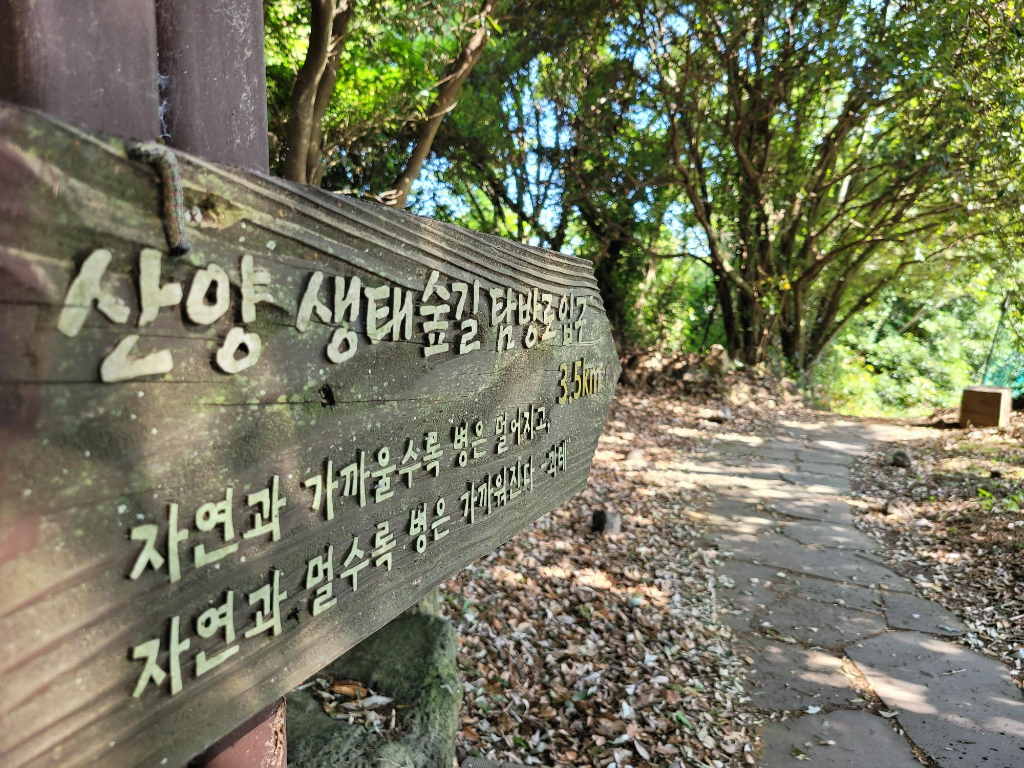
The Sanyang Gotjawal trail is 3.5km long—longer than you might expect. Even at an adult pace, it takes a little over an hour. When I first visited, I came with my elementary-school child, and even though they like walking, they looked a bit tired.
Cheongsu-ri Gotjawal is famous for fireflies, and since Sanyang-ri is right next to Cheongsu-ri, there should naturally be plenty of fireflies here too. I haven’t seen them yet, but even my neighborhood has lots of fireflies—so I don’t doubt this Gotjawal has them as well.
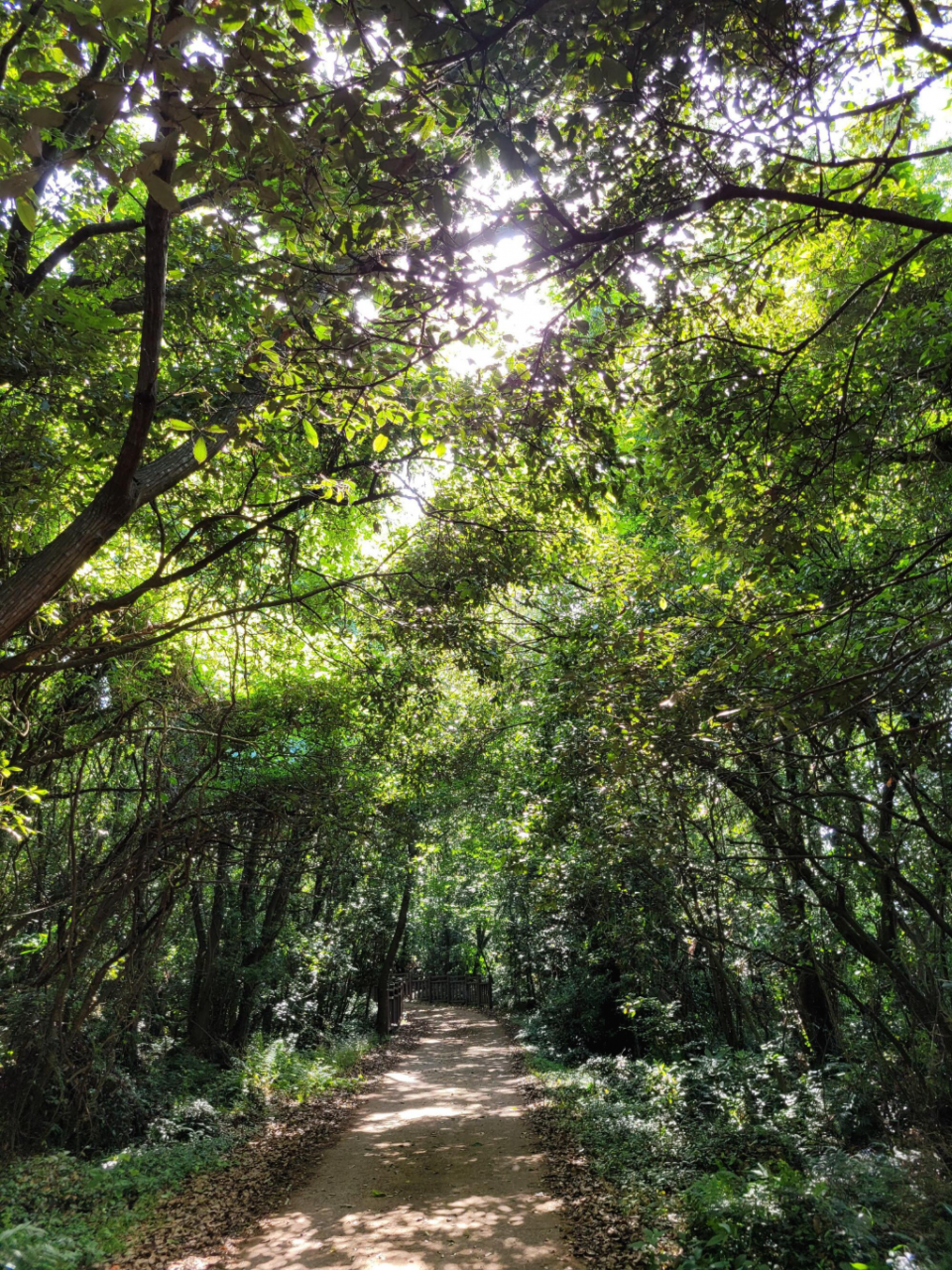
Walking a forest trail in a season like this is truly refreshing. Because of the thick canopy, sunlight barely comes in, and the cool wind blowing up from deep inside the Gotjawal feels like it wakes up every cell in your body.
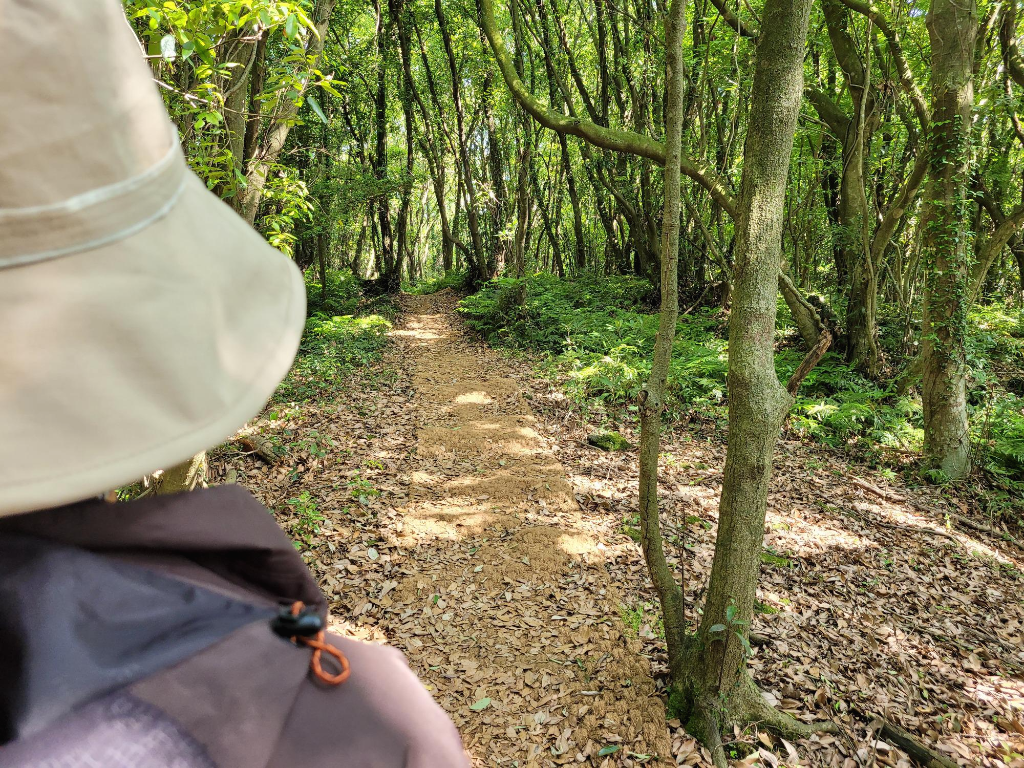
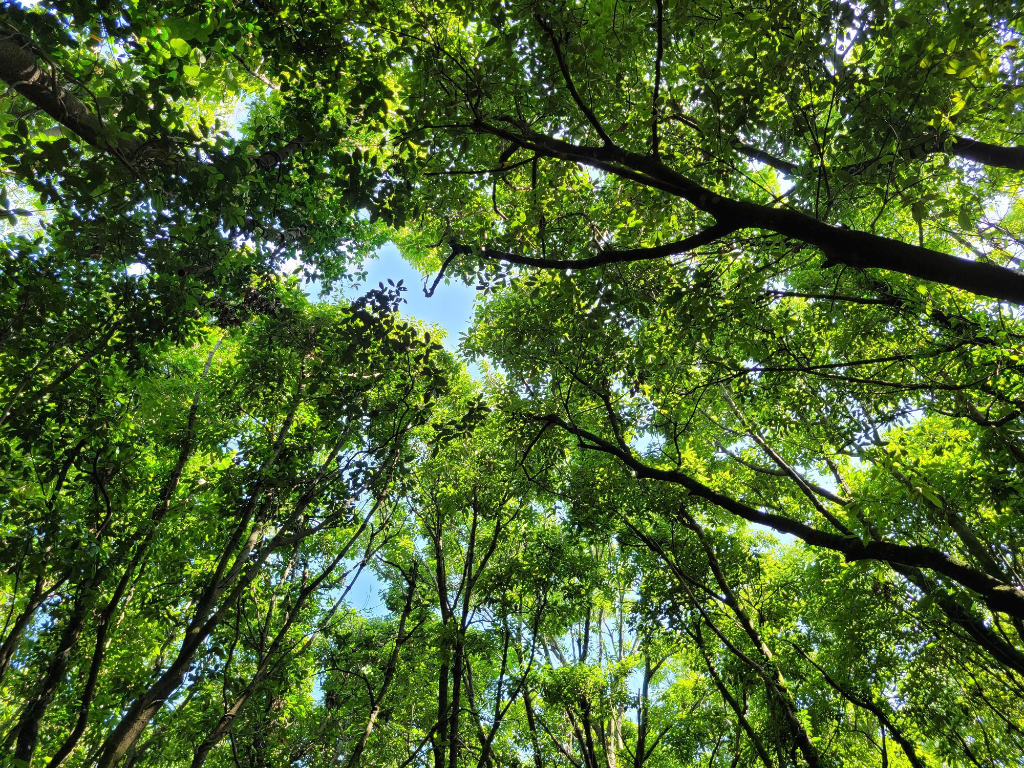
There’s another reason I love Gotjawal: the birdsong.
Many different kinds of birds live in the Gotjawal, so you can hear a wide variety of calls. ASMR has been trending as a way to stimulate the senses, but honestly, nothing beats nature’s sounds.
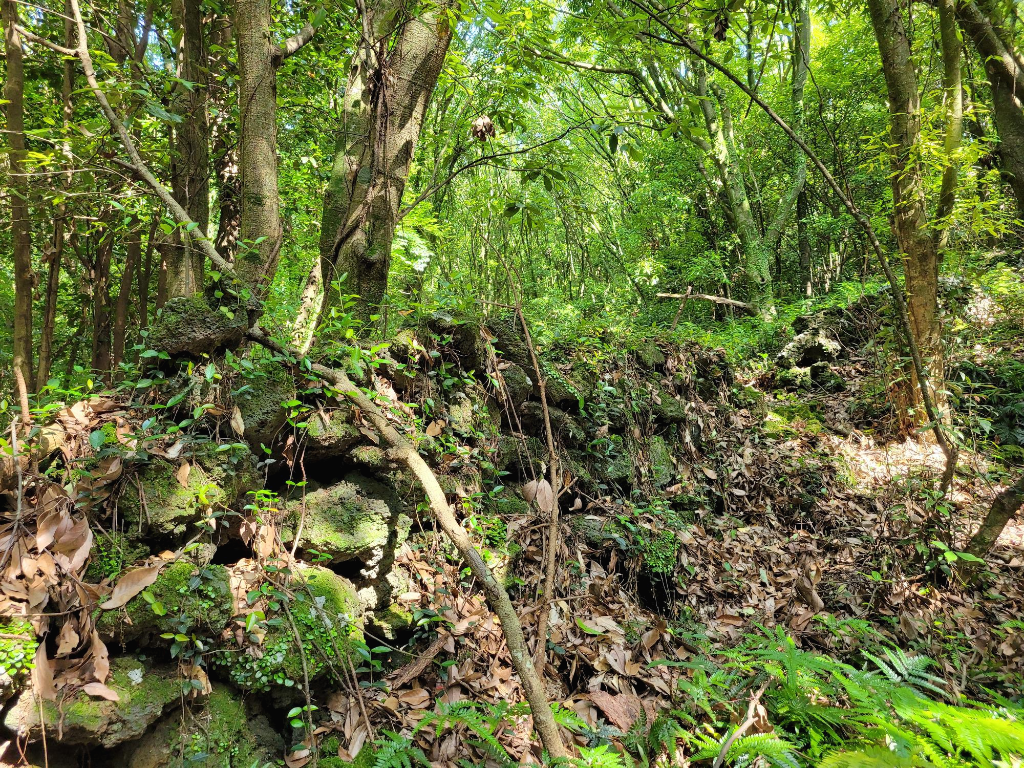
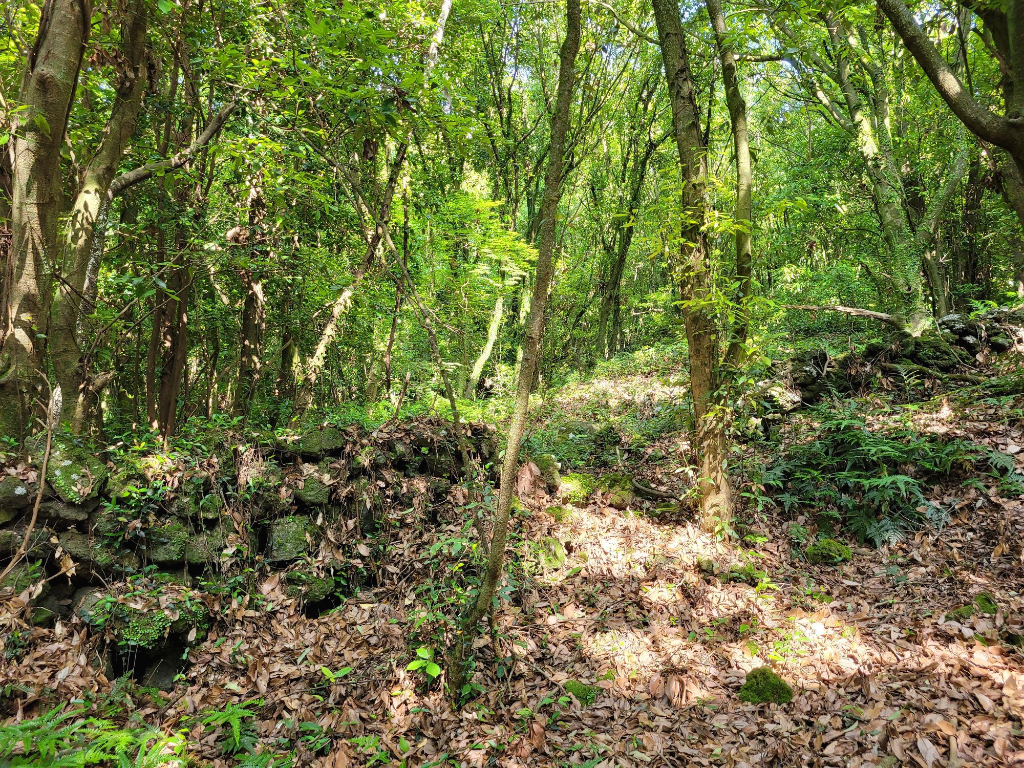
When walking through Jeju’s forests, you’ll sometimes see stone walls like these.
These stone walls were either built long ago along routes where trade wagons used to pass—stone walls of a so-called “Silk Road”—or they were built by residents who hid in the forest during the April 3 Incident (4.3) to block the wind. Even today, you can still find traces of the pain of the 4.3 Incident in many parts of everyday life in Jeju. Sometimes when I talk with neighbors, I can feel memories and grief around 4.3 that I, as a newcomer, can’t fully understand.
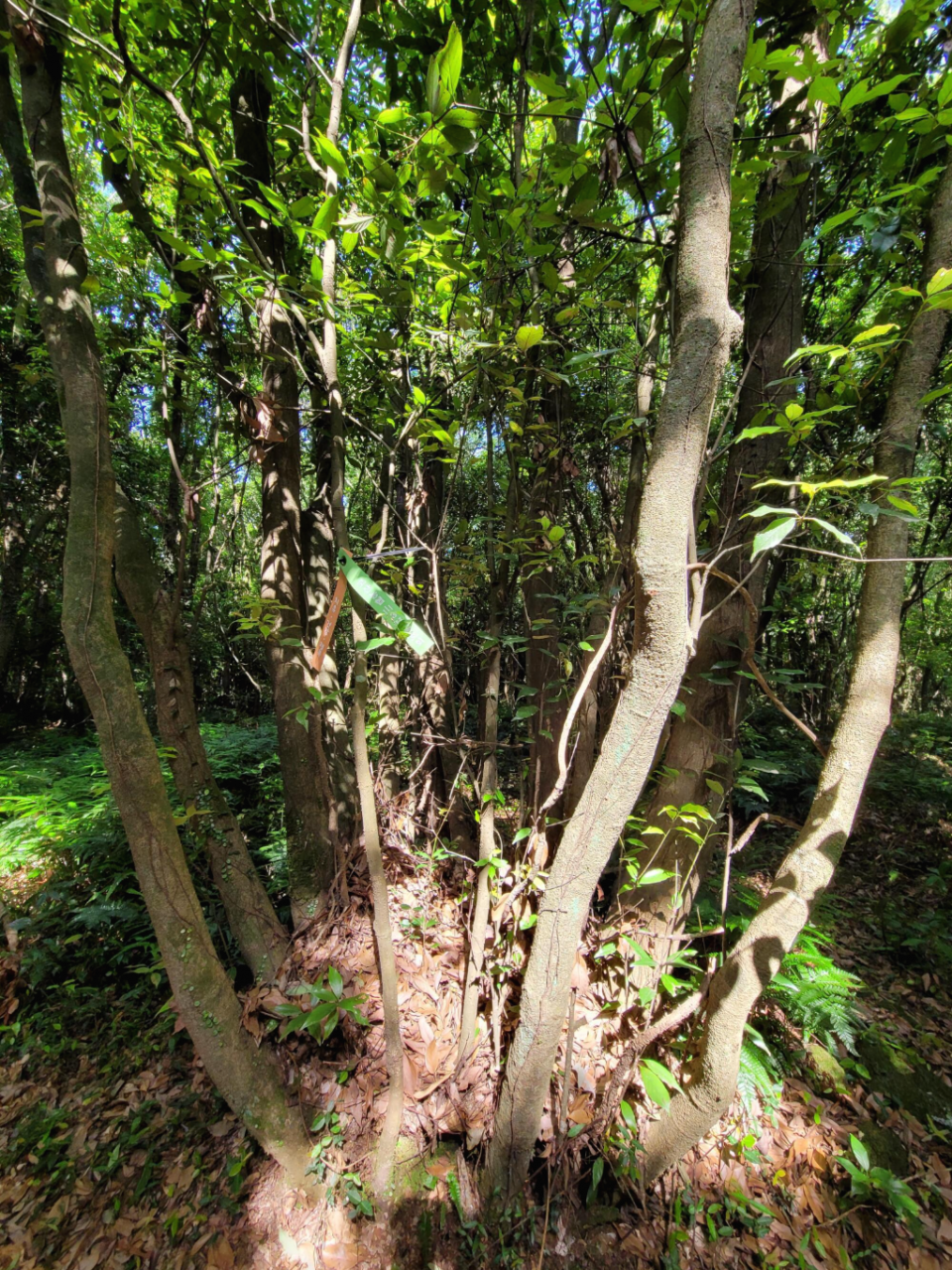
This is a tree my kids call the “prison tree.” It’s called a jonggasi tree, a species unfamiliar to me since I’m from the mainland.
The forests of Jeju, a volcanic island, definitely feel different from forests on the mainland—almost like you’ve stepped into a jungle.
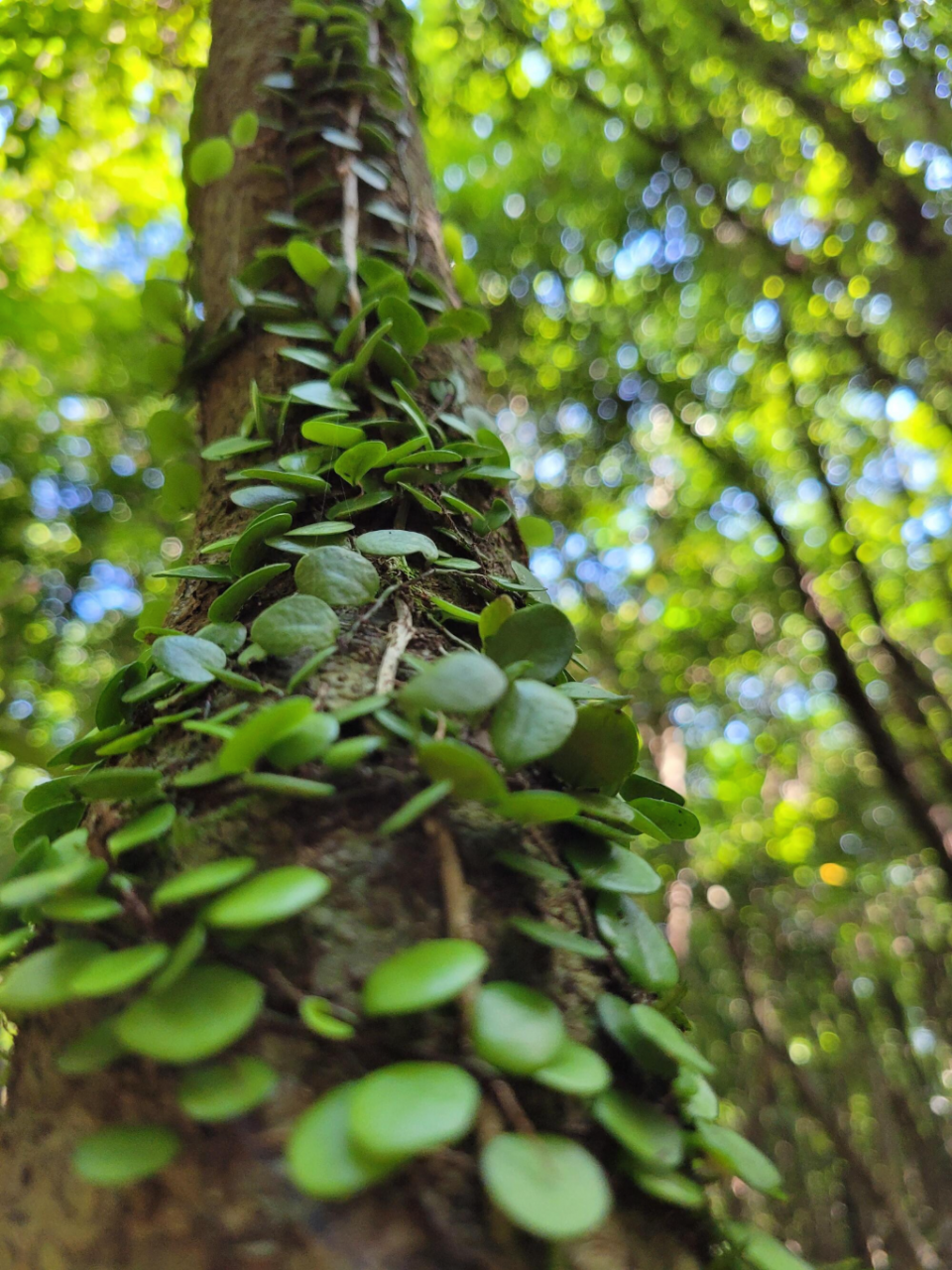
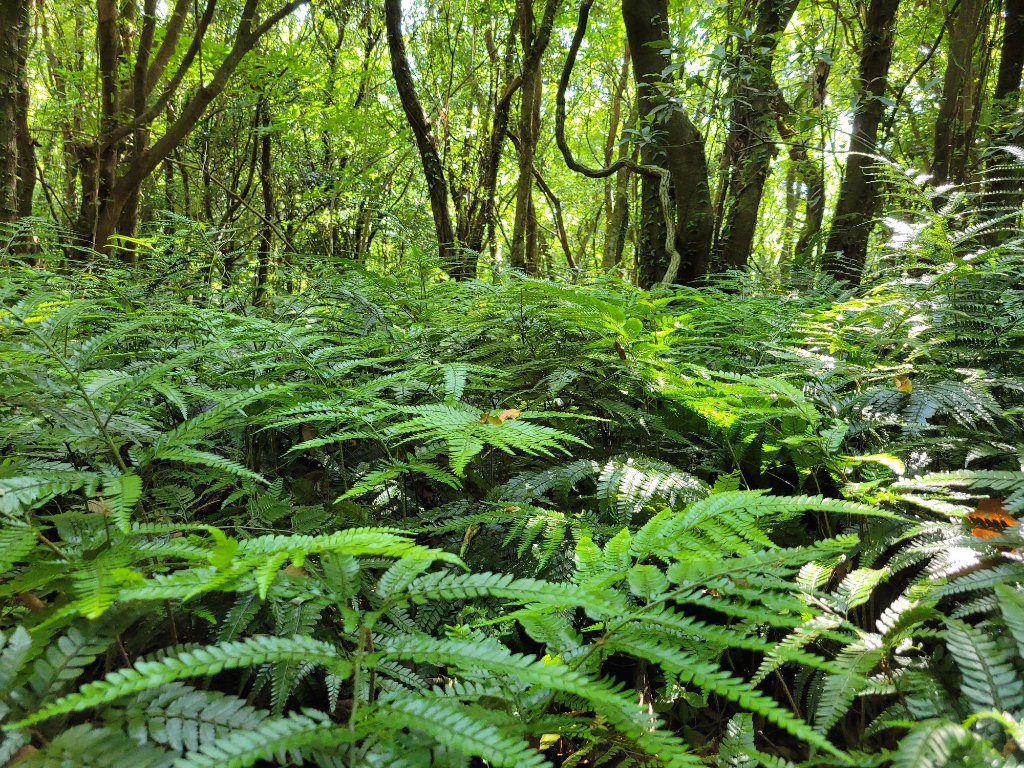
Vines that climb trees and inedible bracken ferns are part of what represents Jeju’s unique ecosystem.
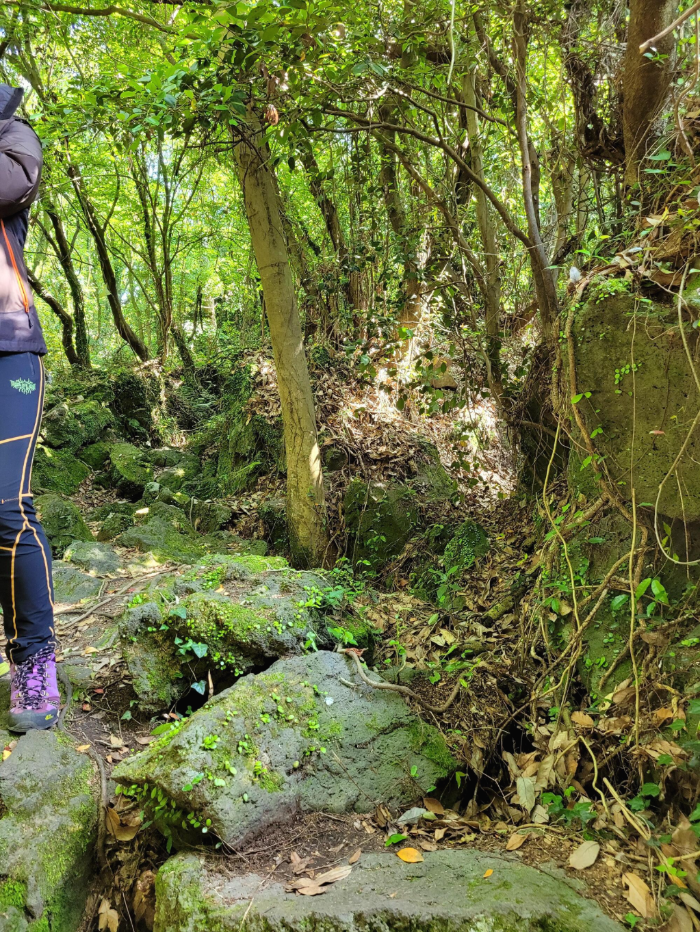
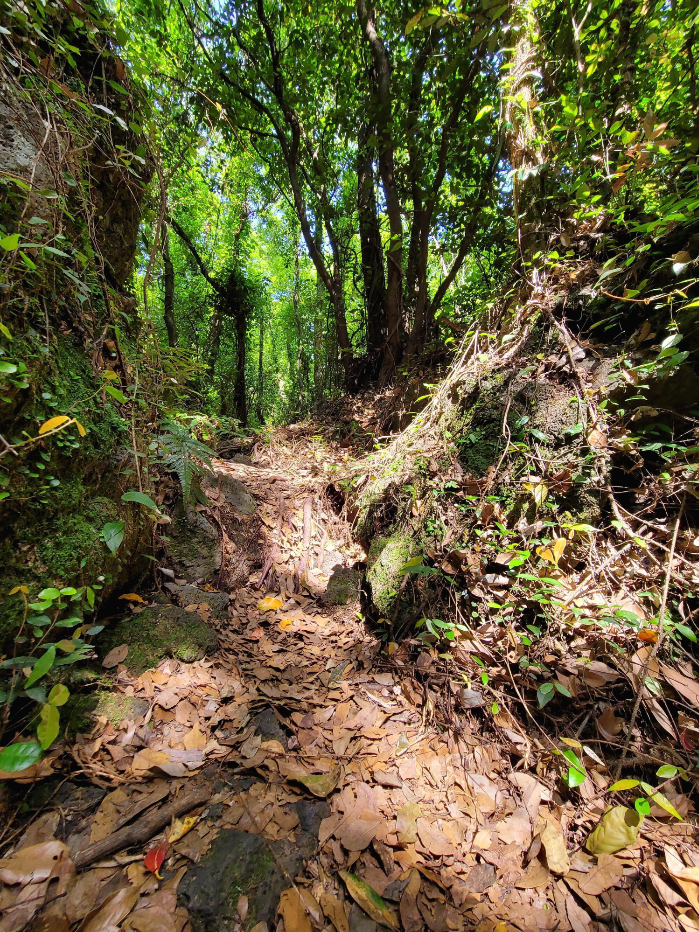
Near the end of the Sanyang-ri Gotjawal course, the path gets rougher. It’s not difficult for adults, but if you’re with young children, be mindful of safety.

제주살이 10년 차, 일상 속 여행을 기록하는 크리에이터입니다. 바다와 바람, 낯선 골목에 스며든 제주를 좋아하고, 그 안에서 느꼈던 순간들을 글과 사진으로 전하고 있어요. 여행지보다는 여행의 온도를 담는 일을 합니다.

Comments
1새소리 들으며 숲속을 산책하면 정말 힐링이 따로 없겠네요~