June in Jeju—when the sunshine is bright and the breeze is cool enough to wash over your whole body—is the season to see mountains and fields grown lush and green, along with flowers in full bloom.
It’s also a truly wonderful time to head out on that long-dreamed-of trip, take in Jeju’s brilliant scenery, and enjoy happy moments with your family.
Shall we set off together to some great places to visit in June and July, after warm spring and right as summer begins?
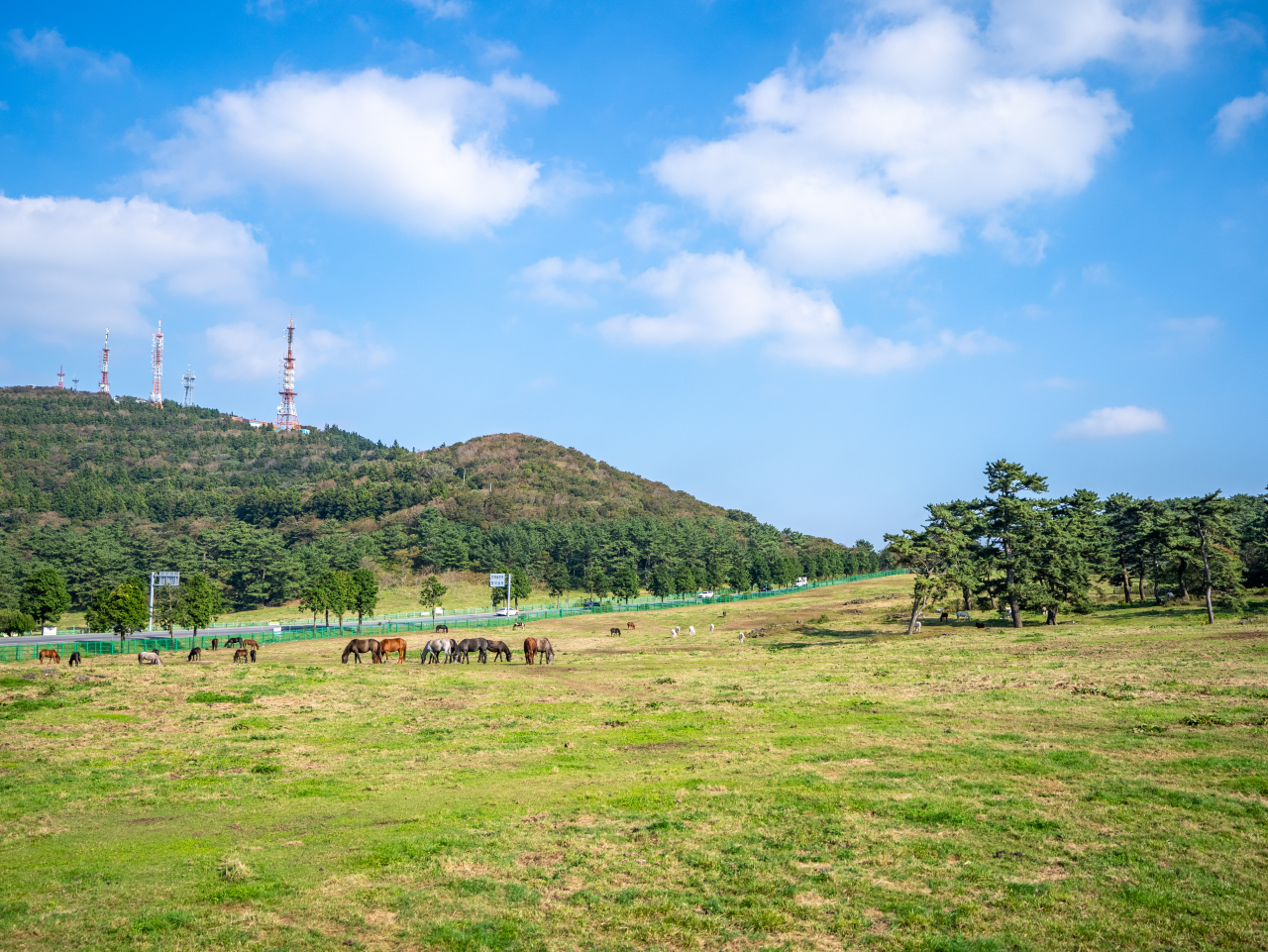
Visit Mabangmokji, where Jeju’s green fields welcome you!
At Mabangmokji, you can see Jeju-bred ponies designated as a Natural Monument. The peaceful sight of horses running across the vast grasslands of Hallasan under Jeju’s distinctive blue sky is truly unforgettable.
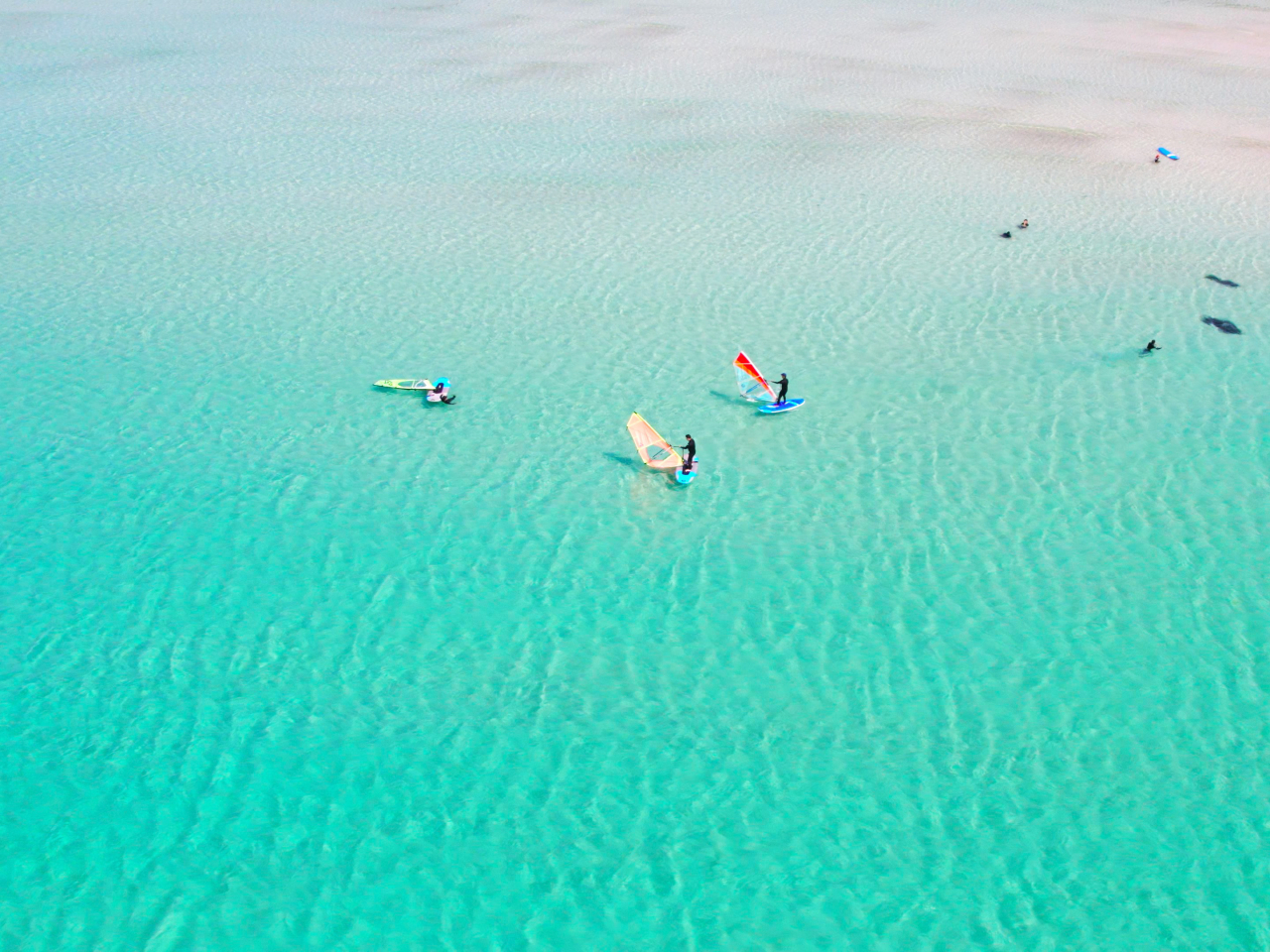
What would it feel like to lie on an emerald sea and look up at the sky?
In Jeju, summer arrives earlier than anywhere else in Korea—by July 1, all beaches officially open. That’s why June, before the crowds hit, is the best time to enjoy surfing.
Surfing on an emerald-blue sea makes for an irresistibly romantic scene. With Jeju’s ever-present winds and relatively shallow waters, it’s easy to see why the island is considered a surfing mecca!
<Recommended places for surfing experiences>
Woljeongri Beach, Geumneung Beach, Gwakji Beach
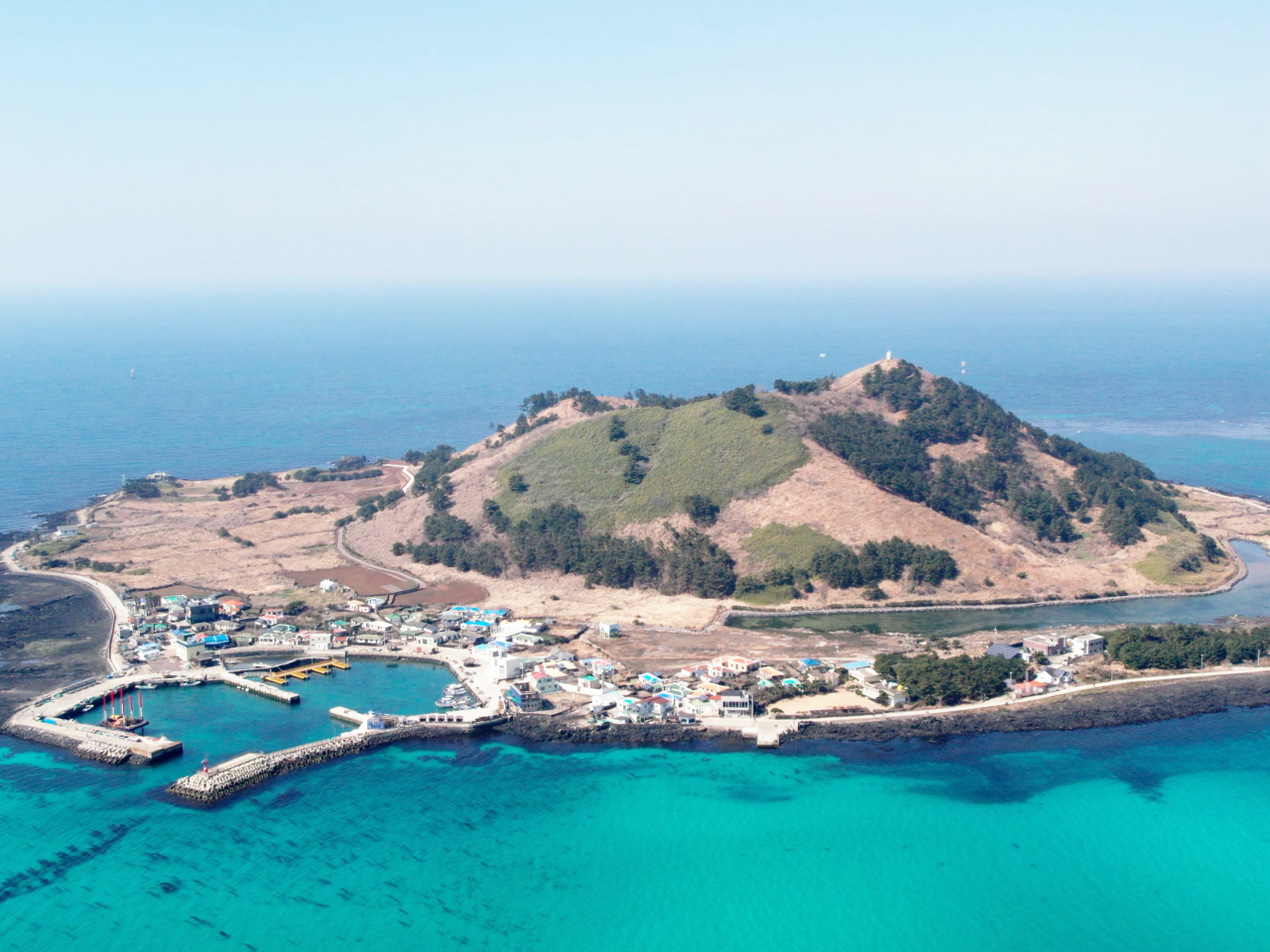
How about a trip to the picture-perfect island of Biyangdo?
Biyangdo, which you’ve always seen from Jeju’s west coast, is a nearby island just 15 minutes away by boat. It’s small enough to explore by bicycle or on foot. Lodging can be more affordable than you might expect, so an overnight stay is also recommended. After the last ferry departs and stillness settles in, the sunset you enjoy from Biyangbong is truly a top-tier moment. And once darkness falls, Biyangdo’s twinkling night sky will guide you straight back to childlike wonder.
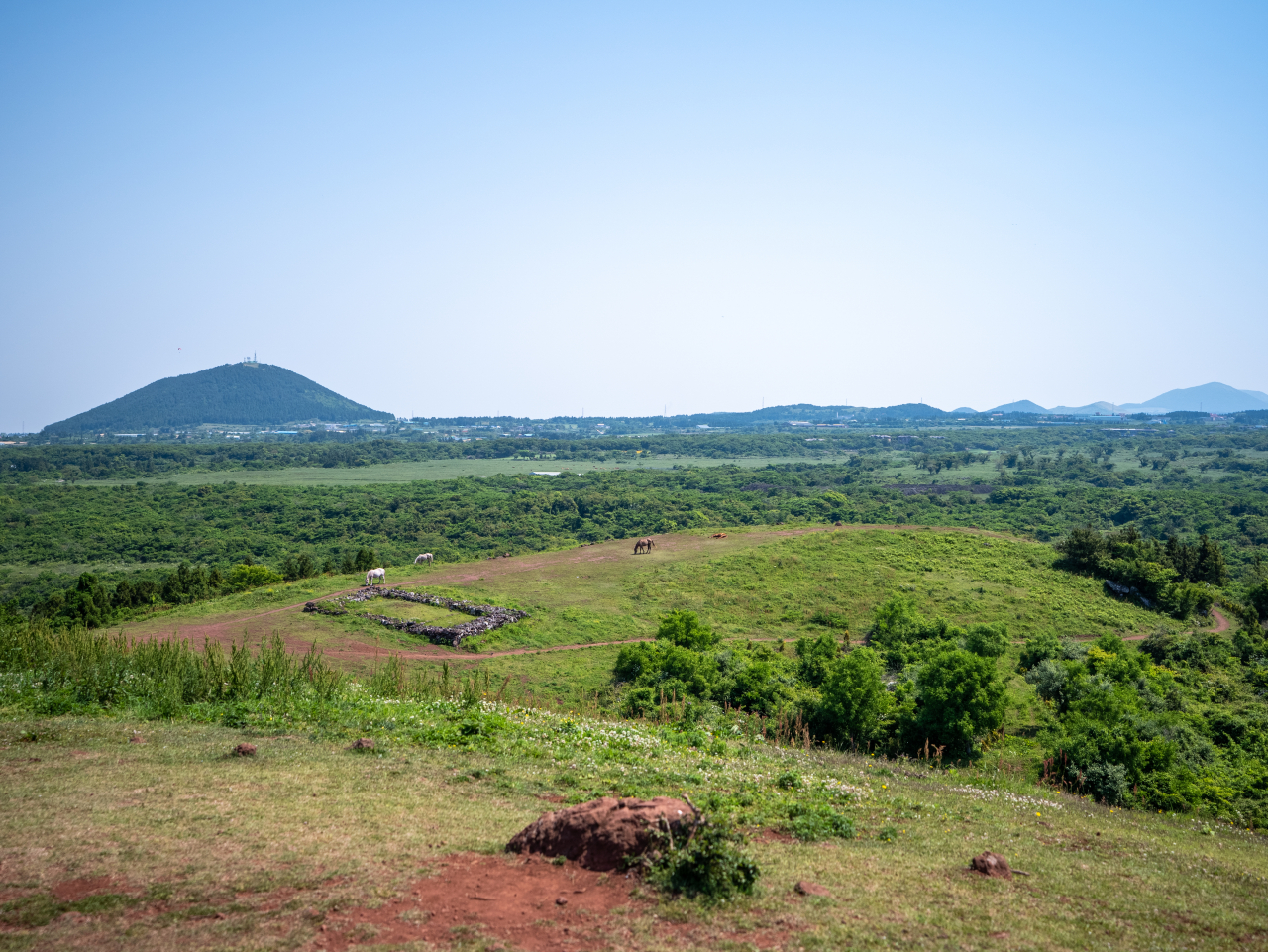
If you’ve come to Jeju, you’ve got to climb at least one oreum!
Nestled within the Gotjawal forest, cozy Mundoji Oreum is one of the few oreum that remains relatively uncrowded. It feels more like a small hill than a steep oreum, making it accessible to all ages. Yet the view from the top is among the most beautiful you’ll find.
Wind turbines over the distant sea, the seemingly endless Gotjawal, and behind it all the ridgelines of Hallasan drawn like a folding screen—this perfect panorama will have no trouble capturing your heart.
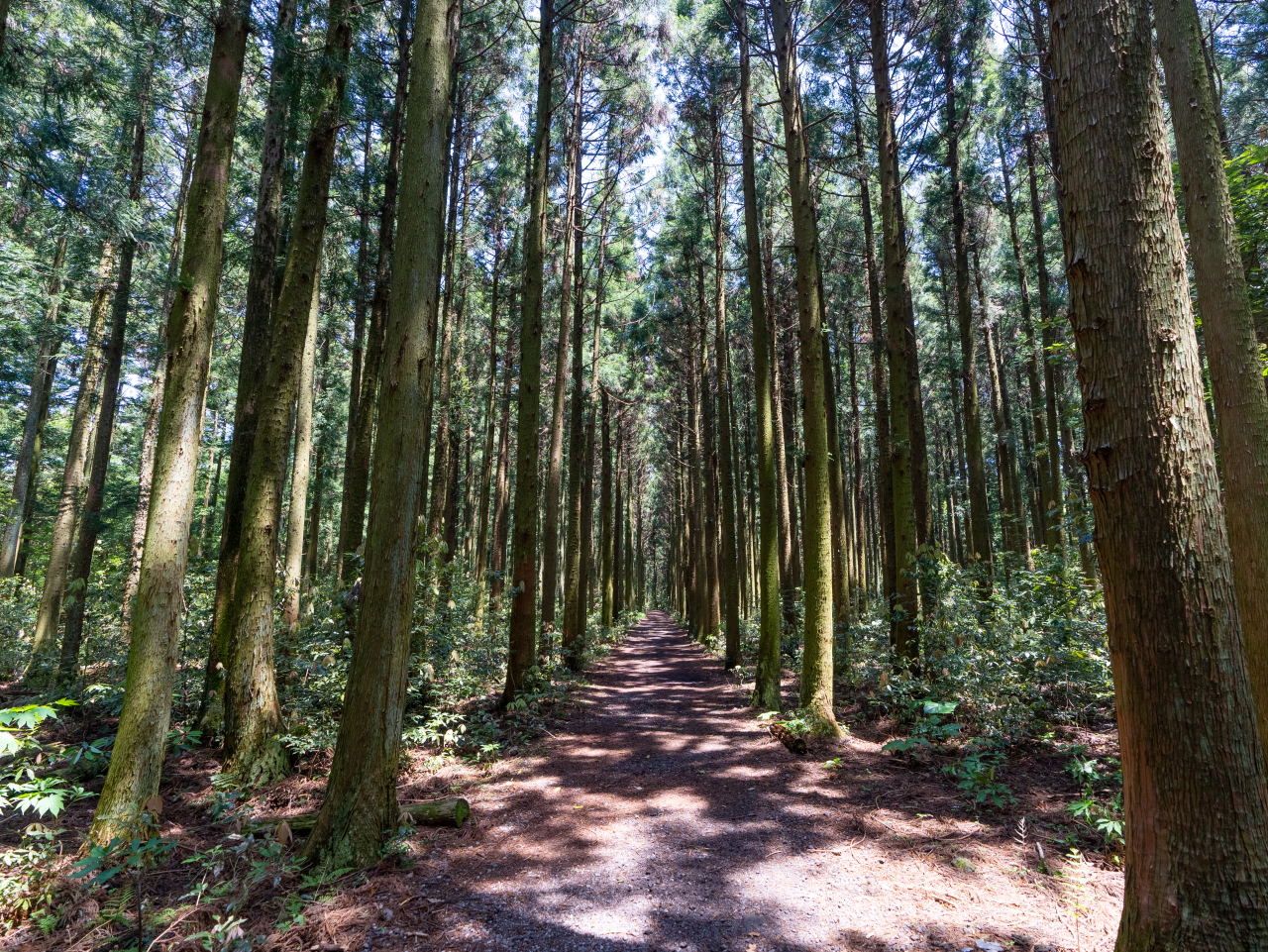
If you’re worried about the strong sun at Mundoji Oreum, try walking the Iseungi Oreum loop trail instead! As you follow this trail, which connects to the Hallasan perimeter path, you’ll come across a mysterious cedar forest walkway. With branches swaying in a gentle breeze and a chorus of birds echoing through the woods, it feels like there might be a secret door leading to an unknown world.
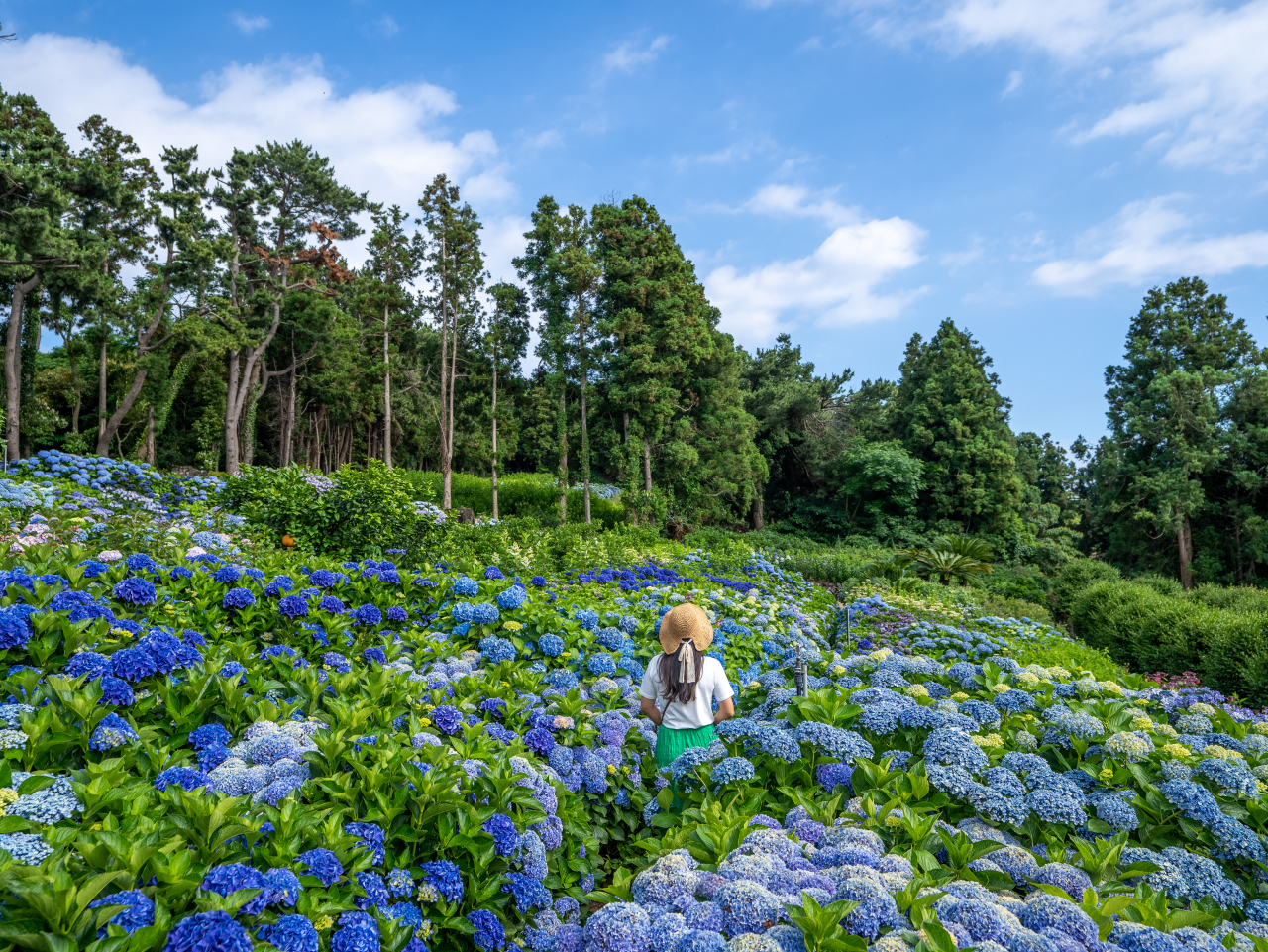
By mid-June, Jeju’s hydrangeas reach their peak.
These days, unlike in the past, it’s so easy to find hydrangeas all over Jeju that the phrase “hydrangea hotspot” almost feels unnecessary.
The large, colorful clusters are so stunning that there’s hardly any way to describe them beyond simply “beautiful.”
Jeju has so many hydrangea spots that it feels like we should organize them separately and create dedicated content.
<Recommended hydrangea spots>
Hueree Hydrangea Festival, Sumdo, Manor Blanc, Gilmotungi Store
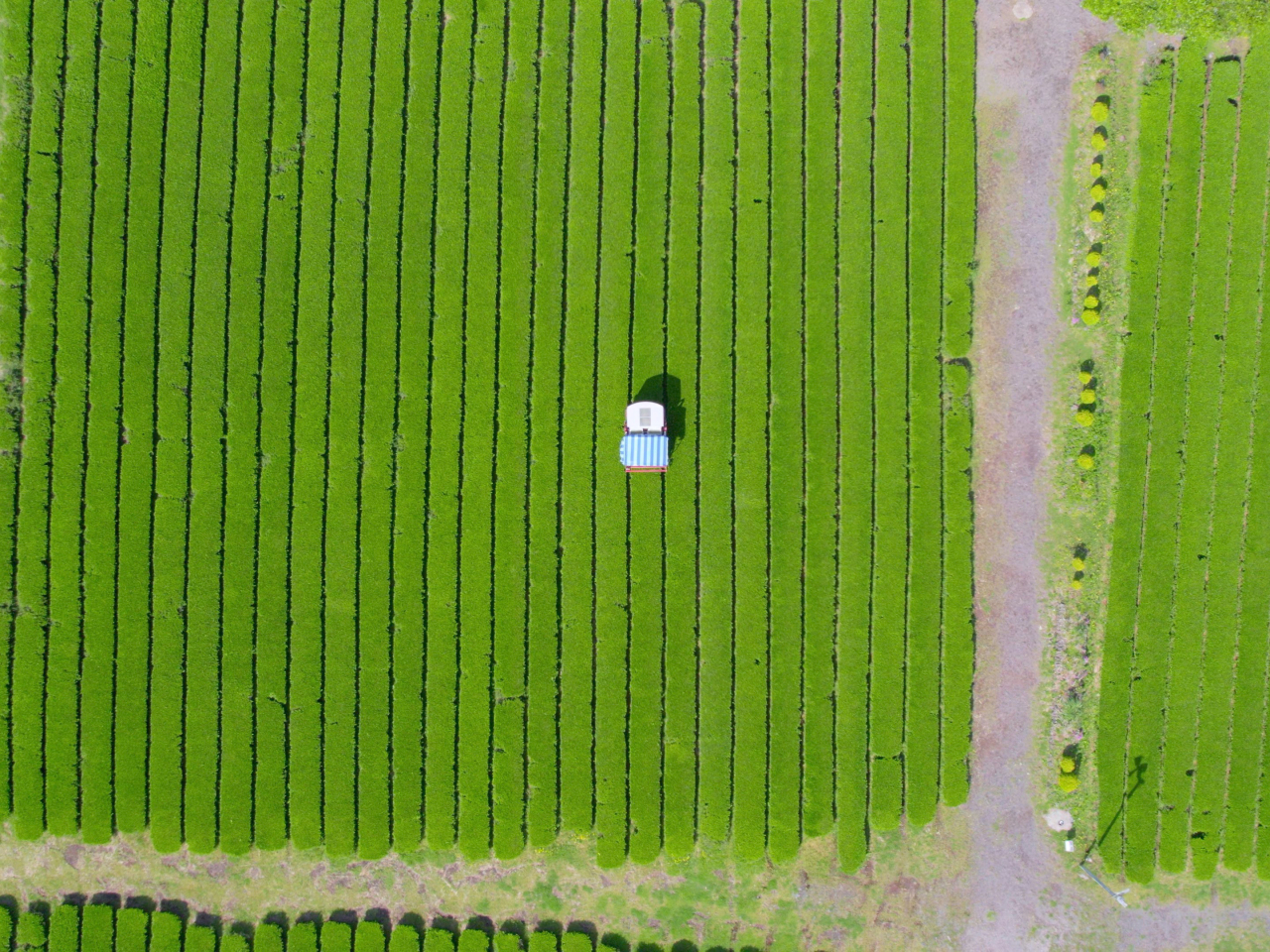
Travel to a green tea field where waves of green beckon you!
Seogwang Dawon is Korea’s largest green tea plantation. Many people know it as the place associated with Osulloc.
As you walk along the small paths between the lush leaves, you may find yourself intoxicated by the deep green-tea aroma carried on the breeze. It’s especially recommended because it stays beautifully green even in Jeju’s fickle weather.
Rather than only seeing the small tea field in front of the Osulloc café, we also recommend crossing the road and enjoying a relaxed walk along the opposite path.
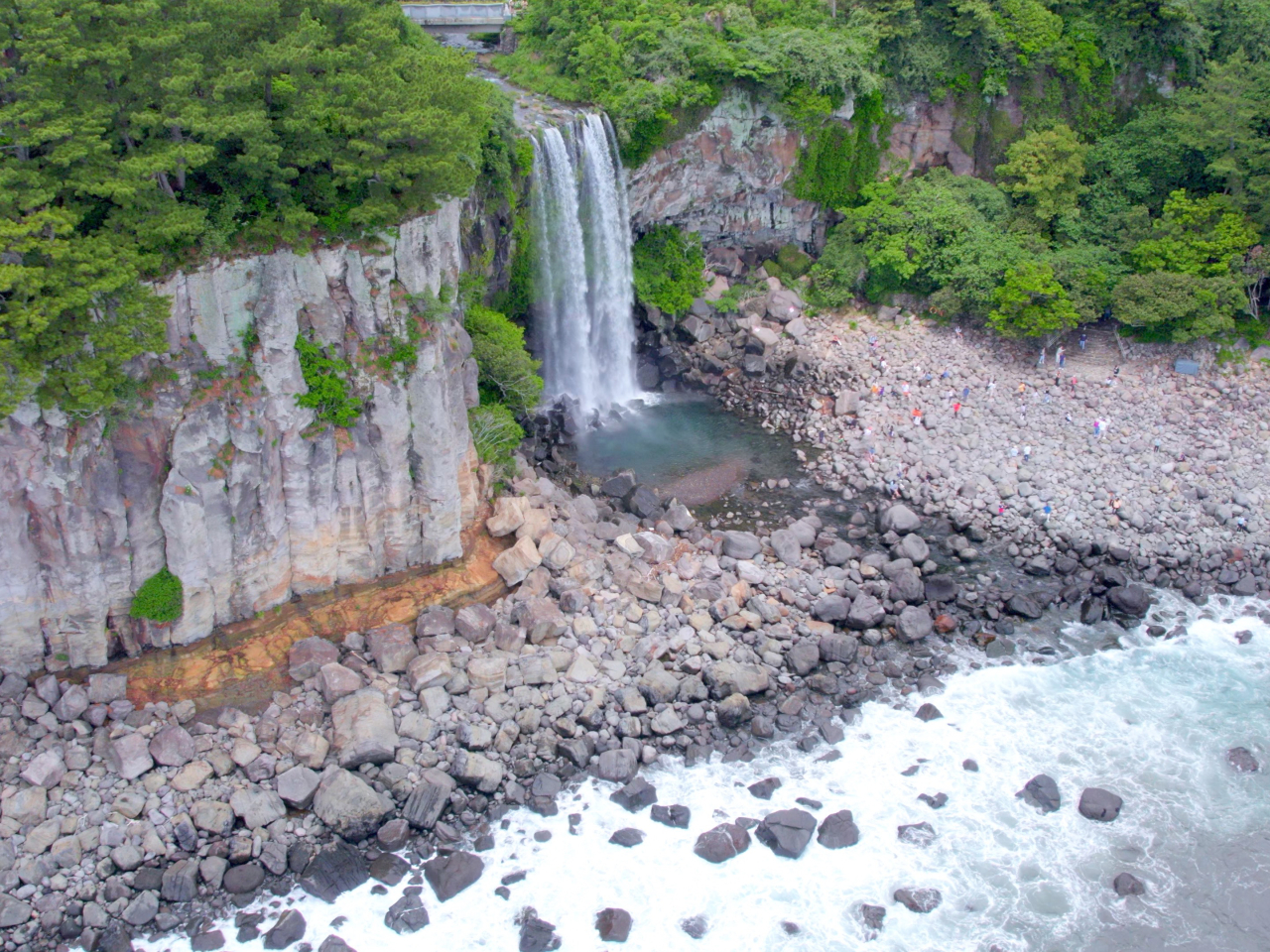
How about going to see a waterfall filled with the power of nature?
In June, Jeju can feel just like summer in the middle of the day. The cool breeze blowing under a magnificent cascade makes this a perfect place to rest your tired body and mind. Jeongbang Waterfall is the only waterfall in Korea that falls directly into the sea. The thunderous roar of the crashing water and the spray shattering against the rocks feels like it can blow away your everyday stress in an instant.
<Jeju’s 5 major waterfalls>
Jeongbang Waterfall, Cheonjiyeon Waterfall, Eongtto Waterfall, Cheonjeyeon Waterfall, Wonang Waterfall
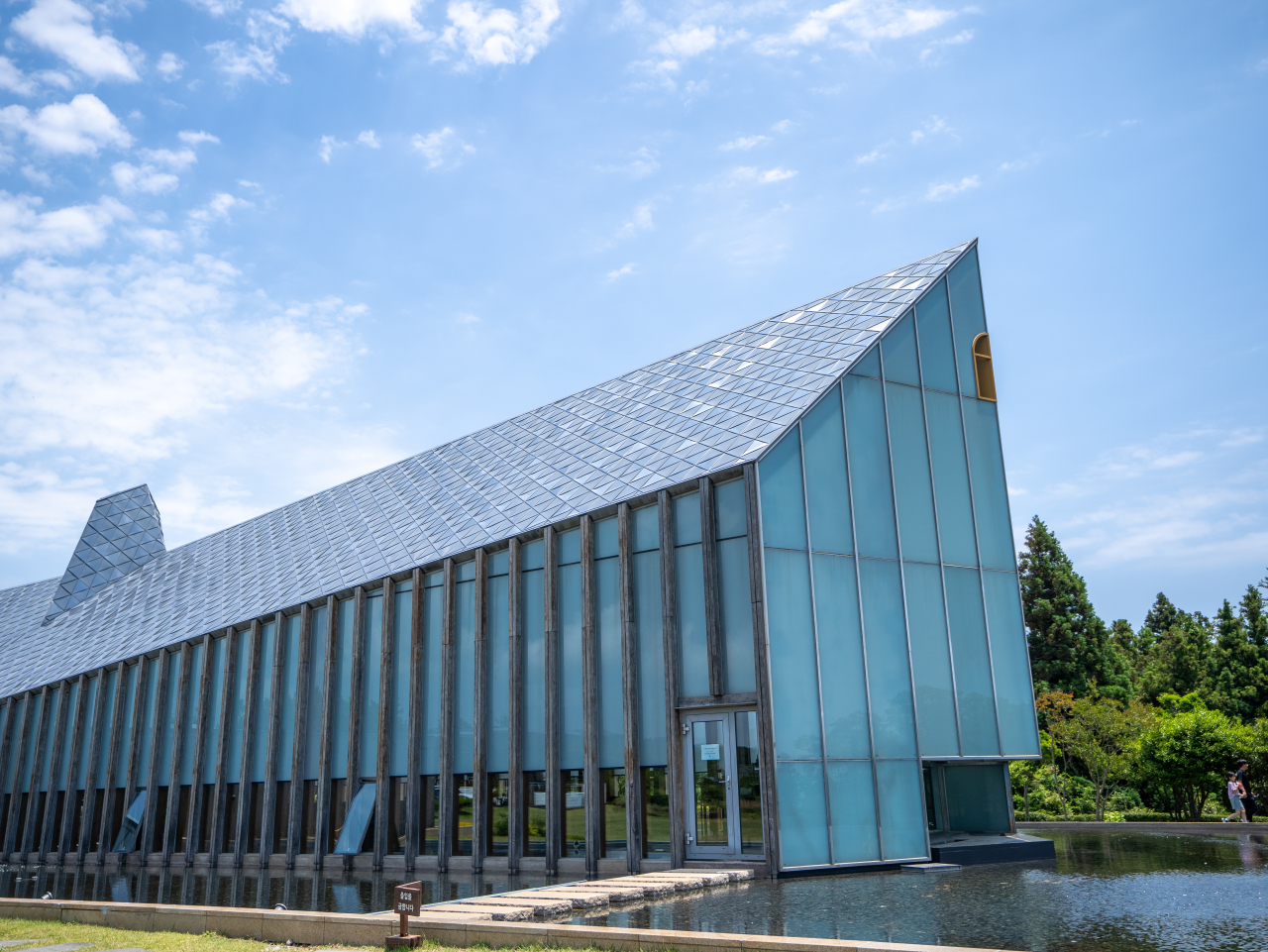
There’s a famous photo spot that many photographers visit for its architectural beauty blended into Jeju’s nature: Bangju Church, created by the world-renowned architect Itami Jun with Noah’s Ark as the motif.
The architecture—harmonizing with the green grass of the fields, Jeju’s blue sky, and the surrounding landscape—is truly one of a kind. Since this is also a place where many people actually worship, be sure to observe proper etiquette.
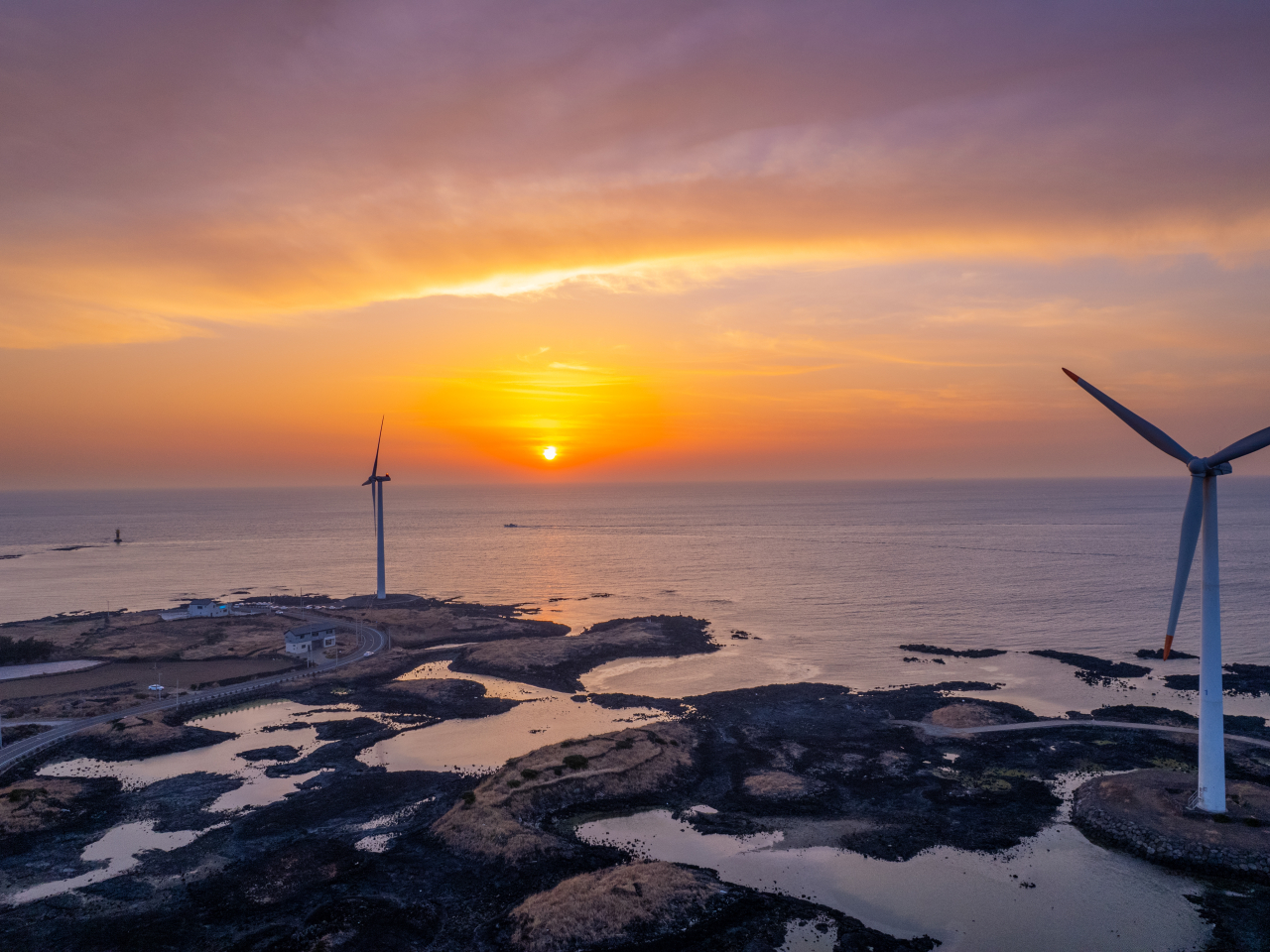
Take a drive along the Sinchang coastal road, where countless windmills greet you!
This place is already famous as a scenic drive with an exotic vibe. Recently, more electric bicycles and electric bikes have popped up, making it even easier to slow down and enjoy the view. If you drive the coastal road from Yongsu Port to Singyemul Park and end your day watching the setting sun, it will likely become an unforgettable memory.
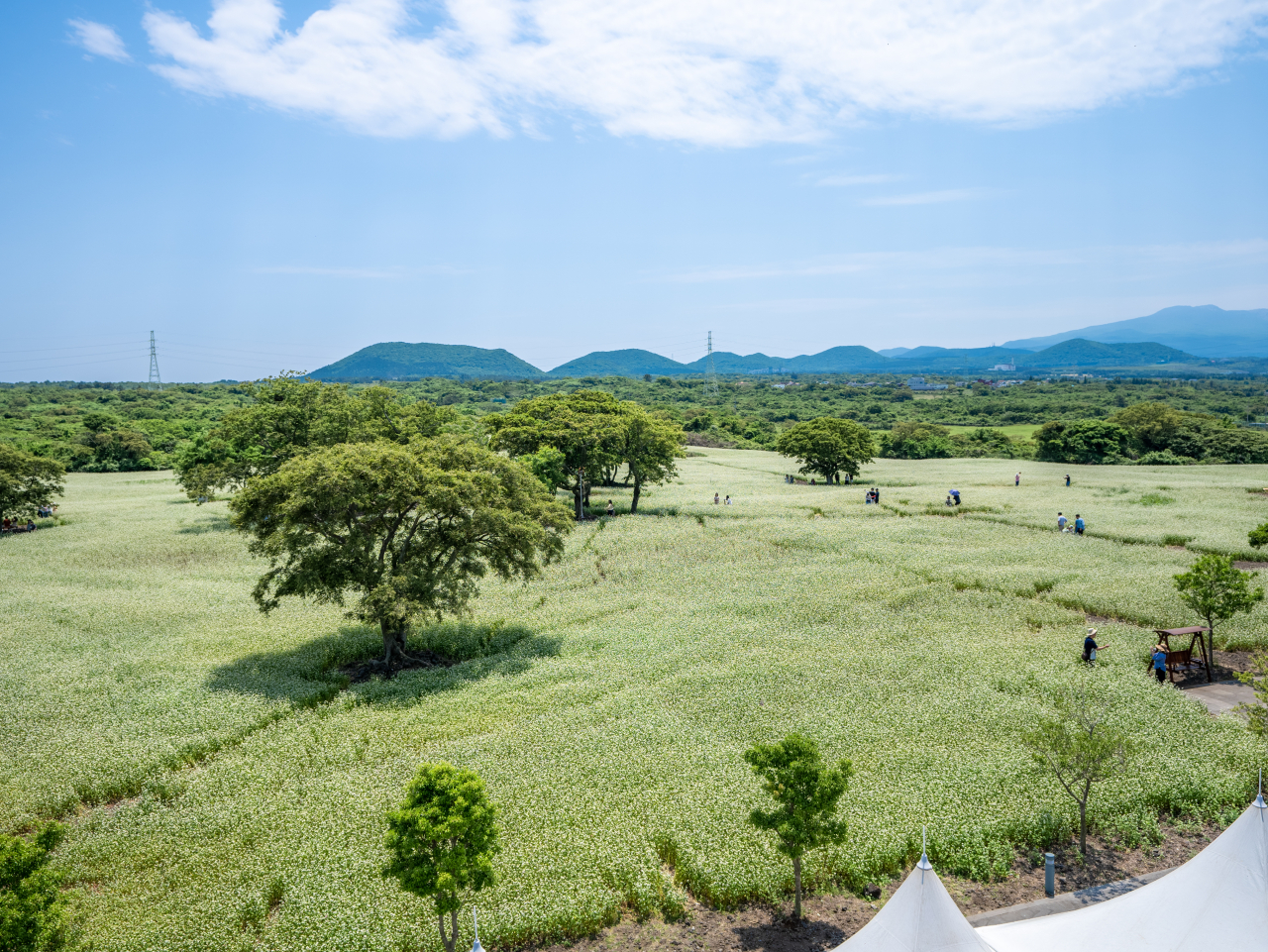
Buckwheat flowers—one of the few crops that can be double-cropped—bloom twice a year, in June and October. In early June, you can enjoy buckwheat festivals by visiting Gwangpyeong-ri in Hallasanarae Cheot Maeul and Wahoeul Buckwheat Village in Jocheon-eup. If you want to see tens of thousands of pyeong of buckwheat flowers blooming like snowflakes, this is a destination you shouldn’t miss.
<Recommended places for buckwheat festivals>
Gwangpyeong-ri, Hallasanarae Cheot Maeul, Wahoeul Buckwheat Village, Jocheon-eup
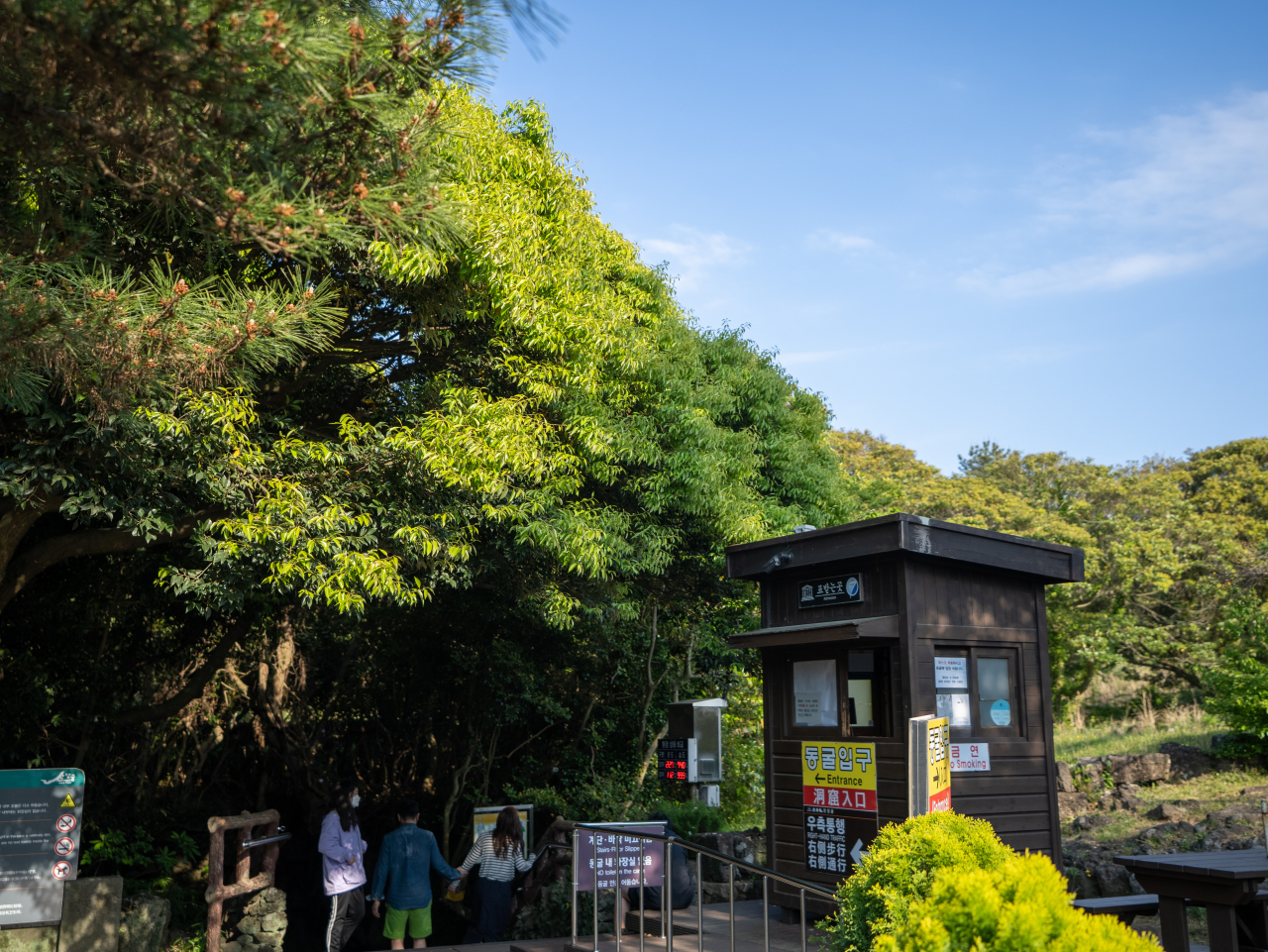
How about Manjanggul, a secret cave that stretches endlessly deep underground?
As soon as you step into Manjanggul, the cool air and its surprisingly massive scale will catch you off guard. It’s a huge lava tube—18 meters wide, 23 meters high, and about 7.4 km long. It stays cool enough to maintain an average temperature of 10°C even in midsummer, so visiting during the day is a great way to take a break from the heat.

제주살이 10년 차, 일상 속 여행을 기록하는 크리에이터입니다. 바다와 바람, 낯선 골목에 스며든 제주를 좋아하고, 그 안에서 느꼈던 순간들을 글과 사진으로 전하고 있어요. 여행지보다는 여행의 온도를 담는 일을 합니다.

Comments
1수국이랑 폭포 같이 넣으니까 동선이 너무 빡세진 않았어요. 대신 낮엔 진짜 더워서 카페 쉬는 시간 필수