Jeju Island, the country’s biggest tourism destination that used to welcome 20 million visitors a year, saw its visitor numbers drop during the COVID era—but it’s still undeniably Korea’s top travel city.
Many people come to Jeju dreaming of a healing getaway, but there’s one mistake people make most when planning a Jeju trip: thinking Jeju is a tiny island. In reality, Jeju is a very large island—about three times the area of Seoul. A poorly planned schedule might end up making you spend your precious trip almost entirely on the road.
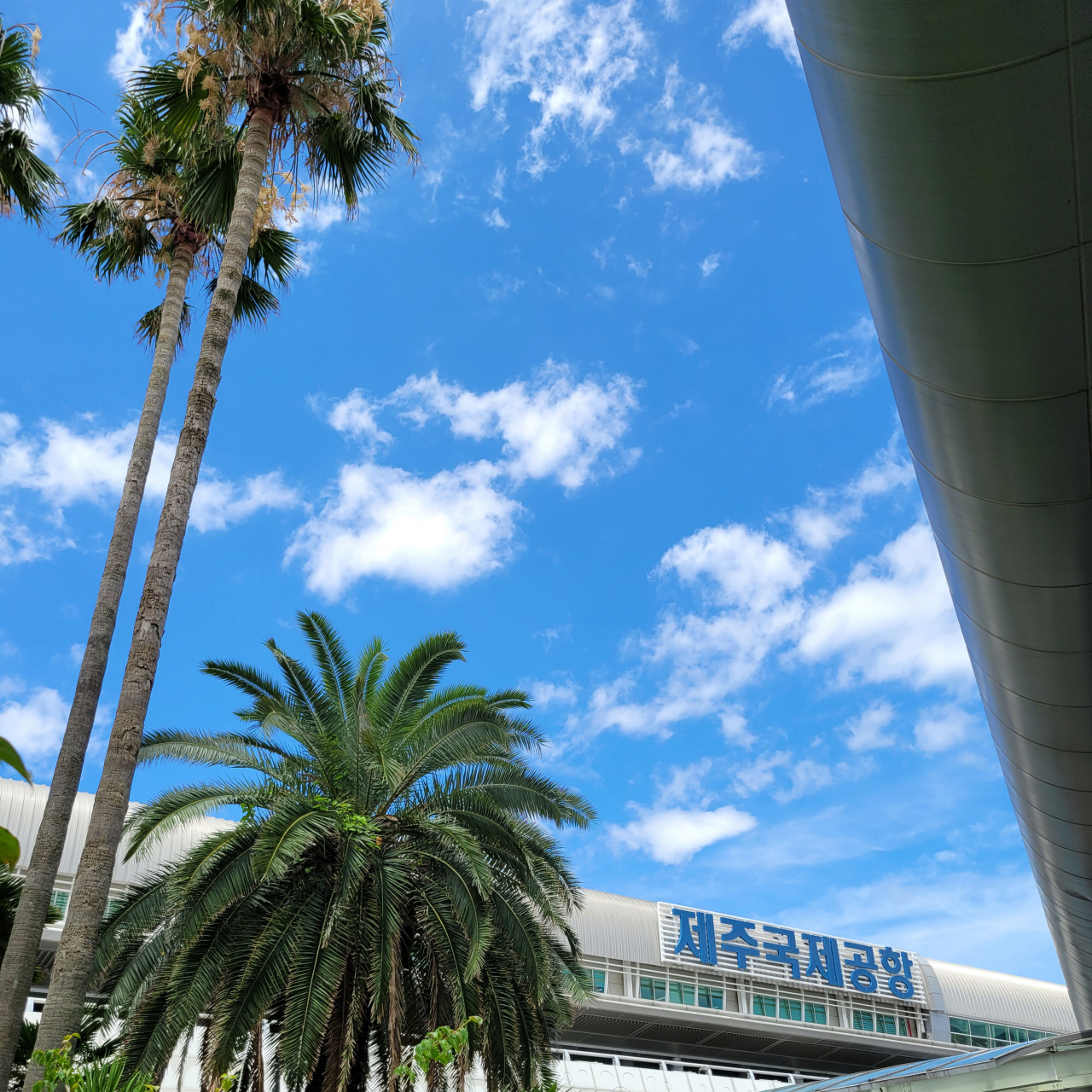
When we prepare for a Jeju trip, the first thing we do is probably search for information and gather resources. These days, countless tips overflow across all kinds of media, but it’s not easy to figure out which ones are “real” information. And because most people are researching precisely because they don’t know, they’re even more likely to fall for misinformation. Even as a Jeju local, when I look up Jeju travel info on the internet and SNS, I’ve seen so much nonsense that I can’t help but wonder if it’s even possible.
So today, I’m going to share high-level information that will help you plan your own Jeju travel schedule. If you know just this, Jeju travel won’t feel intimidating anymore.
Dividing the areas
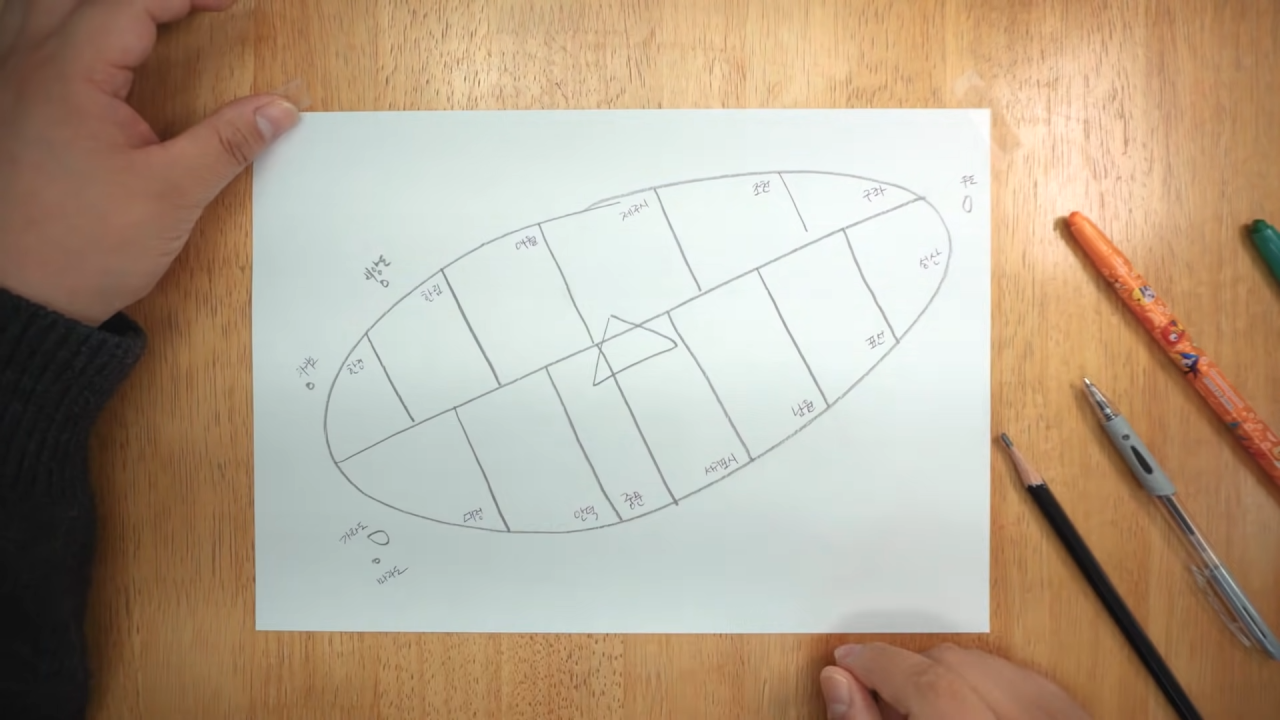
As mentioned earlier, Jeju is a huge island—about three times the area of Seoul. And just like we divide Seoul into districts like Gangnam-gu, Seocho-gu, Yeongdeungpo-gu, Yeouido-gu, and so on, you can also divide Jeju into simple areas.
First, just as Seoul is divided into Gangnam and Gangbuk using the Han River as a reference, Jeju can be divided into the north and the south using Hallasan (Mt. Halla) as the reference: Sanbuk (north of the mountain) and Sannam (south of the mountain). Until Jeju was promoted to a Special Self-Governing Province, it used to be divided into Sanbuk-myeon and Sannam-myeon; now it’s Jeju-si and Seogwipo-si. Even today, it’s easy to hear older Jeju grandmothers (halmang) still call them Sanbuk and Sannam.
In the middle of Sanbuk is Jeju-si, and in the middle of Sannam is Seogwipo-si. And the east side of Jeju-si and Seogwipo-si is what we call East Jeju, while the west side is what we call West Jeju.
On the west side of Jeju-si, there are three areas: Hangyeong-myeon, Hallim-eup, and Aewol-eup. You’ve probably heard of Hallim, where Hyeopjae Beach is, and Aewol-eup, where all the “hot places” are gathered. Hangyeong-myeon is home to Suwolbong, where you can look down at Chagwido, and to the beautiful nature of Jeoji-ri—but it’s less familiar for first-time visitors. Along with Daejeong-eup, Hangyeong-myeon is the only area in Jeju with a broad plain, so it has long been known for having many wealthy farmers. Because farmers there have relatively high incomes and strong local influence, it tends to have fewer tourism-oriented areas.
Next, on the right side of Jeju-si are Jocheon-eup and Gujwa-eup. Jocheon-eup has the wonderful tourist spot of Hamdeok, but due to satellite towns that formed to accommodate Jeju’s growing population, it’s now more accurate to describe it as a living space for locals rather than a tourist area. Gujwa-eup is the hottest part of East Jeju these days. With lots of charming spots like Woljeong-ri and Songdang-ri, it’s a place that young travelers keep coming back to.
In the middle of Sannam is Seogwipo-si, and on the west side of Seogwipo-si there are three areas: Daejeong-eup, Andeok-myeon, and Jungmun. Originally, Jungmun is part of eastern Seogwipo, so it isn’t typically separated as its own area—but since it’s a tourism special zone, I recommend treating it as a separate area. Daejeong-eup is where Marado, Songaksan, and Gotjawal Provincial Park are located. With outstanding natural scenery, it has many provincial parks. Andeok-myeon embraces Sanbangsan, Yongmeori Coast, and Sagye Beach. Among them, Yongmeori Coast will offer breathtaking scenery you’ve never seen anywhere else.
Jungmun was developed as the Jungmun Tourist Complex in 1978 and became famous as Korea’s top honeymoon destination—a place countless newlyweds visited, and that remains their dream spot even now. Because it’s a planned area, it has plenty of sights, activities, and well-prepared accommodations.
On the east side of Seogwipo-si are Namwon-eup, Pyoseon-myeon, and Seongsan-eup. Seongsan-eup has Seongsan Ilchulbong, designated by UNESCO, and Pyoseon has a folk village. Namwon doesn’t have one single famous attraction that immediately comes to mind, but it has many hotels, pensions, and resort facilities. Namwon is also the area with the best weather in Jeju. Since ancient times, it’s had abundant sunshine and less wind, so tangerines grew well there—and their taste is exceptional, so even within Jeju, Namwon tangerines are the most preferred. The climate is so good and the area so livable that even Jeju people want to spend their retirement years in Namwon.
Calculating travel time
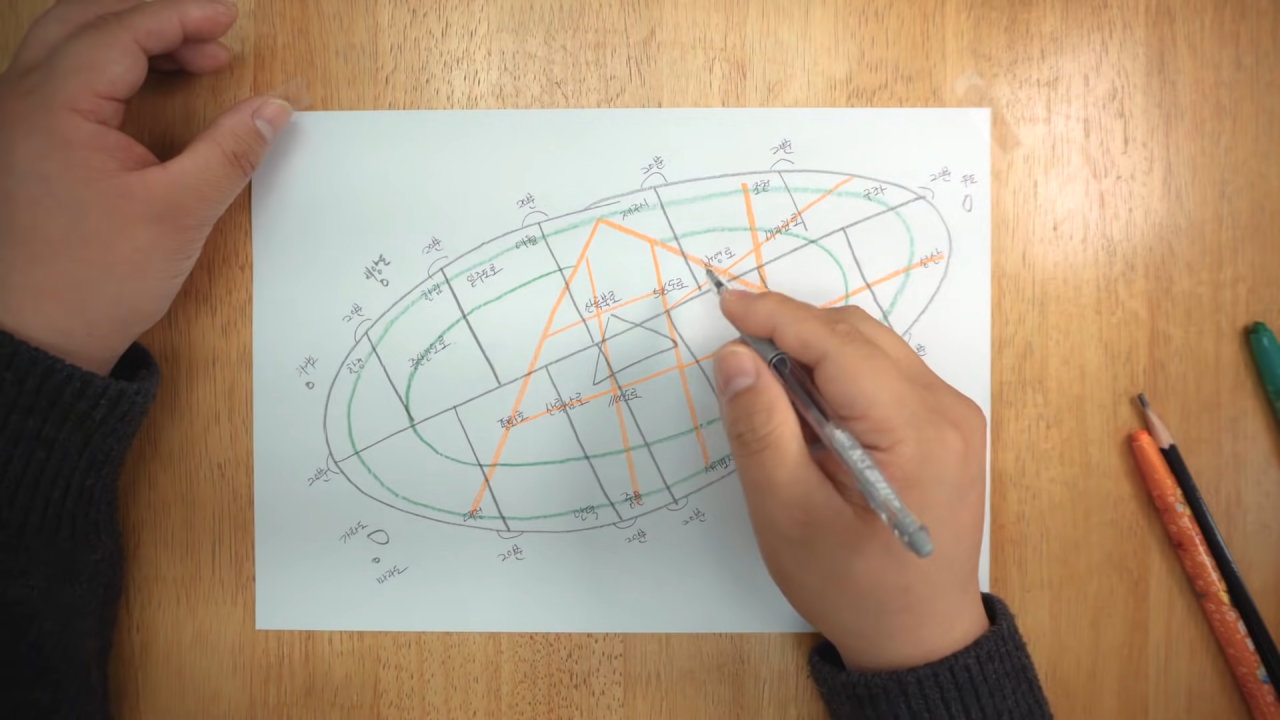
Now that we’ve divided all of Jeju into areas, let’s learn how to estimate travel time between them. You’ve probably heard of the Ilju Road, the loop road that circles the island along the coast.
Ilju Road is about 240 km. Even if you drive at 60 km/h, it takes about 4 hours—so it requires a lot of travel time. When I first traveled to Jeju 10 years ago, I thought driving around the island would be easy. So on that first trip, I did an absurd route: eating in Andeok-myeon, then driving for an hour to have coffee in Namwon. On that short 2-night, 3-day trip, I ended up driving a total of 1,000 km. Now, after living in Jeju for 6 years, I can’t even imagine doing that.
When moving from one area to another in Jeju, it generally takes about 20 minutes. For example, from Jeju-si to Aewol-eup immediately to the west takes 20 minutes; to the next area, Hallim-eup, it’s 40 minutes; and to Hangyeong-myeon, about 1 hour. The east side is similar: to Jocheon-eup is 20 minutes, to Gujwa-eup is 40 minutes, and to Seongsan Ilchulbong is about 1 hour. If you check on navigation, you’ll get very similar times.
But even when moving within Aewol-eup itself, it can take 20 minutes. Because Jeju’s areas are long, stretching from Hallasan down to the coast, you should think of the minimum travel distance as 20 minutes.
How to build your schedule
When planning your trip, it’s extremely important to reduce travel time and create an efficient route. Based on what I explained above, choose the places you want to go and calculate the travel time. For example, imagine you had a delicious breakfast at a brunch cafe in Aewol-eup. Then you search hard on YouTube and Instagram for your next hot place—and you find two options: one is a cafe at Hyeopjae Beach, and the other is a cafe at Woljeong-ri Beach. From Aewol-eup to the cafe at Hyeopjae Beach takes 20 minutes. But to the cafe at Woljeong-ri Beach takes about 1 hour. Unless it’s a place you absolutely must visit even after spending an extra 40 minutes, if the overall value is similar, choosing the cafe at Hyeopjae Beach will make for a more sensible and comfortable trip.
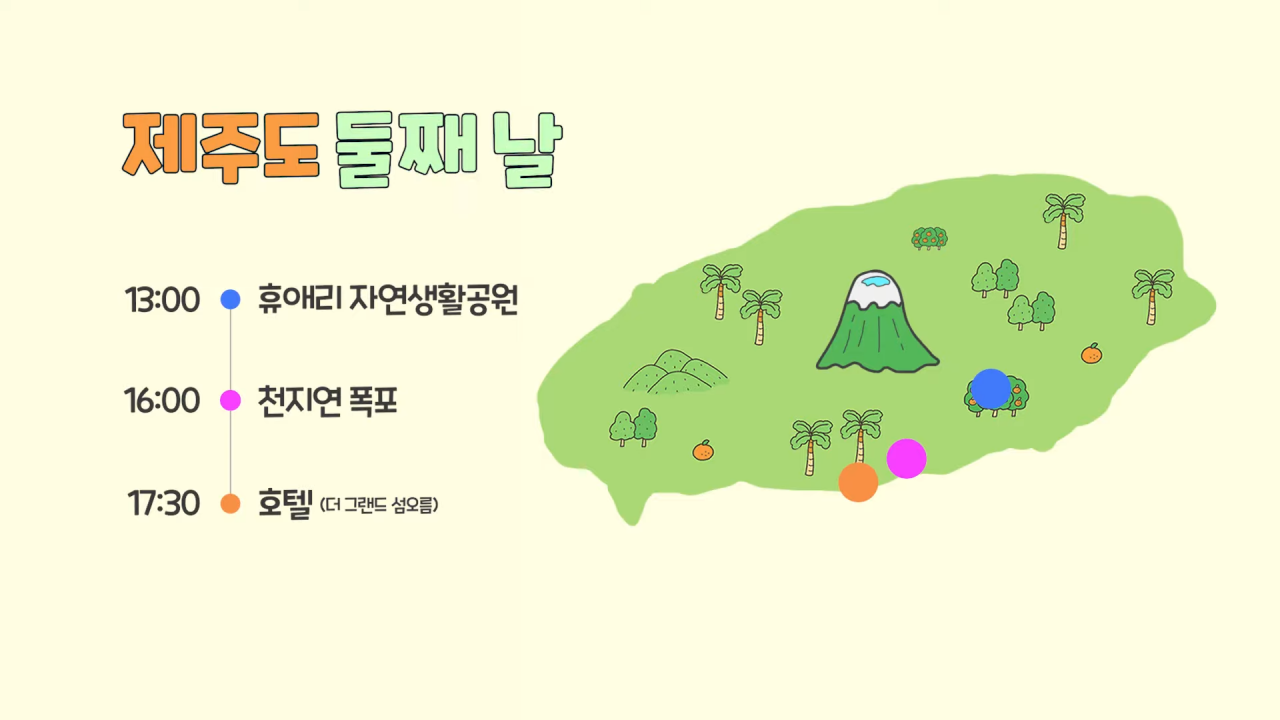
The video below is one I made for those who dream of traveling to Jeju, and it helps you plan a Jeju itinerary.
Seeing that it has already surpassed 500,000 views, it seems there are still many people for whom Jeju travel has felt like a tough labor-filled moment.
I sincerely pray that every traveler who comes to Jeju will have a happy Jeju trip.

제주살이 10년 차, 일상 속 여행을 기록하는 크리에이터입니다. 바다와 바람, 낯선 골목에 스며든 제주를 좋아하고, 그 안에서 느꼈던 순간들을 글과 사진으로 전하고 있어요. 여행지보다는 여행의 온도를 담는 일을 합니다.

Comments
8다음주 가족여행으로 3박4일 갈 예정입니다.숙소는 중문인데 이동계획을 어떻게 짜야할지 고민이 많았는데 도움이 될 것 같습니다.
♡♡♡♡
오오 좋은정보 감사드립니다
좋은 정보 감사합니다
@진규용 감사합니다. 행복한 여행되세요~ 😊
제주도여행을 수십번 가지만 매번 일정짜기가 젤 어려왔는데...설명을 해주신대로 짜면 수원할듯합니다.꿀팁 감사해요~^^
@김혜숙🌾 감사합니다. 계획 잘 세우시고 즐거운 여행되세요.
최고입니다!!!!!