425km
There’s a trail on Jeju that’s even longer than the distance from Seoul to Busan. It’s the Jeju Olle Trail, made up of 26 routes in total. Today’s story is about an Olle journey of playing, resting, and walking.
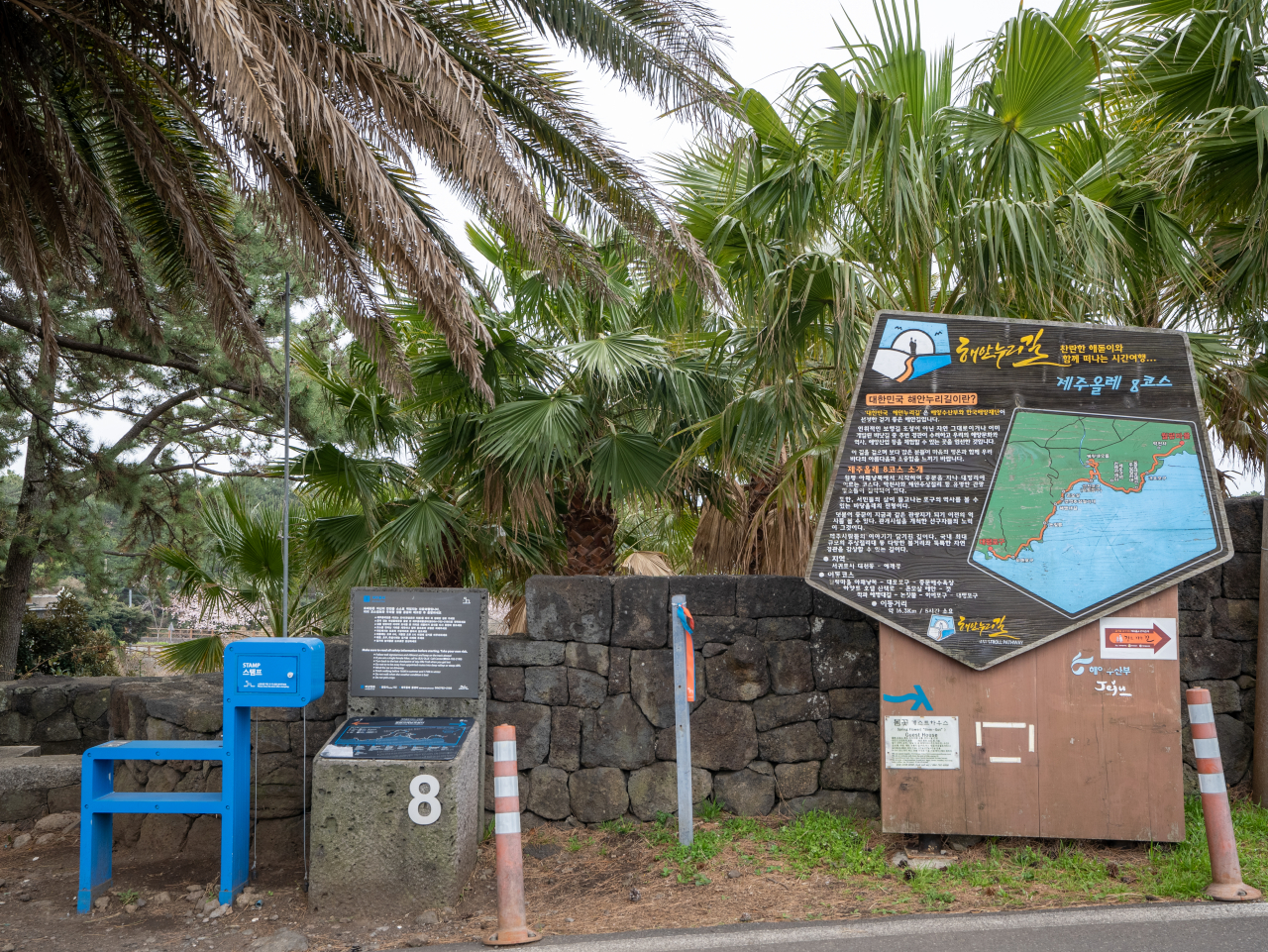
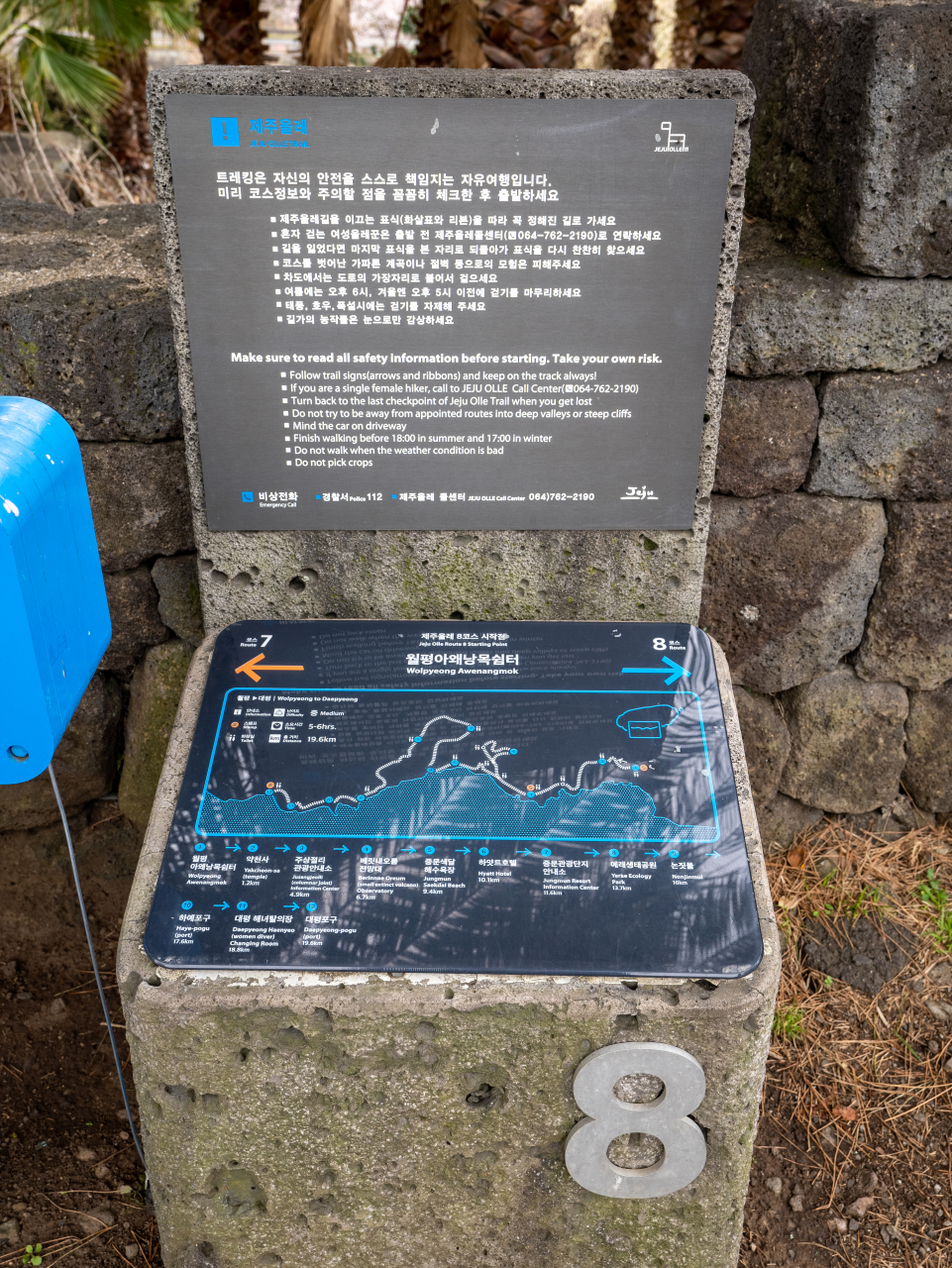
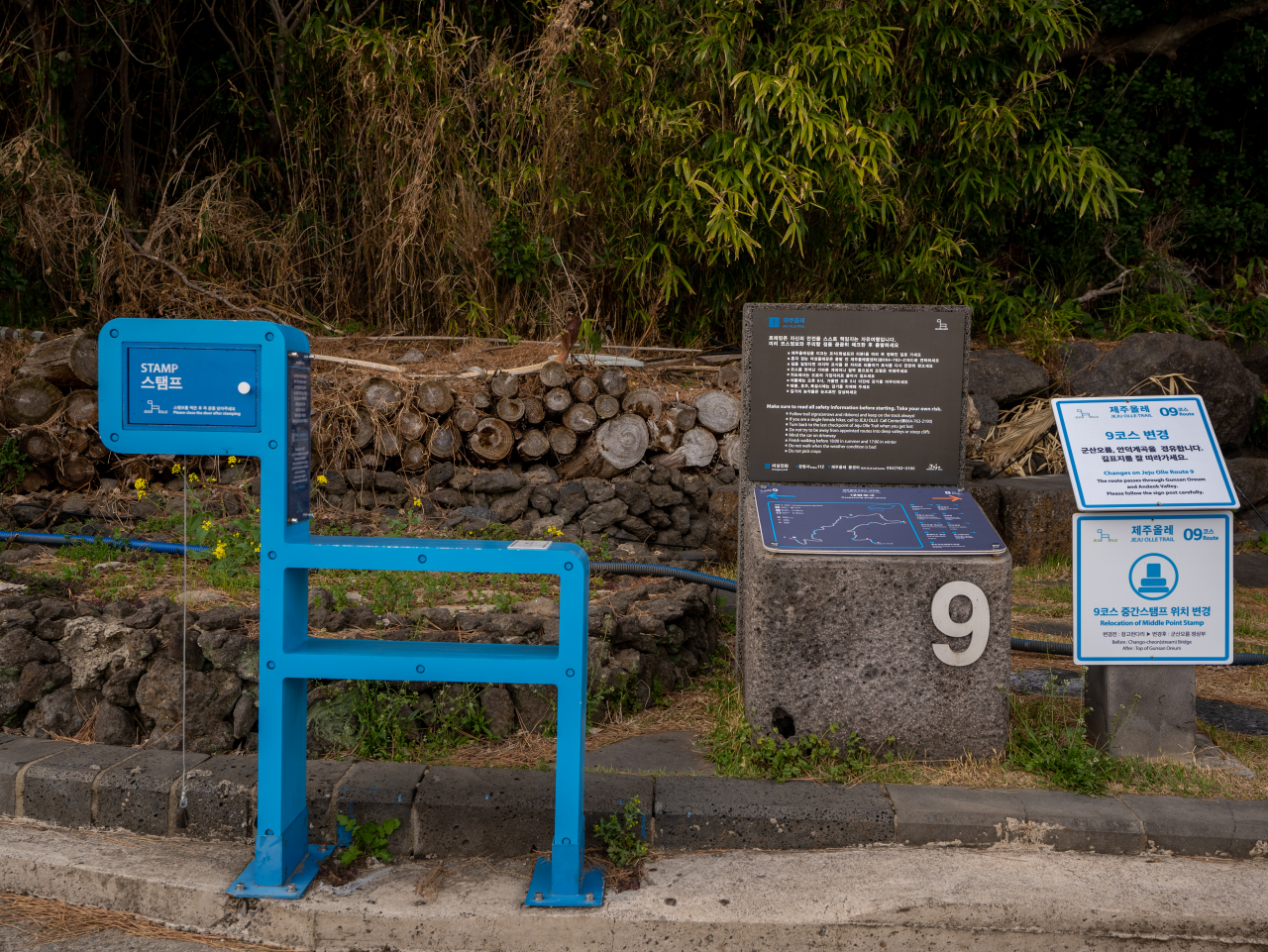
We came to Wolpyeong Village to walk Olle Trail Route 8—perfect for spring, or rather, a route you simply must walk in this season. It’s a course of roughly 20 km, walking from Wolpyeong Village through Jungmun and Yerae to Baksubijeong in Daepyeong-ri.
After helping the kids get to school and getting ready, it was already 10 a.m.
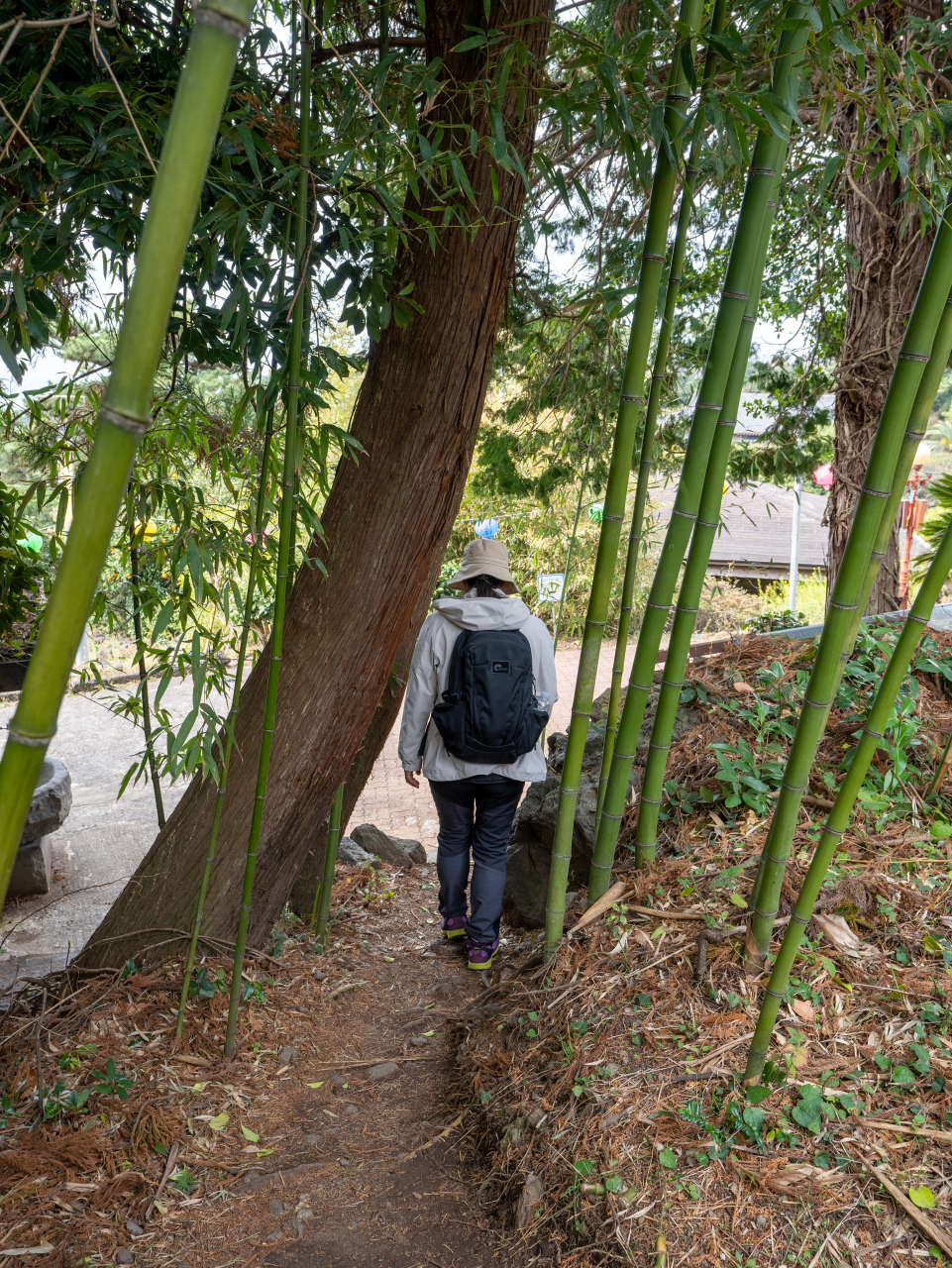
We started walking along the trail. Before long, we spotted Daejeok Gwangjeon, the largest Buddhist hall in the East.
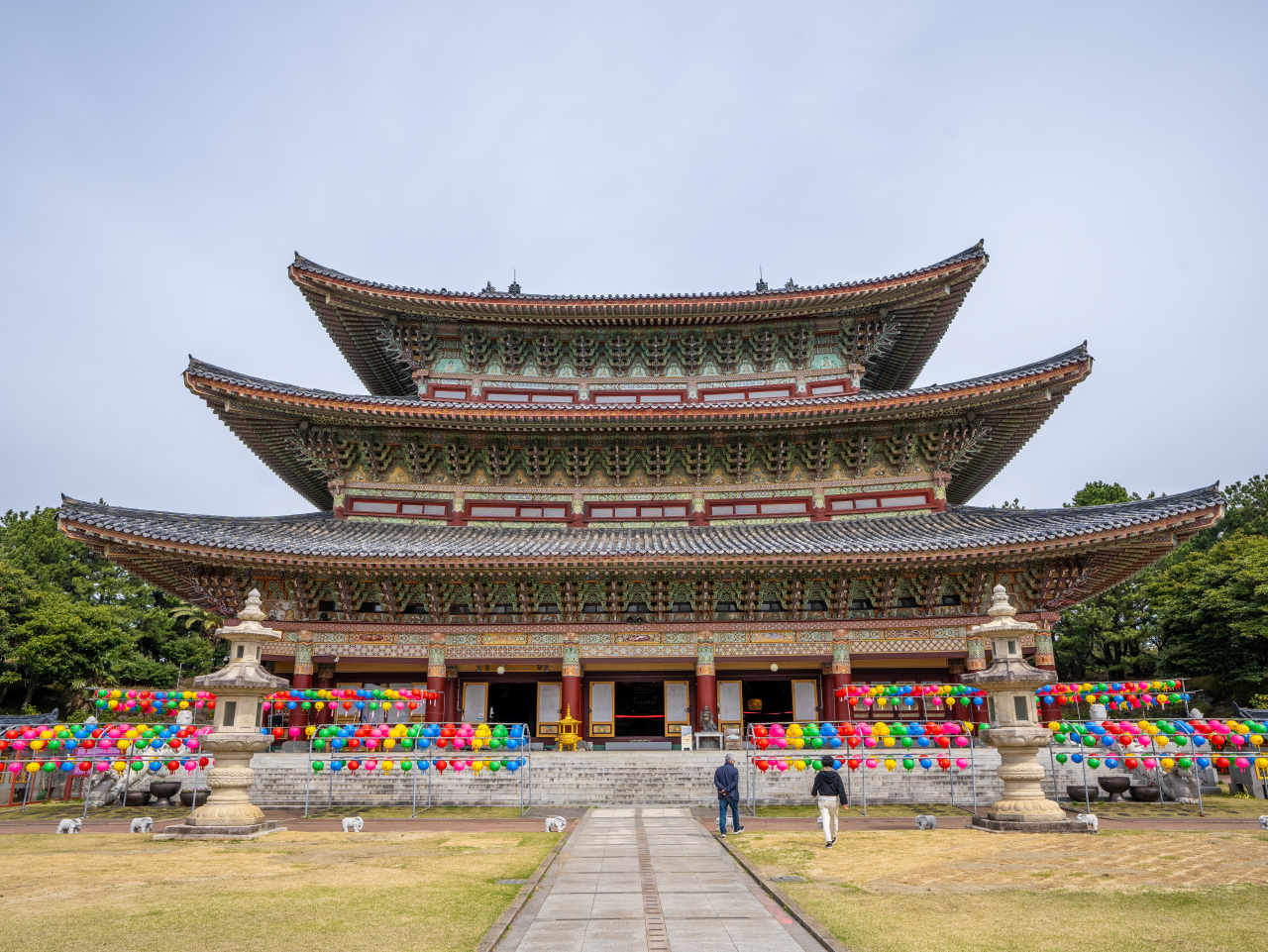
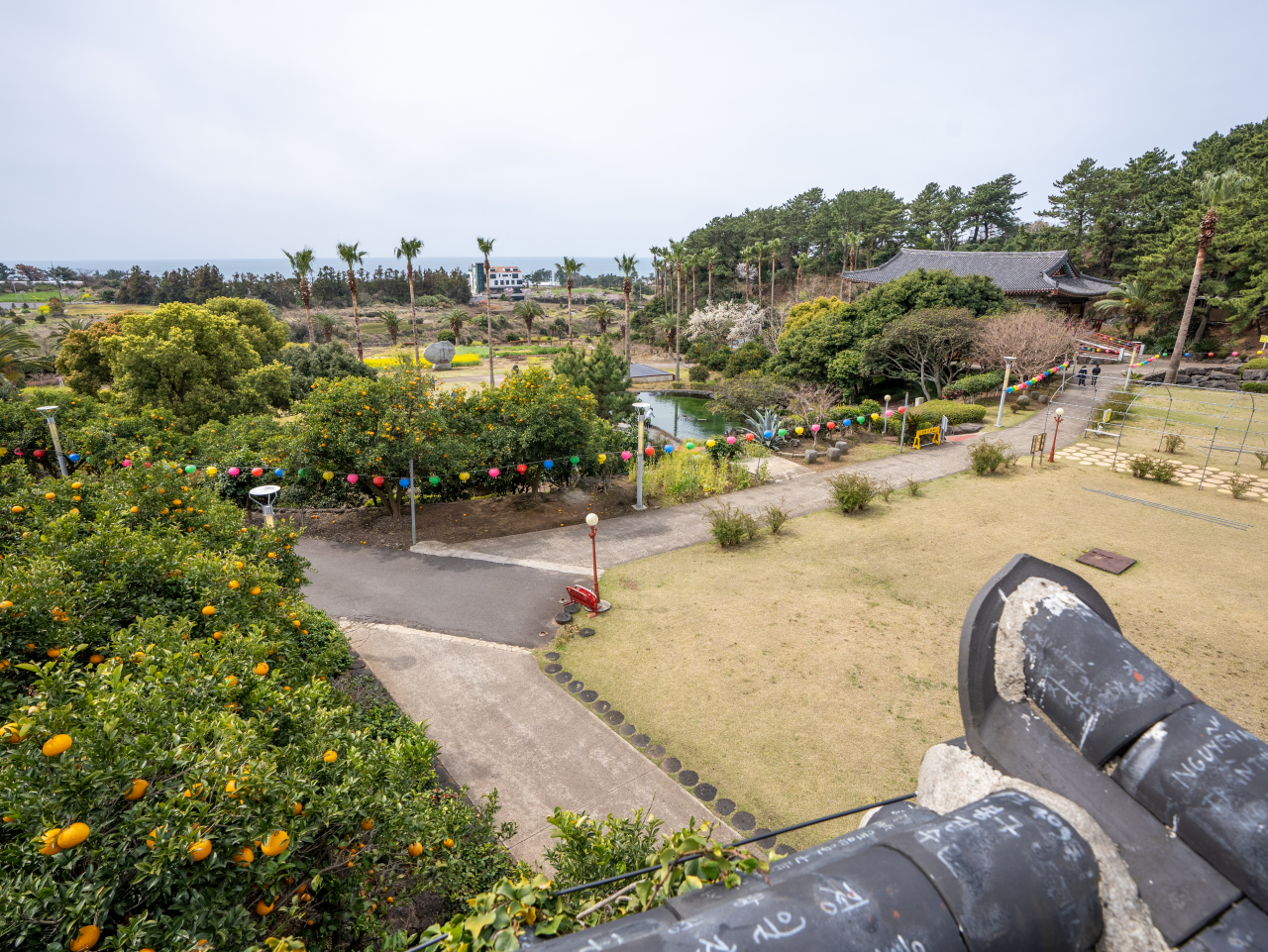
This is Yakcheonsa, well-known as an “exotic” photo spot. At the entrance to the temple there’s a pond that never dries up year-round, with mineral spring water bubbling up—hence the name Yakcheonsa. If you take a photo with the large palm trees below the pond and the temple in the background, it feels like you’re in Southeast Asia.
After passing Yakcheonsa and heading down toward the sea along Naecheon Stream, we came to Daepo Port.
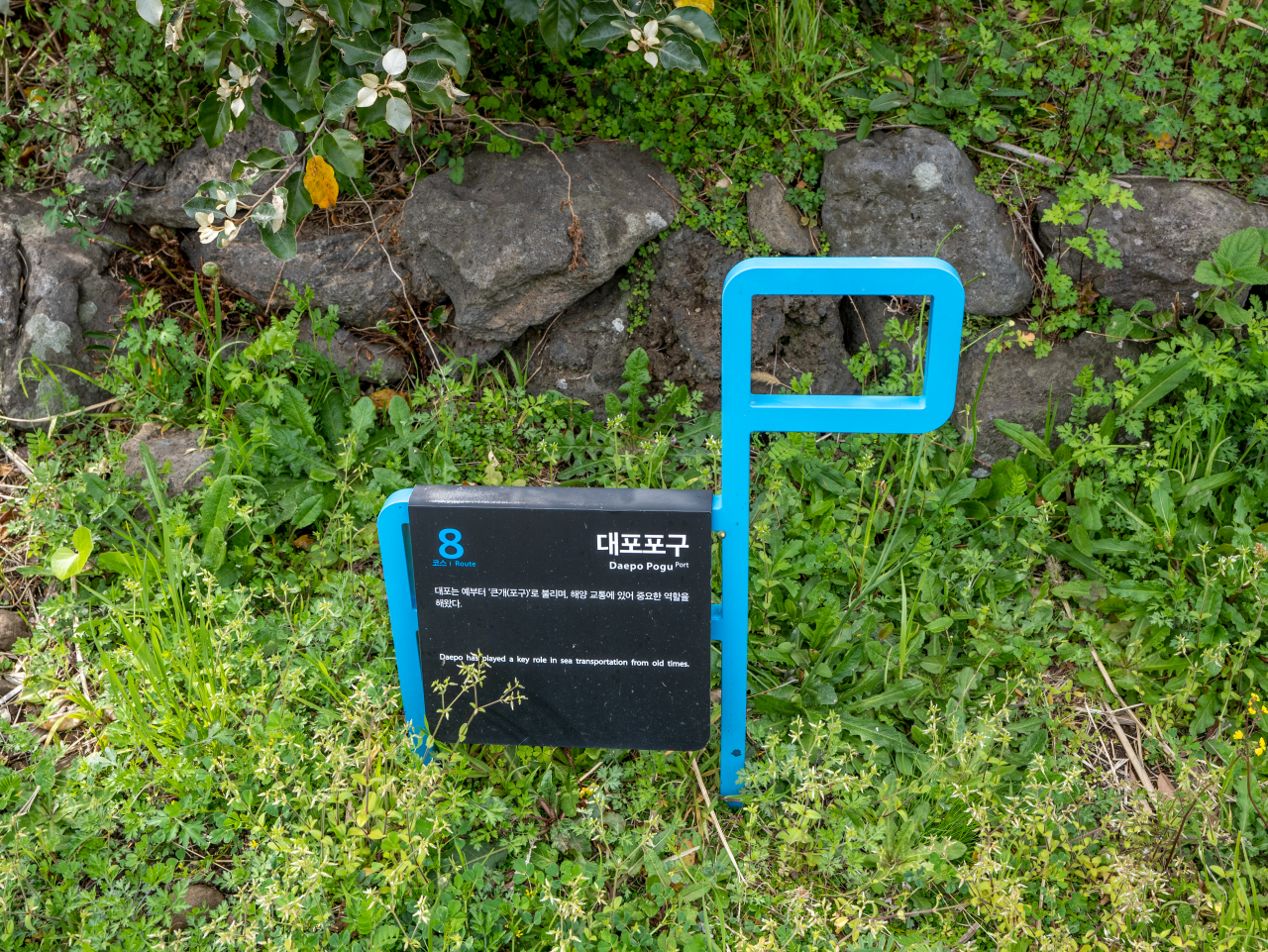
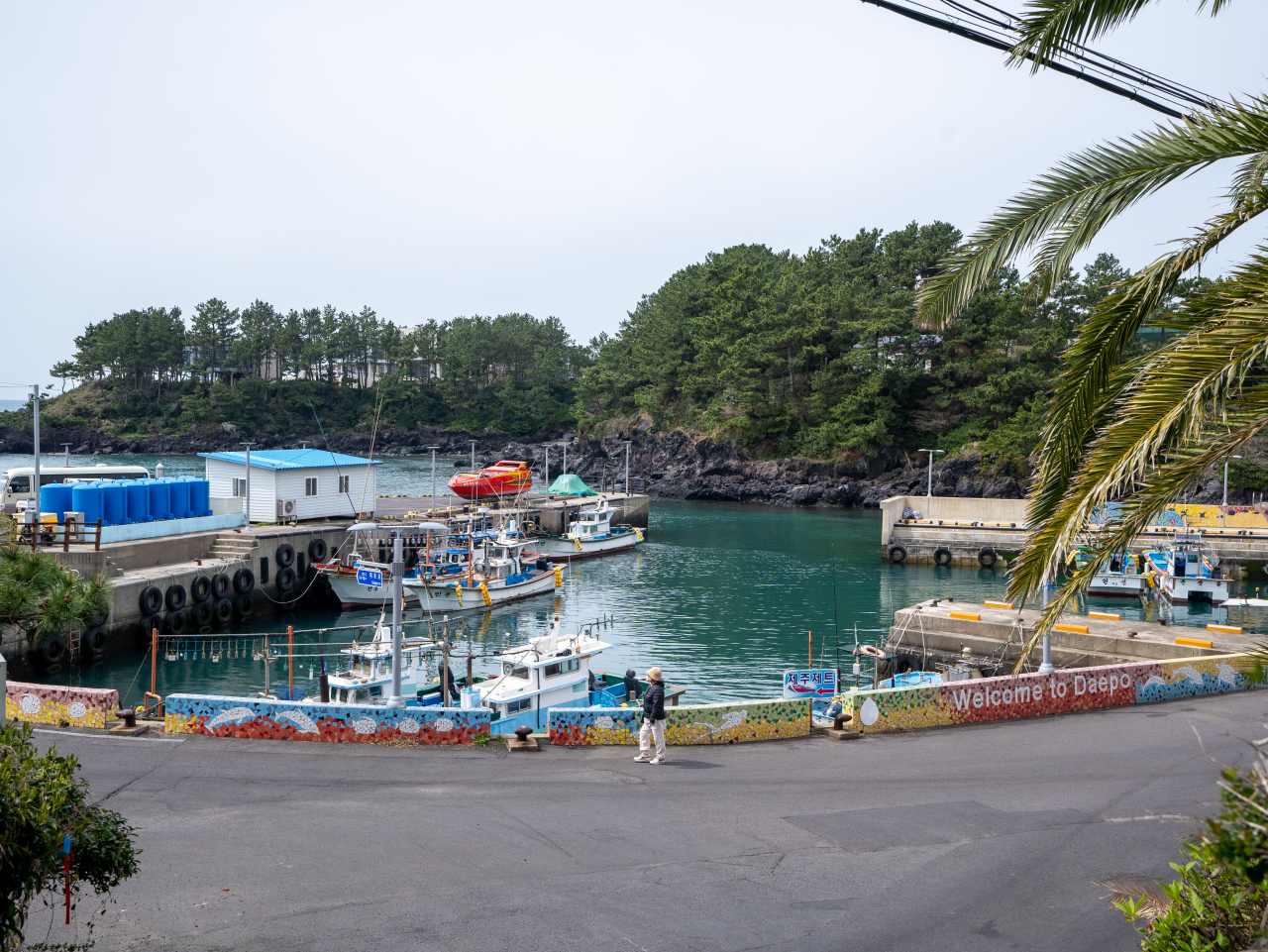
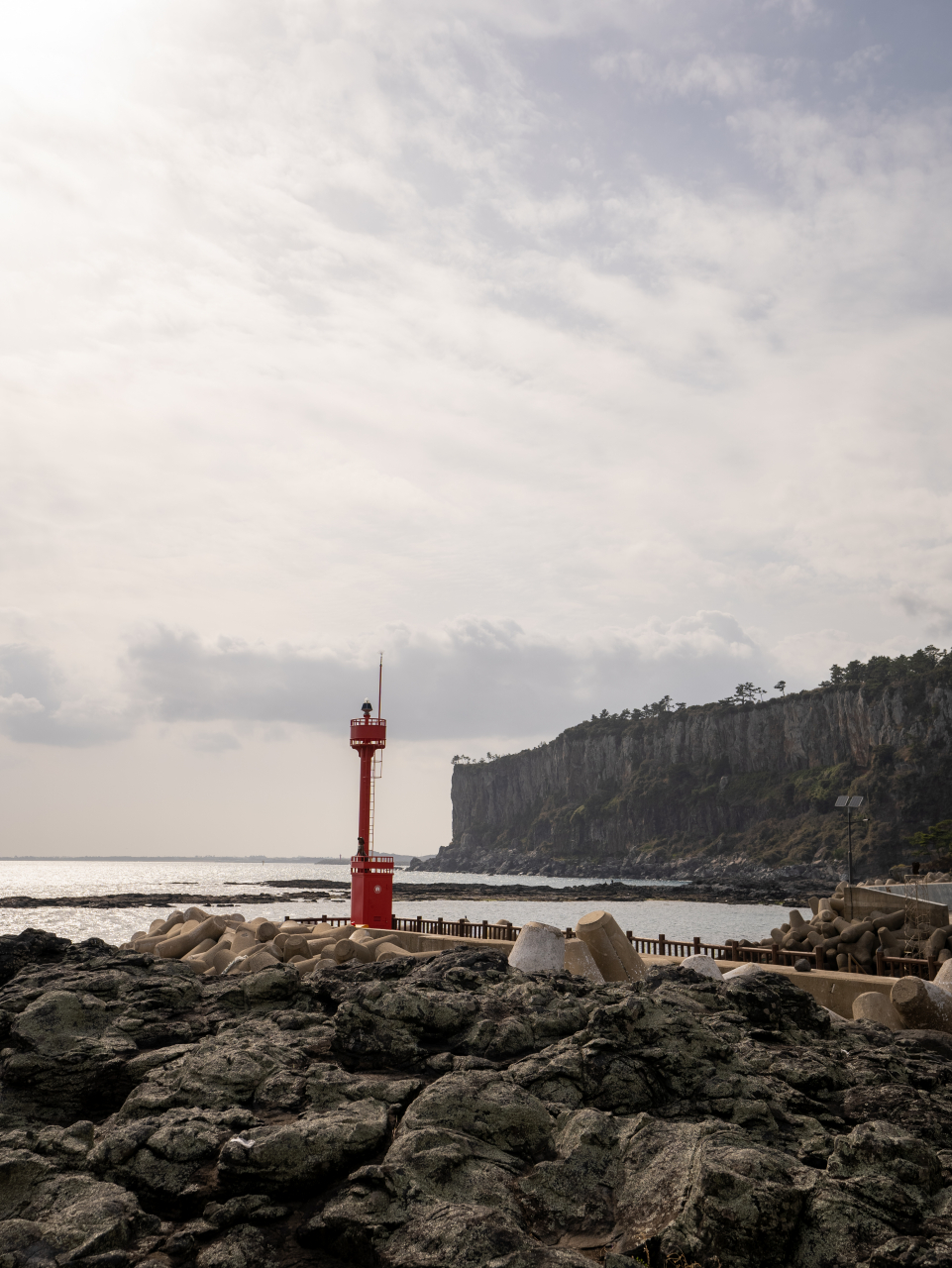
If you imagine a tiny fishing village from a story, it might look like Daepo Port. I’d always driven past this area, but it was my first time coming all the way down to the port. When you get out of the car and walk on your own two feet, Jeju shows you a completely different side.
From the Jungmun stadium area, an ecological park stretches along the coastline. Enjoying the well-maintained path, we eventually reached the columnar joints.
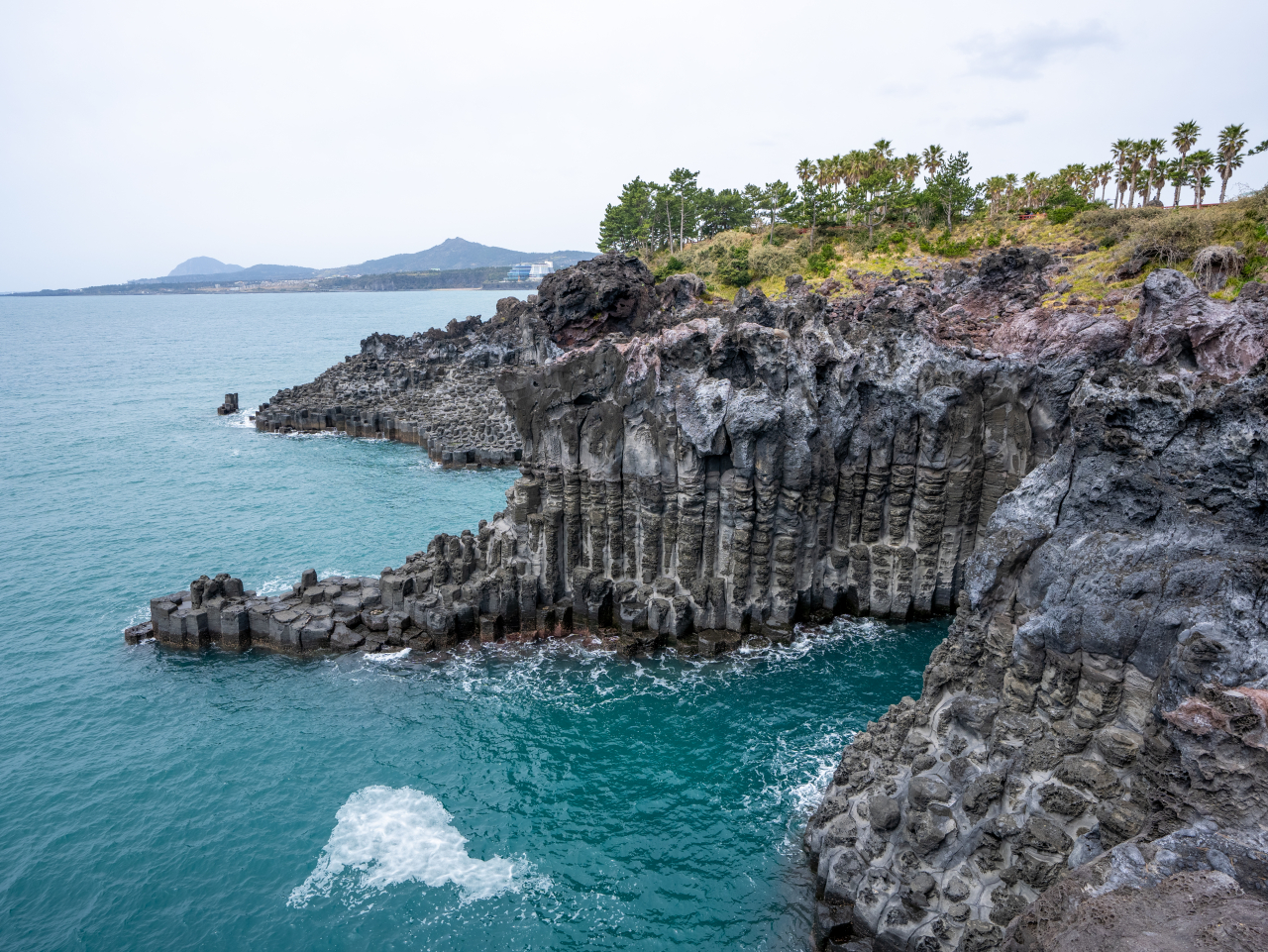
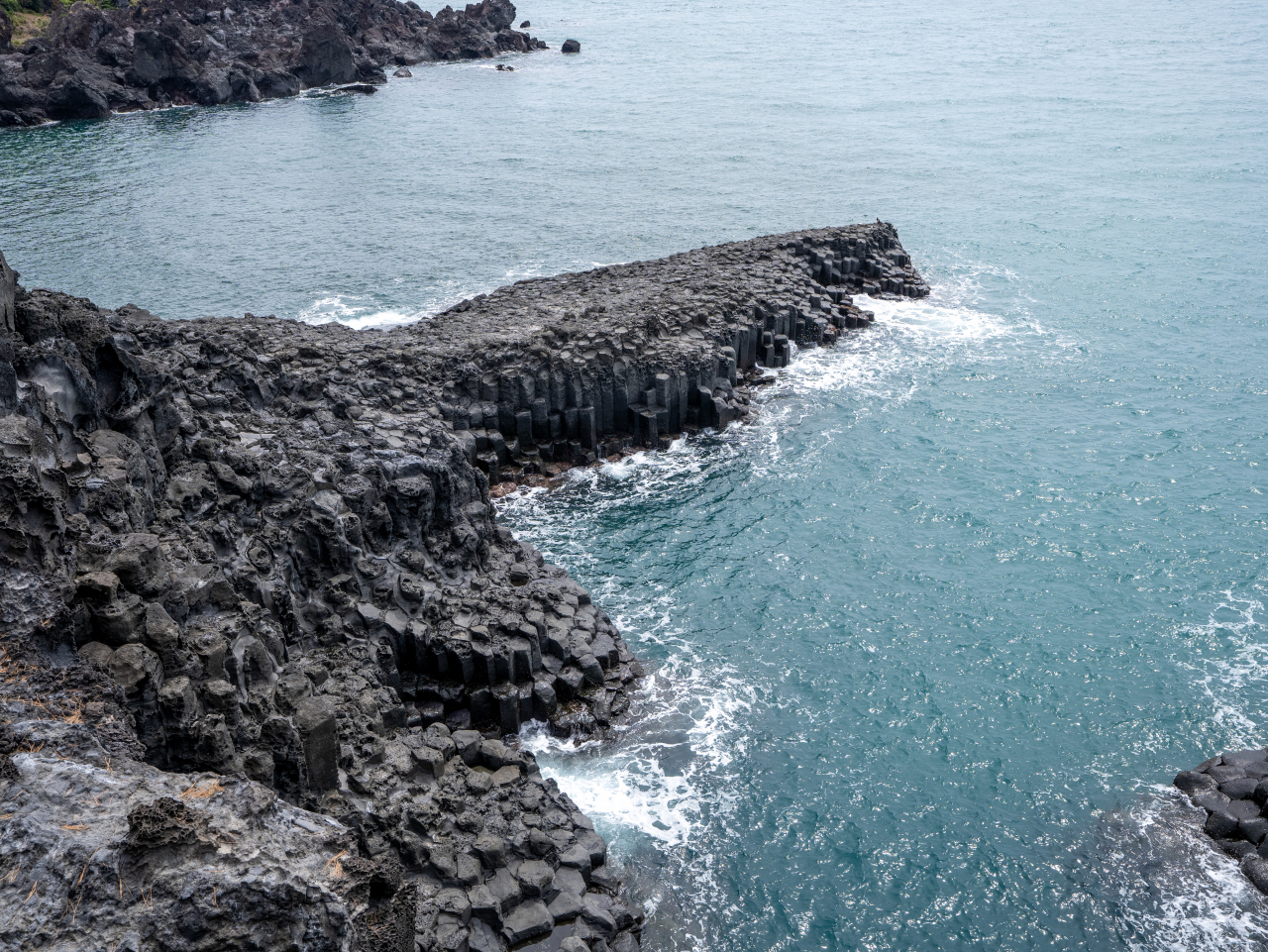
Hexagonal stone columns formed when lava flowed into the sea and cooled rapidly—one glance is enough to captivate you. Resembling a beehive or even a musical instrument, the columnar joint cliffs offered both the grandeur and the exquisite precision of nature.
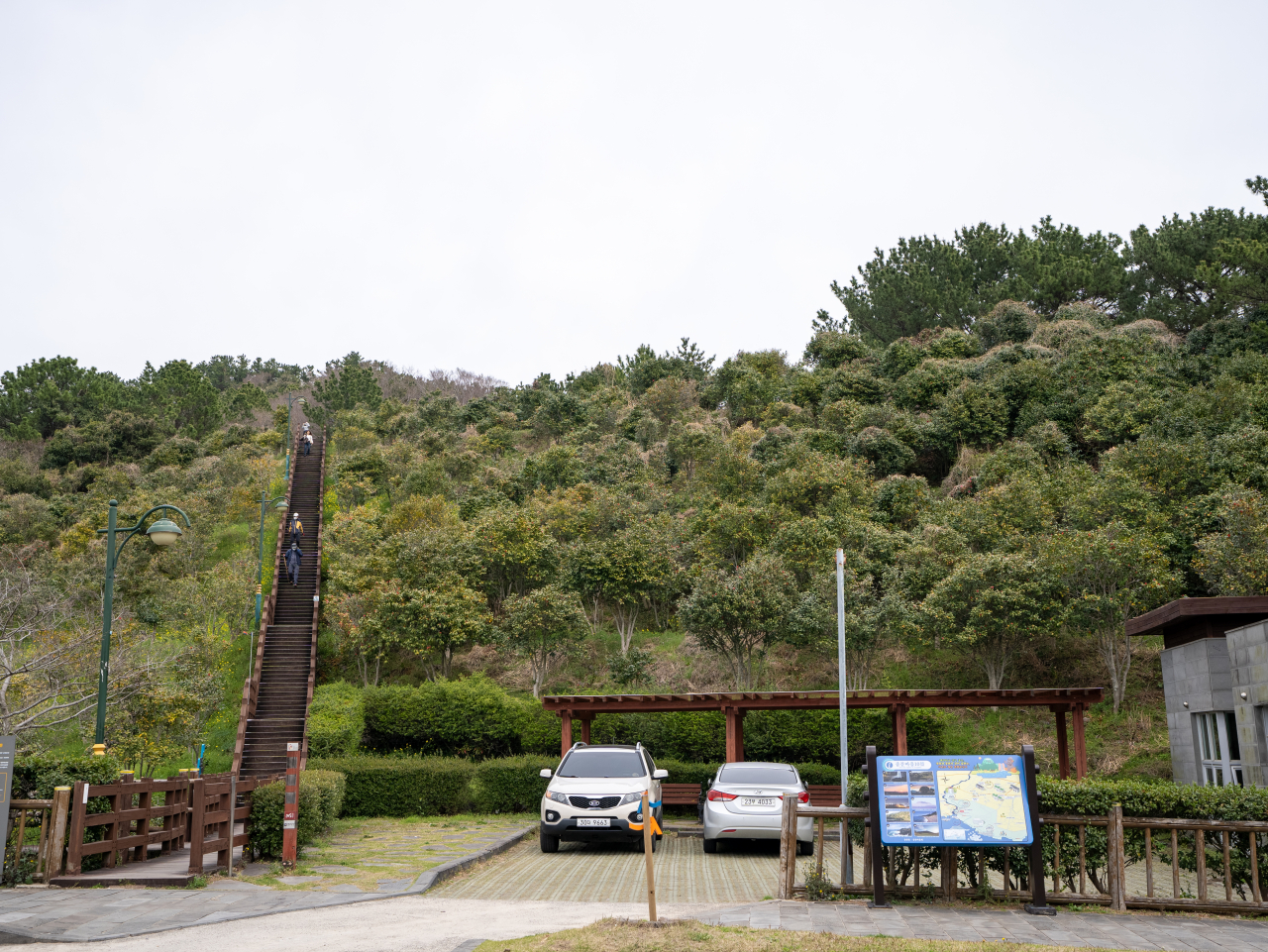
After going around Beritnae Oreum and entering the Jungmun Tourist Complex, we left the Olle route briefly and headed to Eongdeongmul Valley, where bright yellow canola flowers were in full bloom.
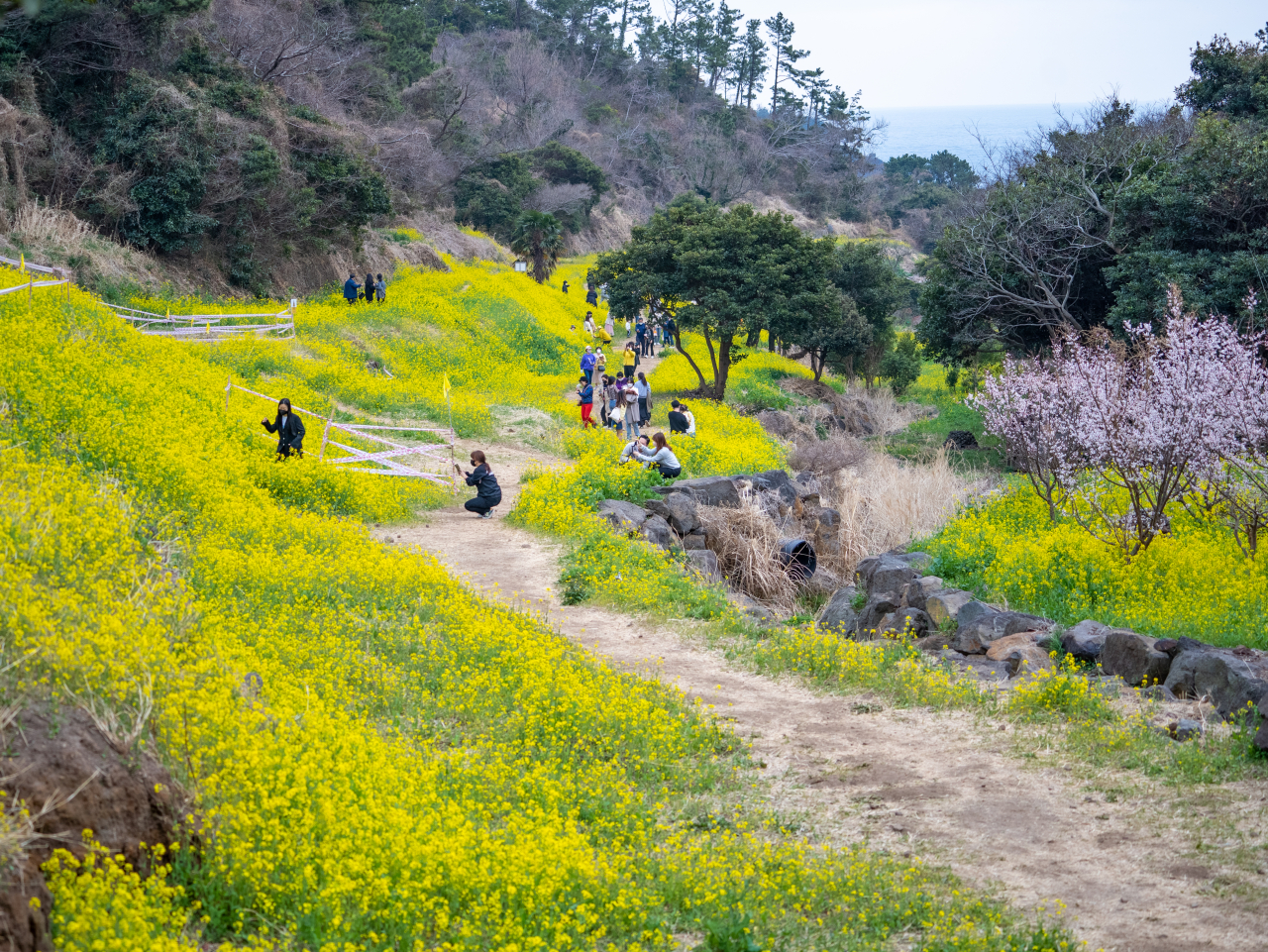
This place, with canola flowers stretching along the valley, is best visited right now. Canola blossoms, a symbol of Jeju spring! It’s no exaggeration to say people come to Jeju at this time just to see them. Together with the next stop, Yerae Ecological Park, it’s exactly why you should walk Olle Trail Route 8 in spring.
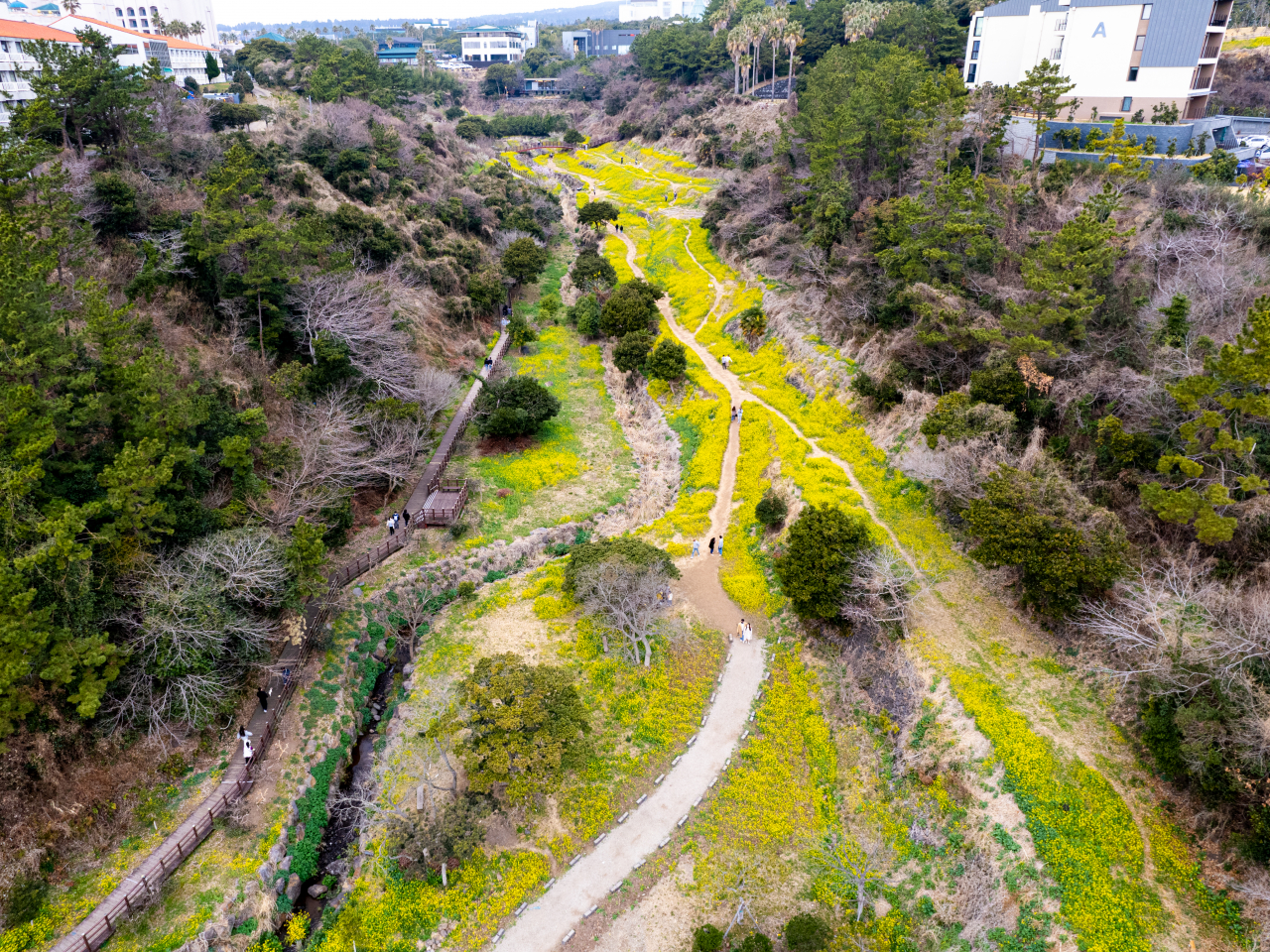
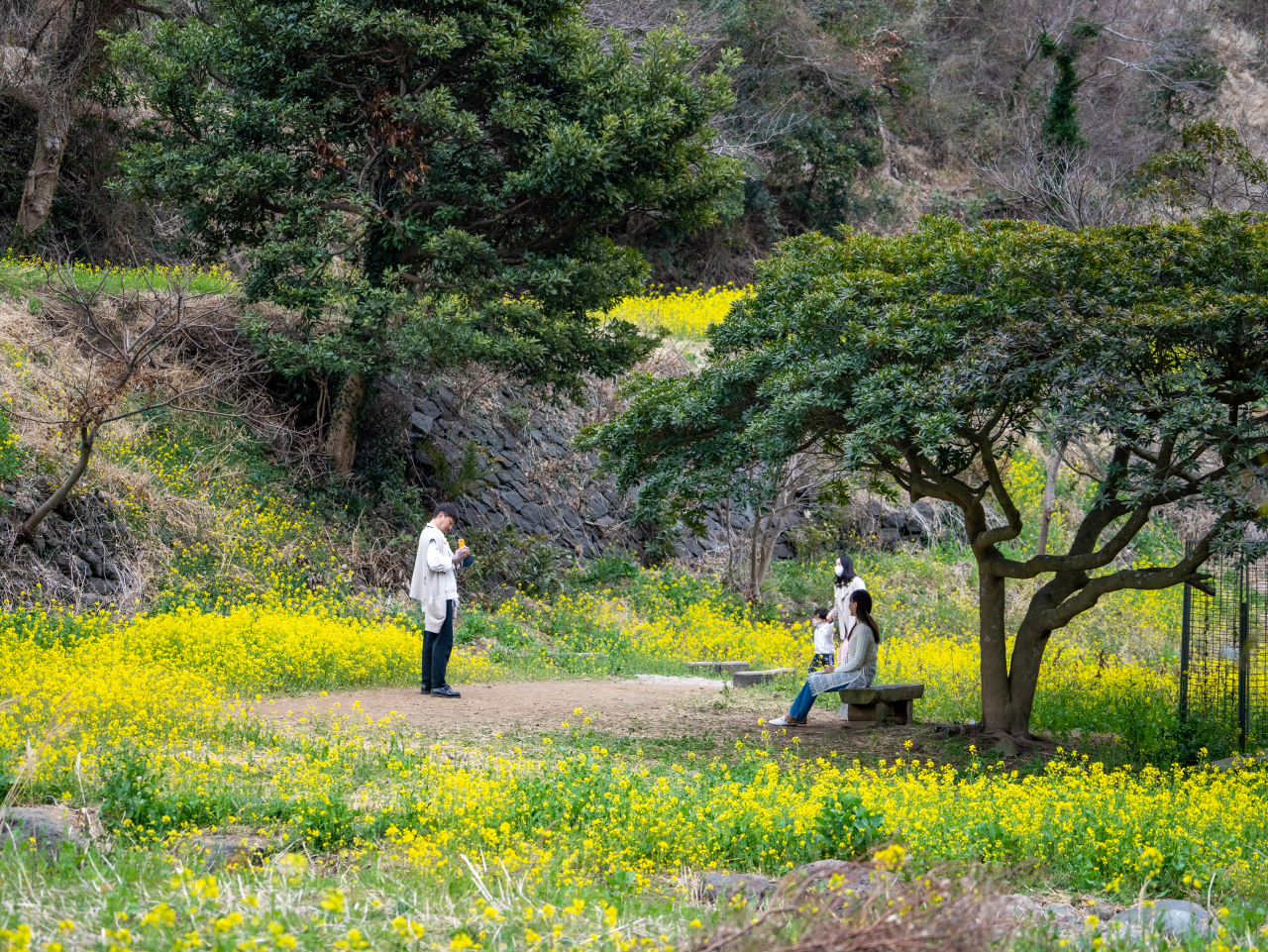
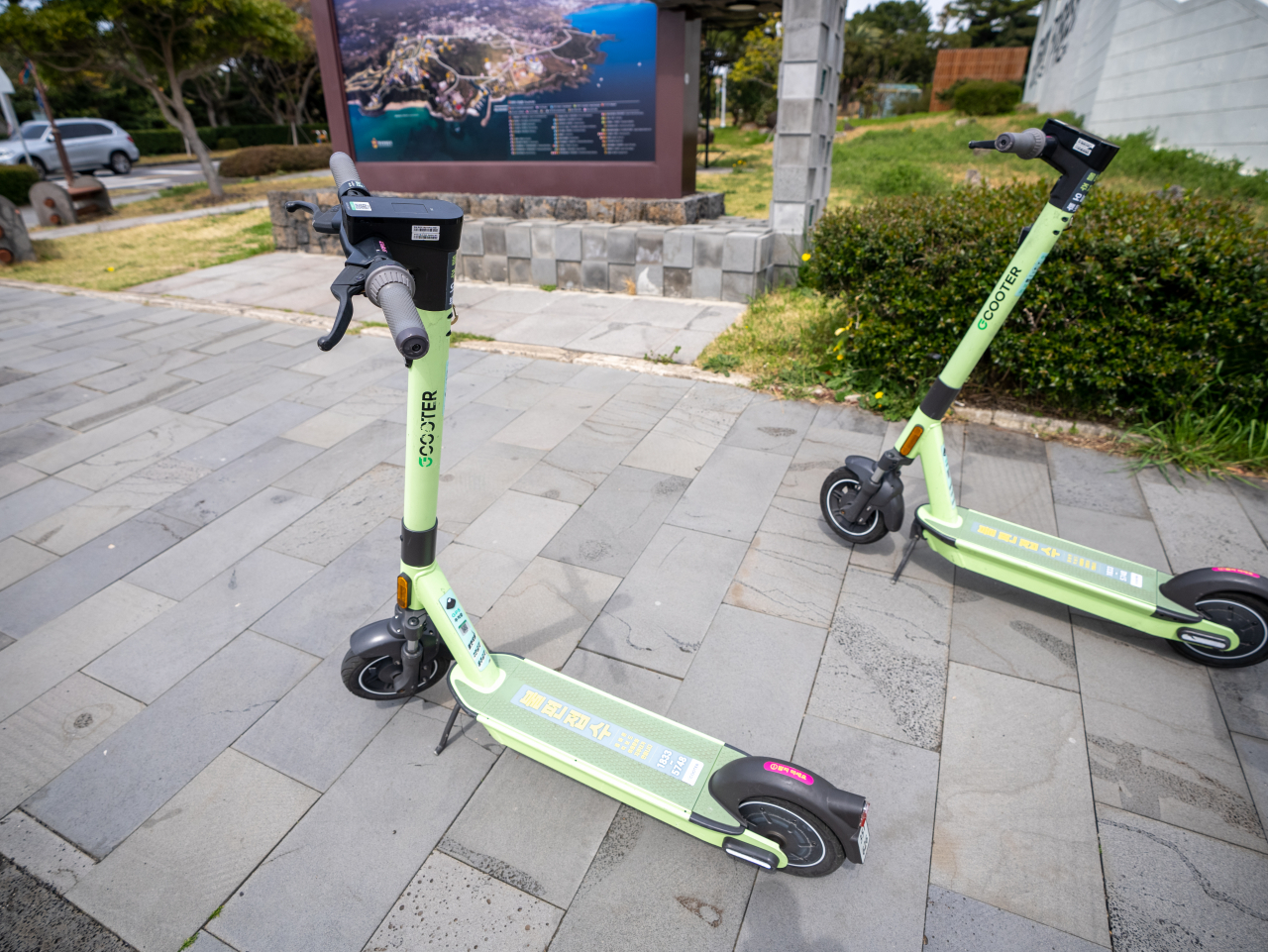
We stepped slightly off the Olle route, but if you climb the stairs on the left at the end of Eongdeongmul Valley, you’ll rejoin the Olle Trail. We needed to leave the Jungmun Tourist Complex and head toward Yerae-dong. The slope isn’t extremely steep, but the uphill still isn’t easy. And because you have to keep walking along the roadside, it’s a tough section. We rented shared e-scooters and moved to the next point, Yerae Ecological Park, without wearing ourselves out.
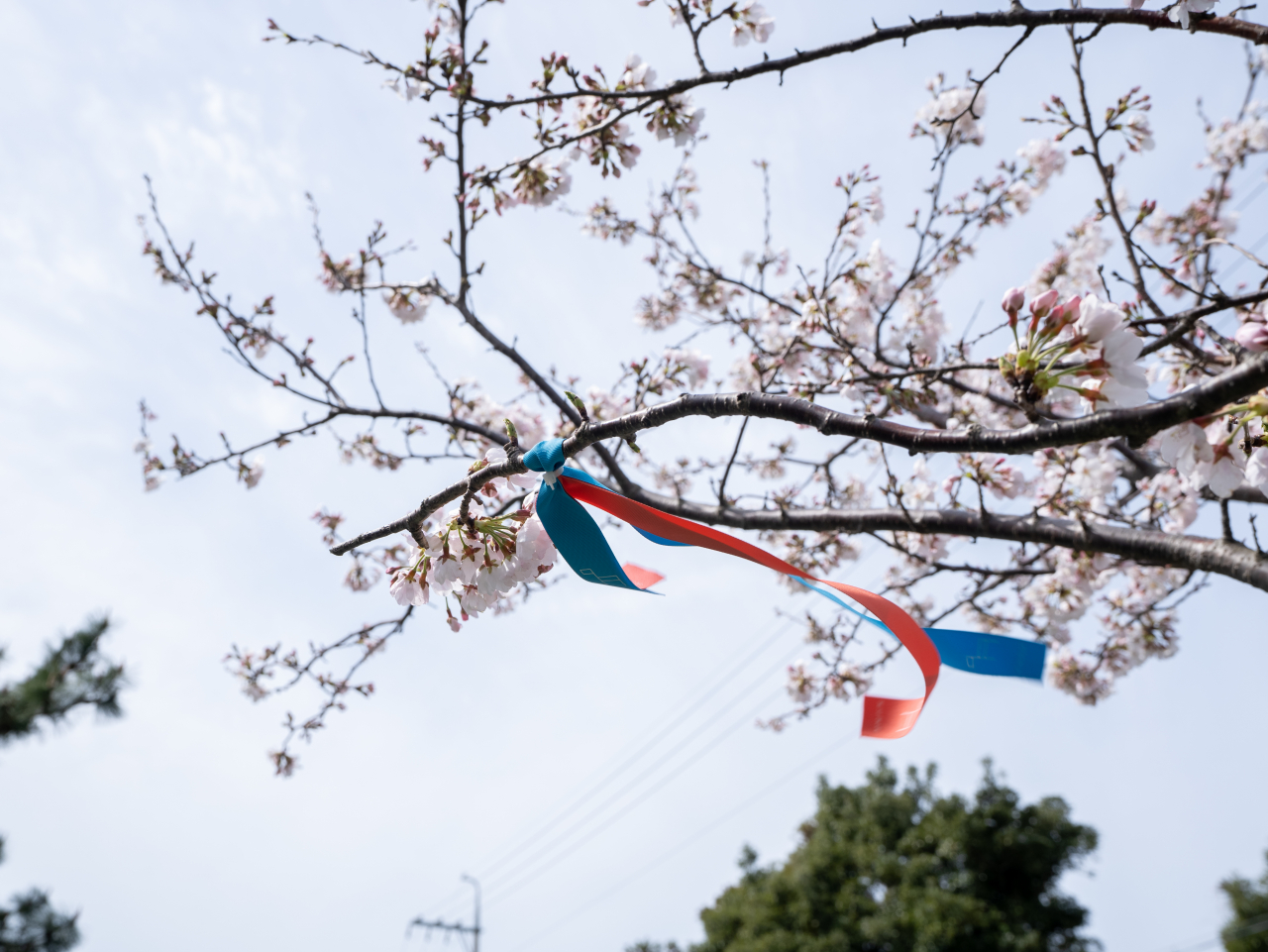
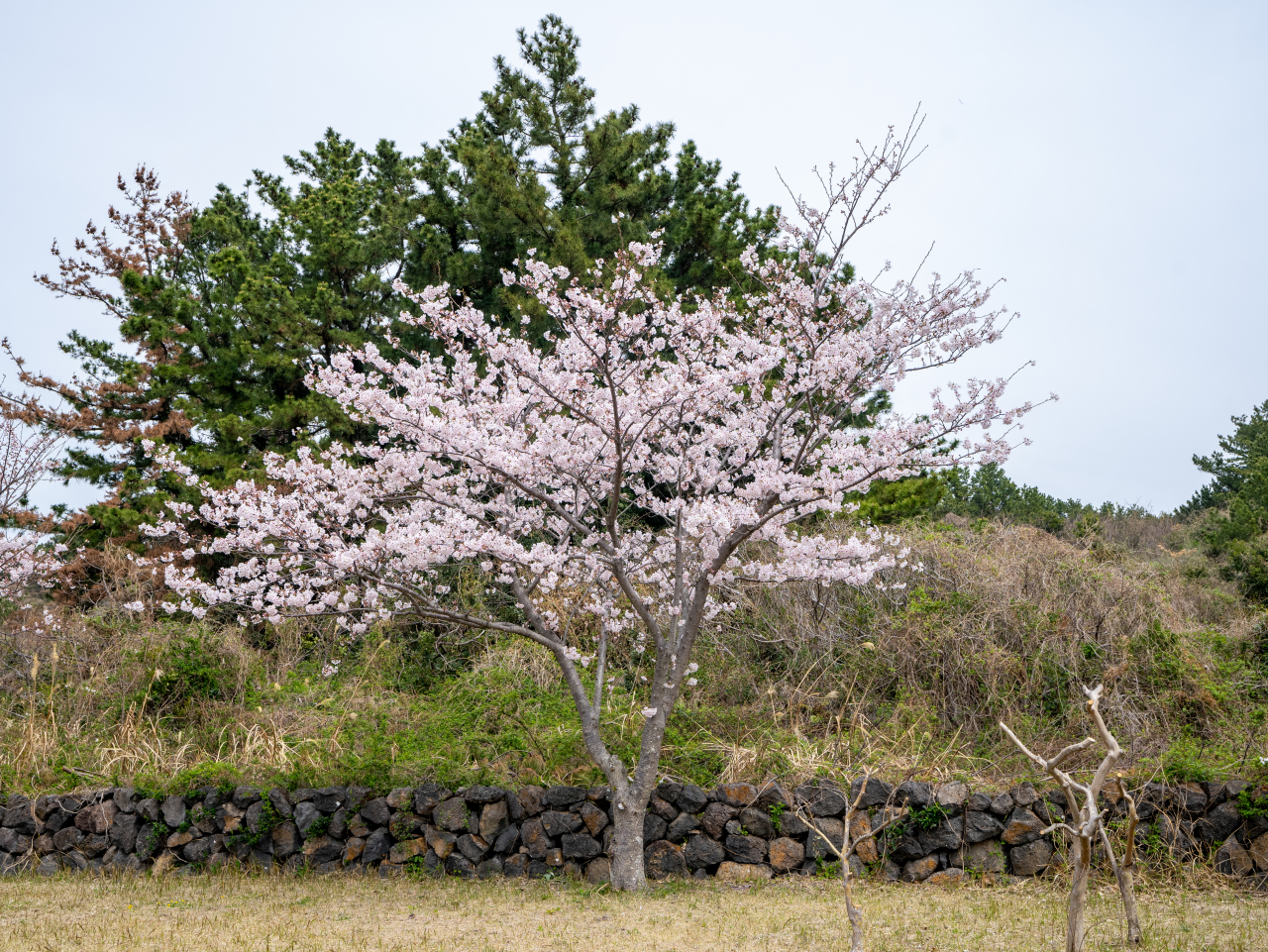
At Yerae Ecological Park, the cherry blossoms were at their peak.
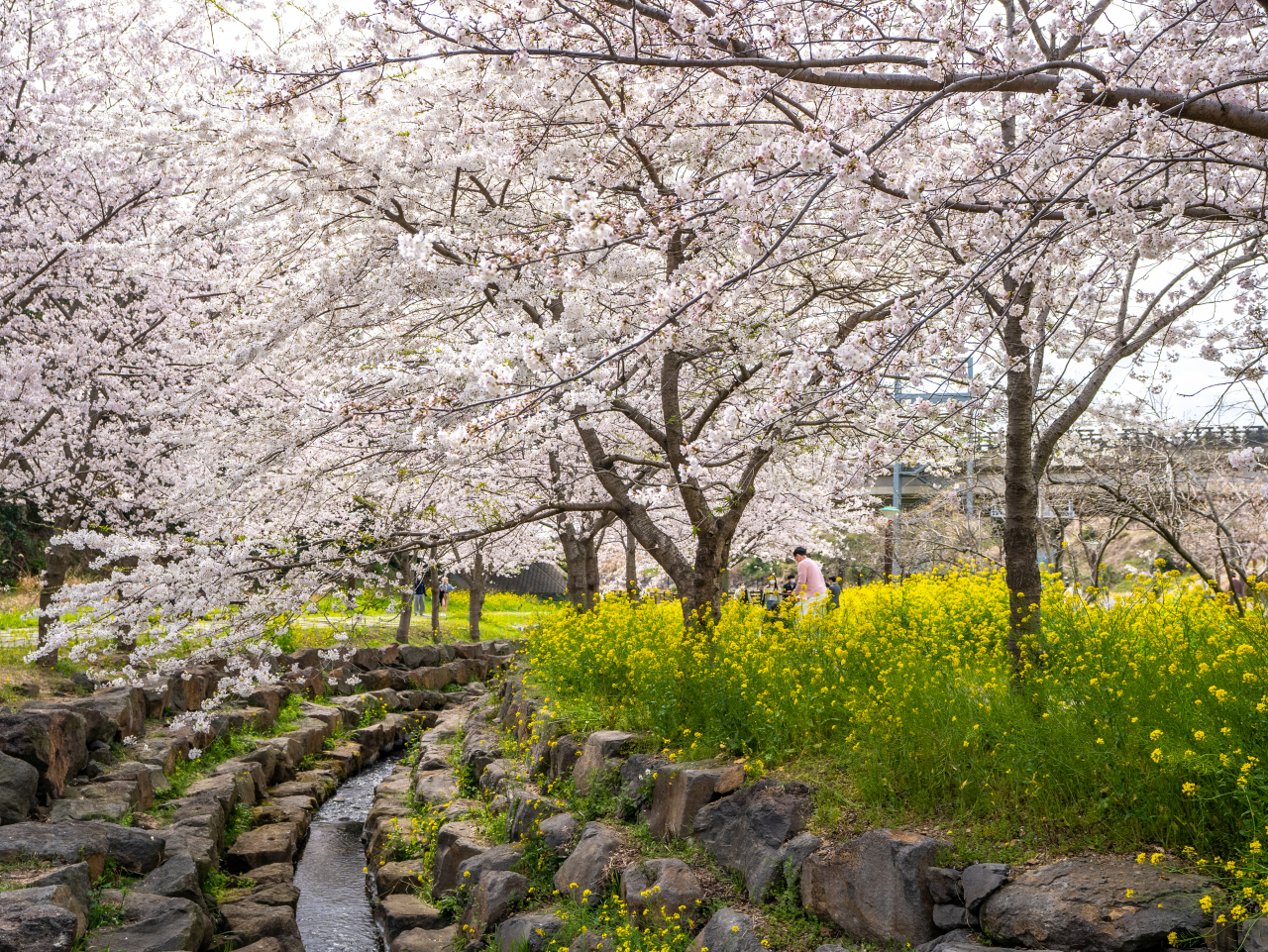
I grew up seeing the cherry blossoms of Gyeongju and Jinhae every year, but Jeju’s cherry blossoms feel different from the start. In the city, cherry blossoms often feel like a balance of flowers and buildings—while on Jeju, they’re a scene from a landscape painting, framed by earth, trees, and sky.
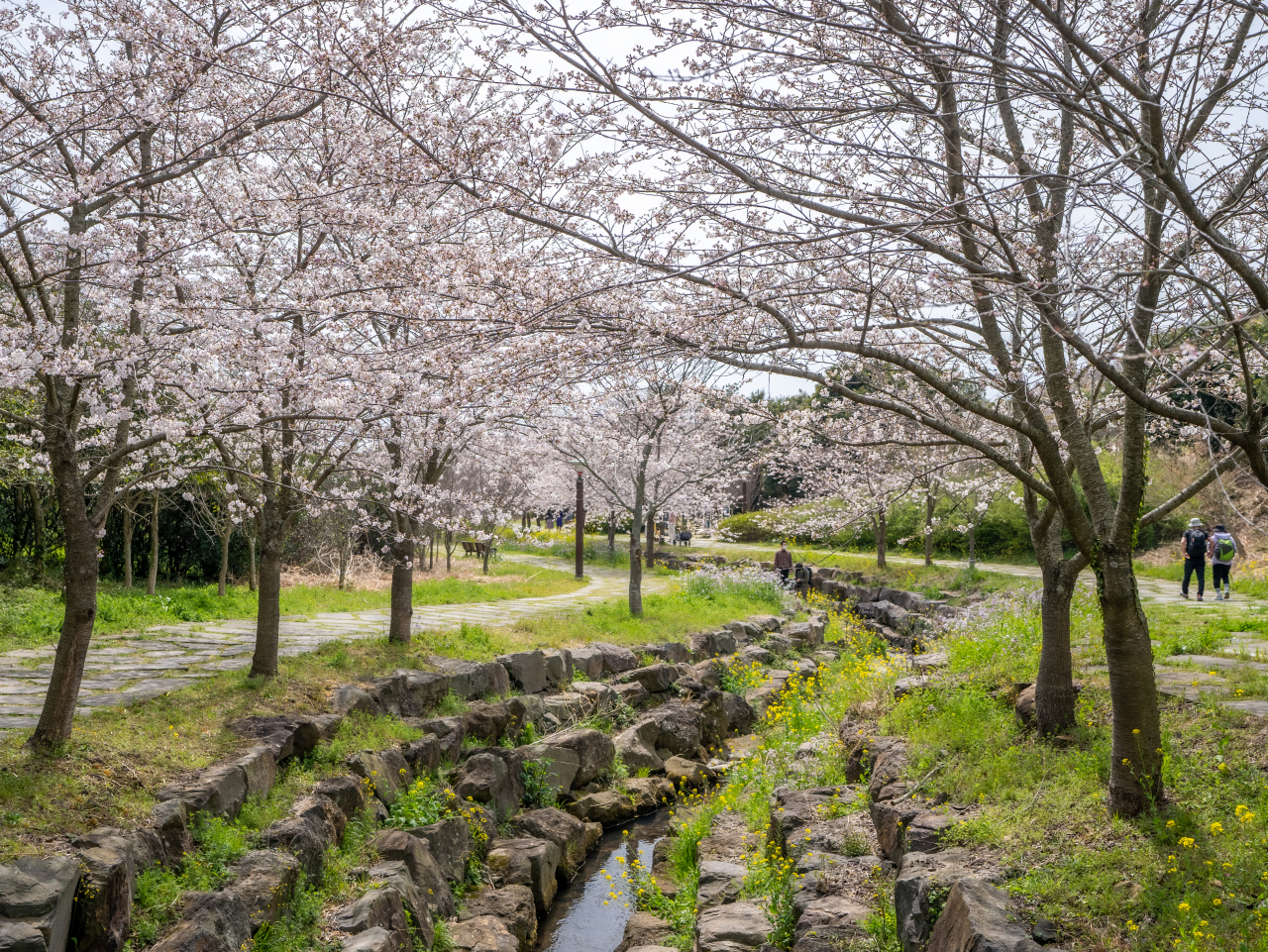
Yerae Ecological Park lets you fully soak in Jeju’s cherry blossom scenery. In the valley where Daewangsucheon Stream flows, Jeju stone, yellow canola blossoms, pink cherry blossoms, and a blue sky come together—one of Jeju’s hidden views.
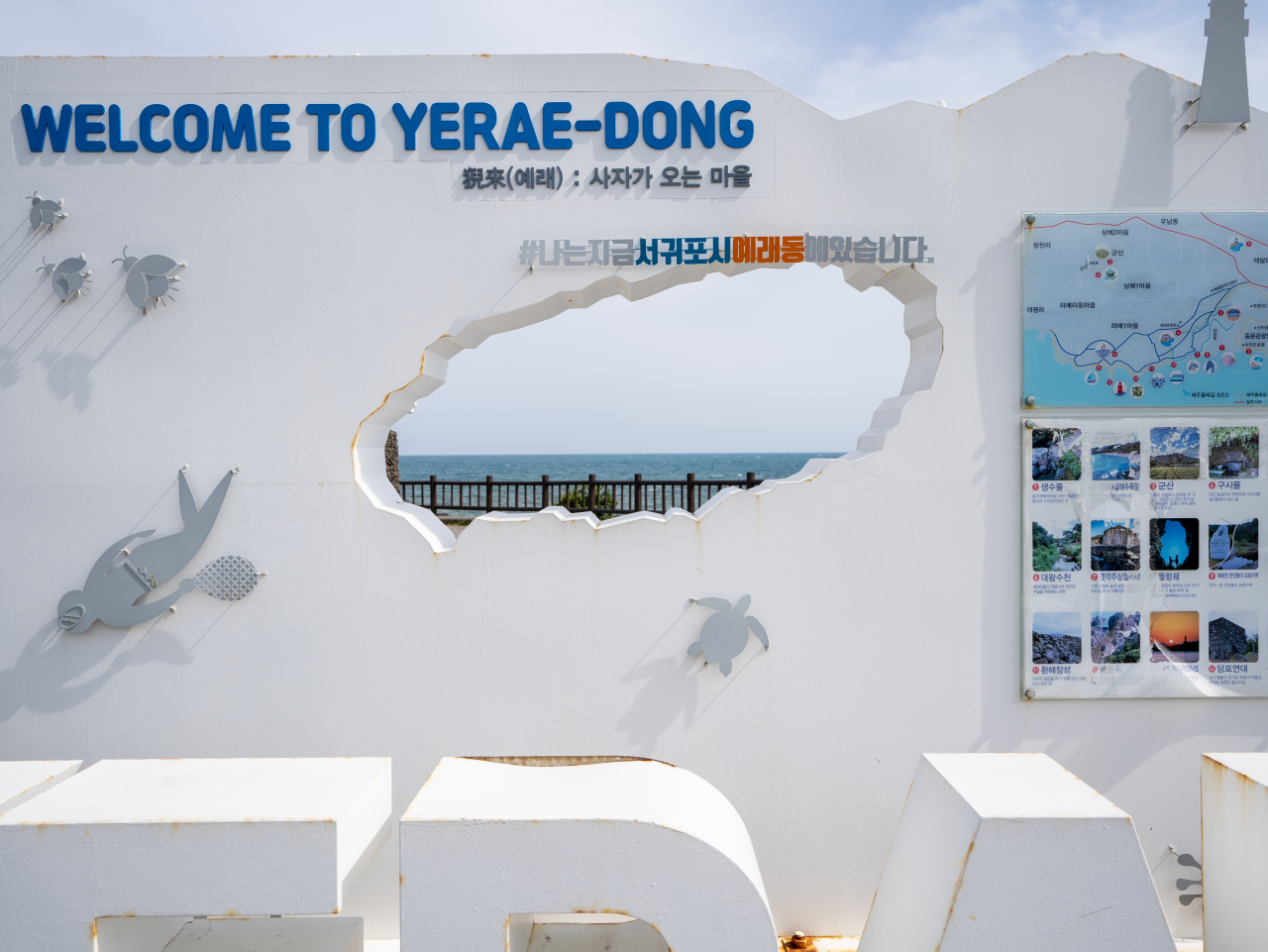
We came back out to the coastal path. This is the stretch heading toward Daepyeong-ri along the shore, past Nonjitmul. My legs started to ache. But I couldn’t miss my favorite coastal road in Jeju. Not long after moving to Jeju, I rode in an acquaintance’s car and was taken on a drive from Seogwipo to Jungmun along the coastal road, then from Yerae-dong to Daepyeong-ri. Back then, I couldn’t believe how beautiful this coastline was. Ever since, whenever I wanted to see the sea, I’d come drive along this Yeolli Coastal Road.
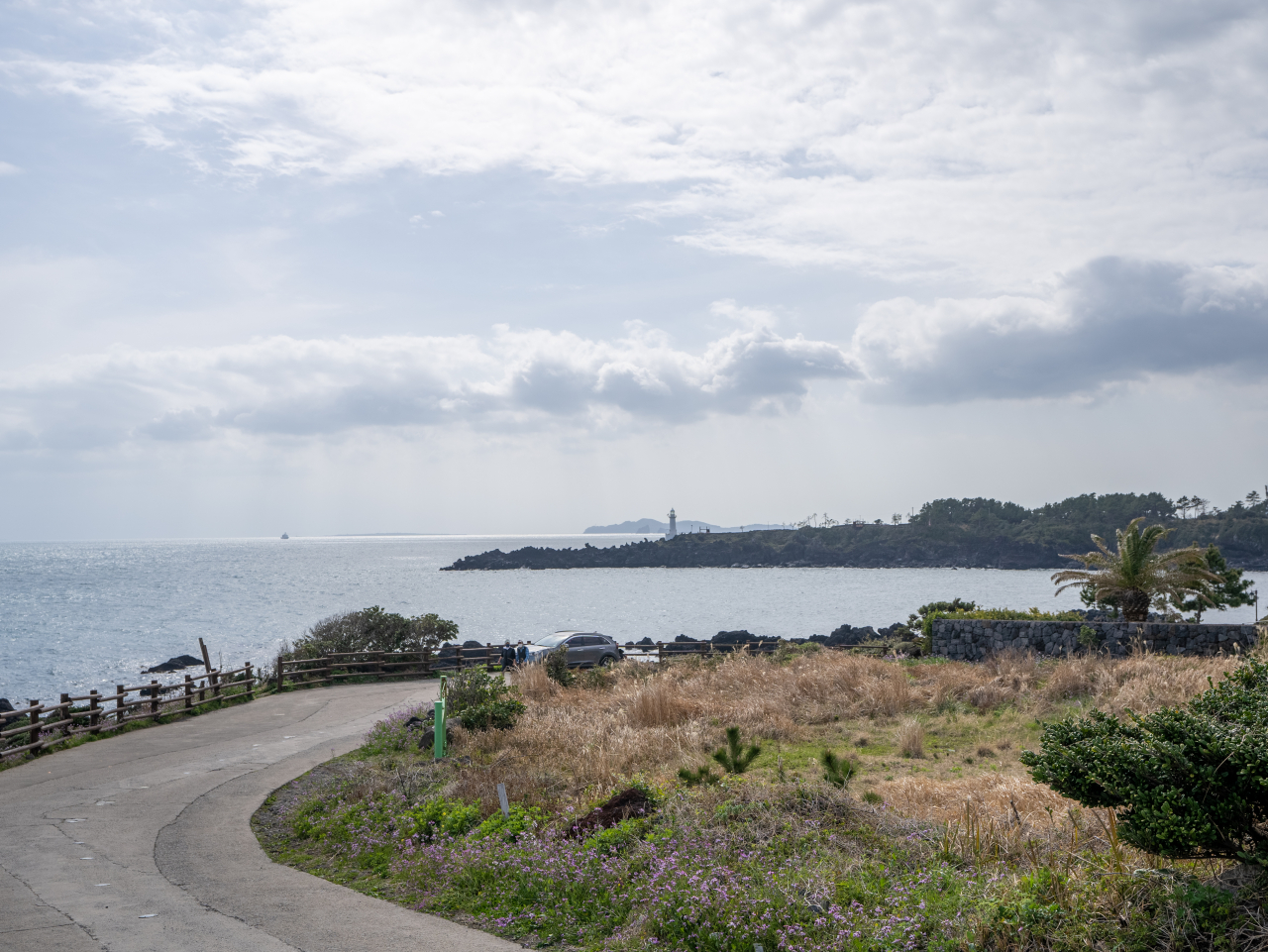
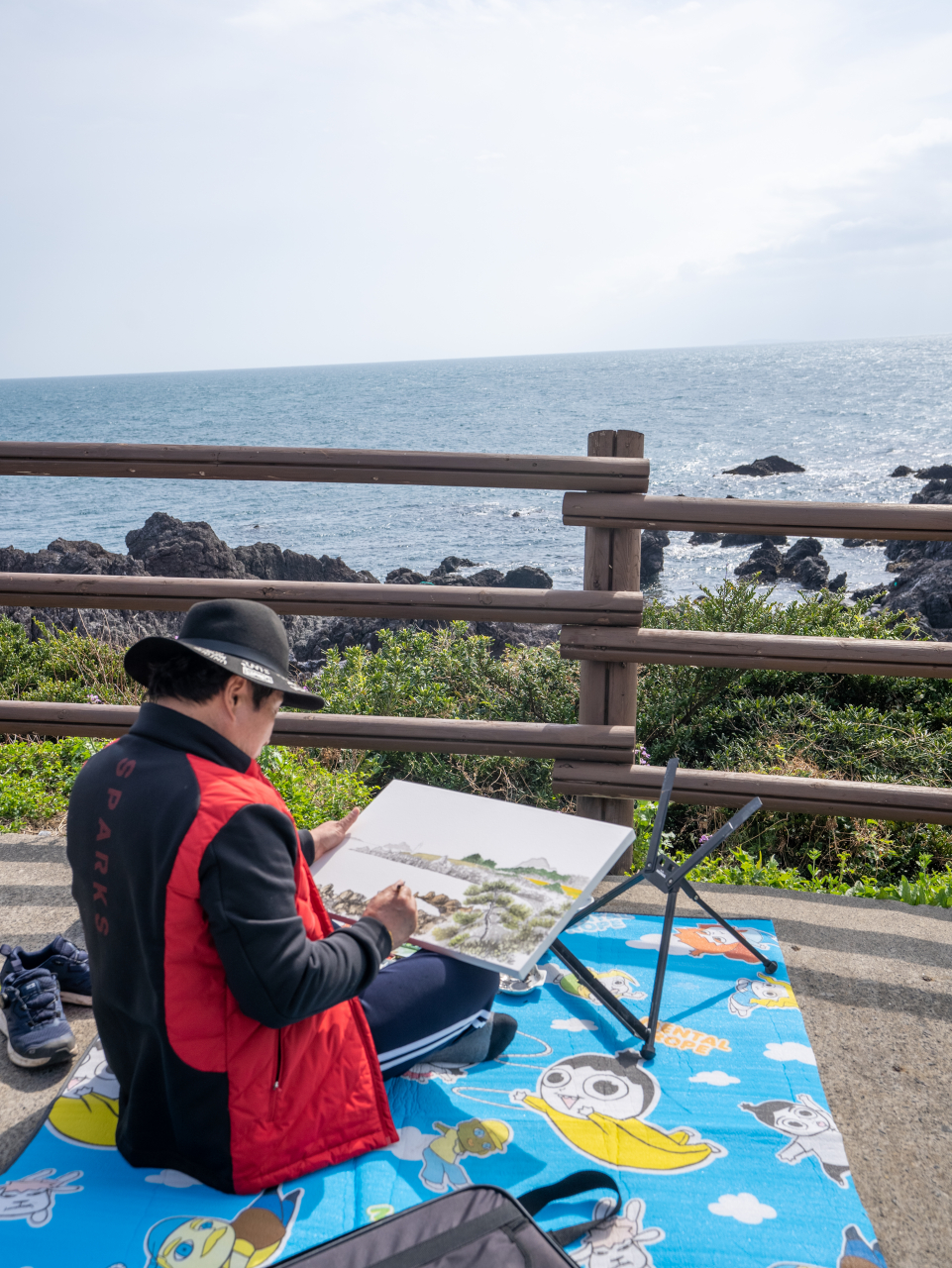
Passing Haye Port, we entered Daepyeong-ri village, where today’s destination, Baksubijeong, is located.
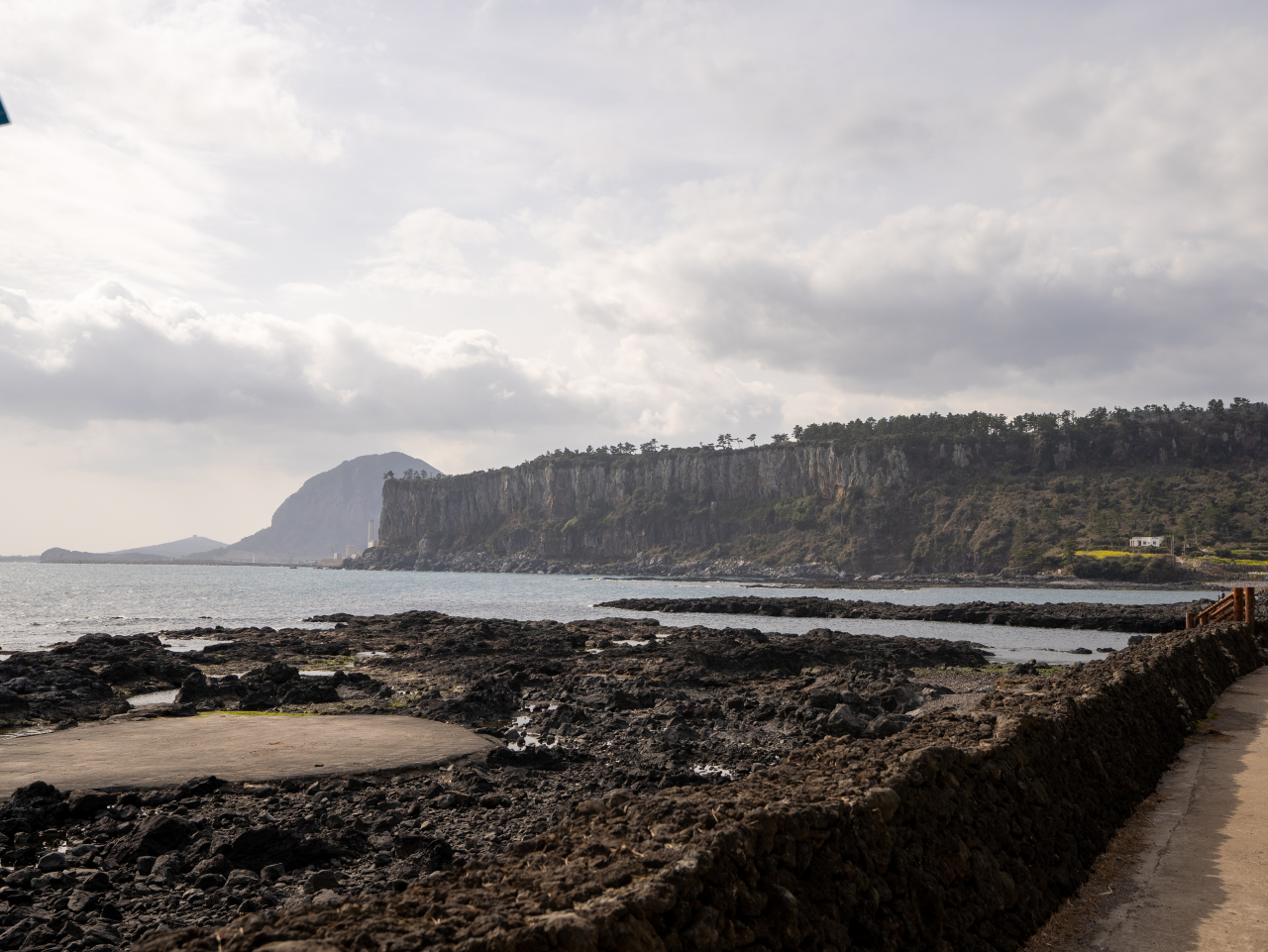
In the meantime, even more new cafes had appeared. I can’t help but gently worry whether the big cafes popping up like mushrooms after rain might be taking away from Jeju’s character. After playing, resting, and walking, we finally arrived at the finish at 6 p.m. After walking for 8 hours, my legs felt unbearably heavy. But during those 8 hours, we saw a new Jeju, felt it, and carried it in our hearts.

제주살이 10년 차, 일상 속 여행을 기록하는 크리에이터입니다. 바다와 바람, 낯선 골목에 스며든 제주를 좋아하고, 그 안에서 느꼈던 순간들을 글과 사진으로 전하고 있어요. 여행지보다는 여행의 온도를 담는 일을 합니다.

Comments
0No comments yet.