Whenever I passed through western Jeju, Sanbangsan was always the first thing to catch my eye. Rising alone between the flat village and the sea, it’s so striking that even from far away you immediately think, “Ah, that’s Sanbangsan.” This time, instead of just passing by, I decided to climb up in person to Sanbanggulsa, a temple perched halfway up the mountain.
The closer I got, the more Sanbangsan felt less like a gentle oreum and more like a massive block of rock. Known as a bell-shaped volcanic body at about 395m above sea level, Sanbangsan gives a different impression from the typical oreum with a crater. The solid cliff face looked as if it had risen in one hardened piece—powerful and intense.
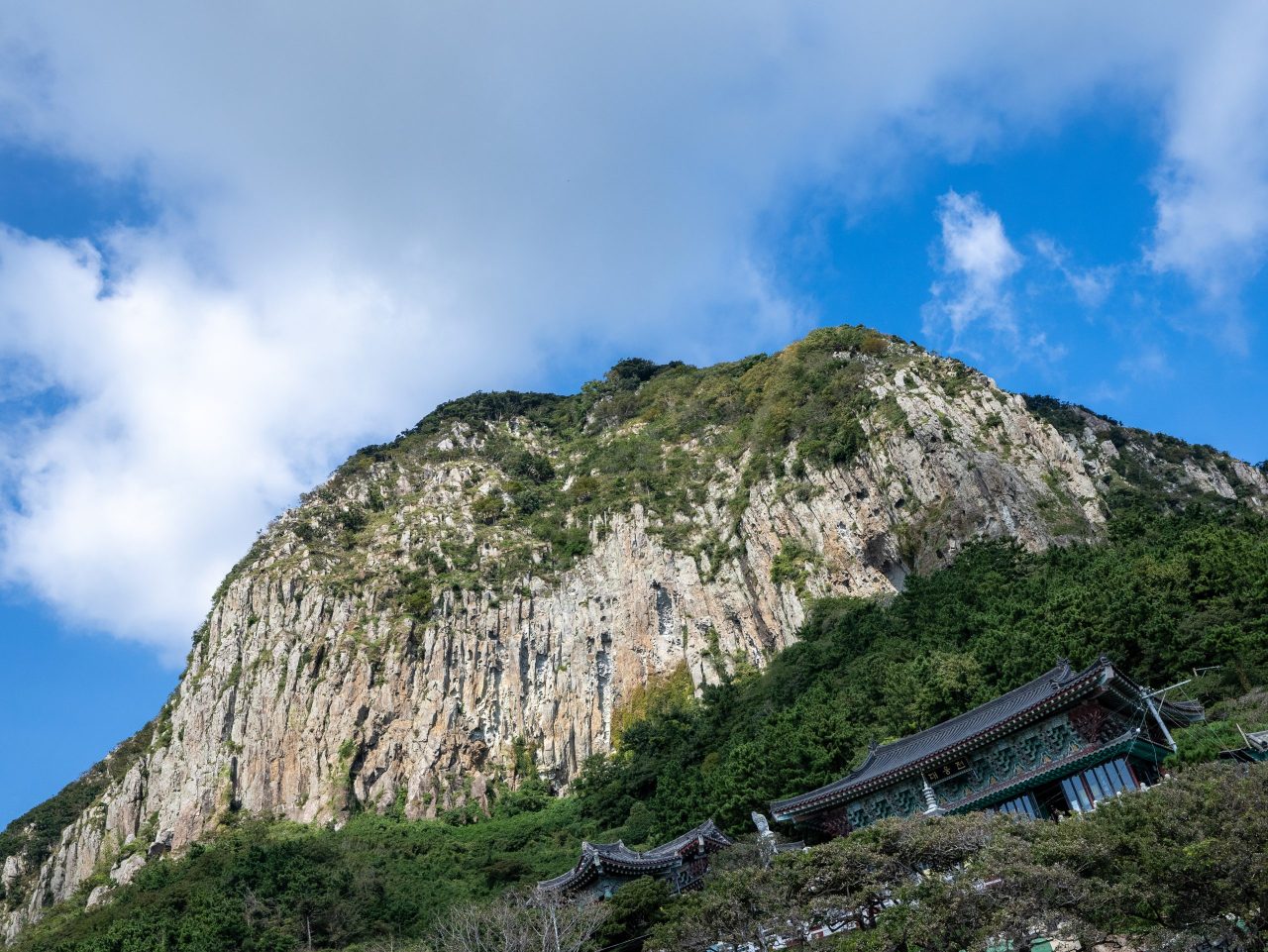
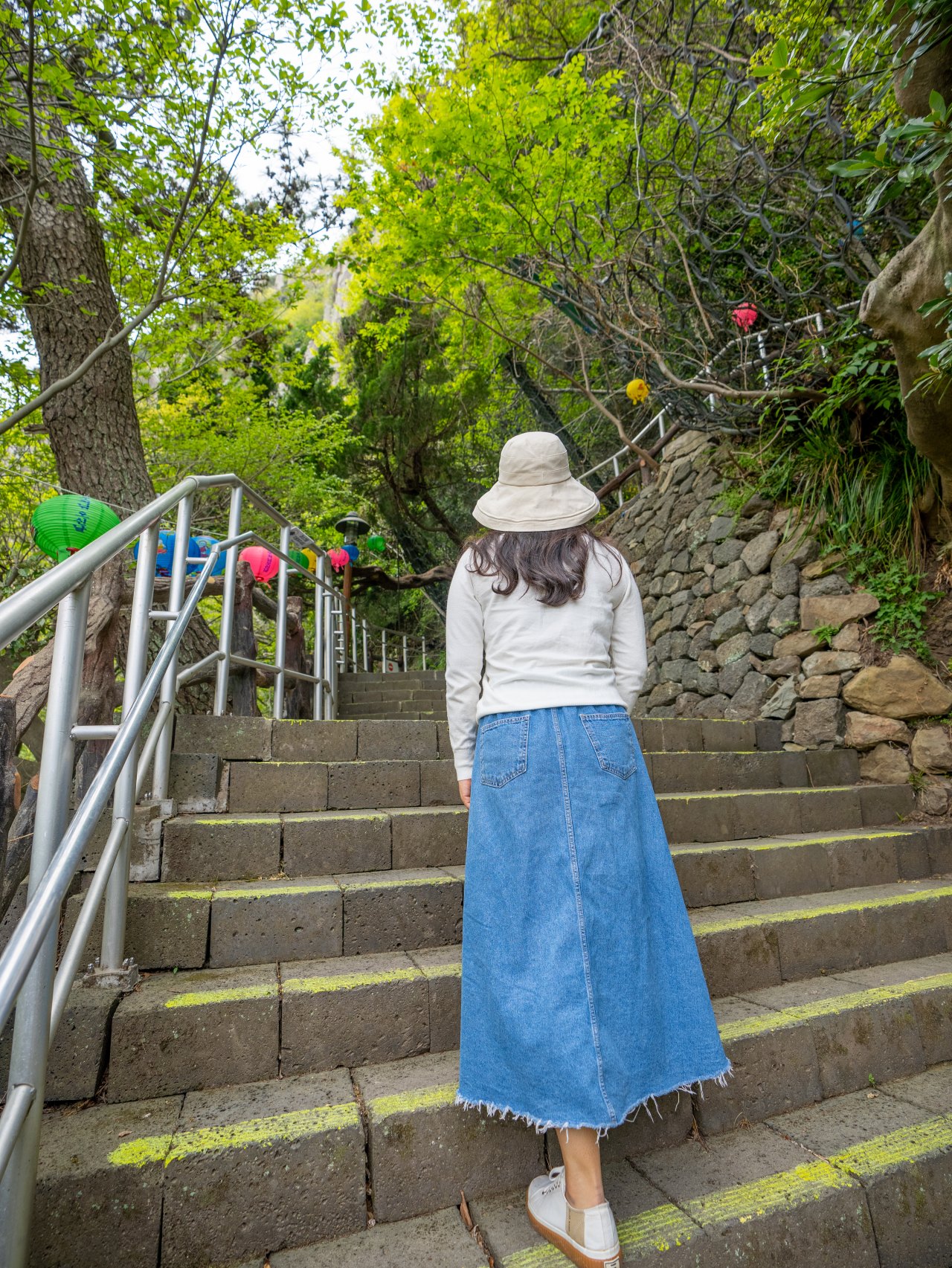
The entrance area was calmer than I expected. There were the usual busy elements of a tourist spot—temple buildings, a ticket booth, and a parking lot—but with Sanbangsan’s huge cliff as the backdrop, the overall mood felt heavy and grounded. Since Sanbanggulsa is a temple with a Buddha enshrined inside a natural stone cave halfway up Sanbangsan, you have to climb a fair number of stairs from start to finish to reach it.
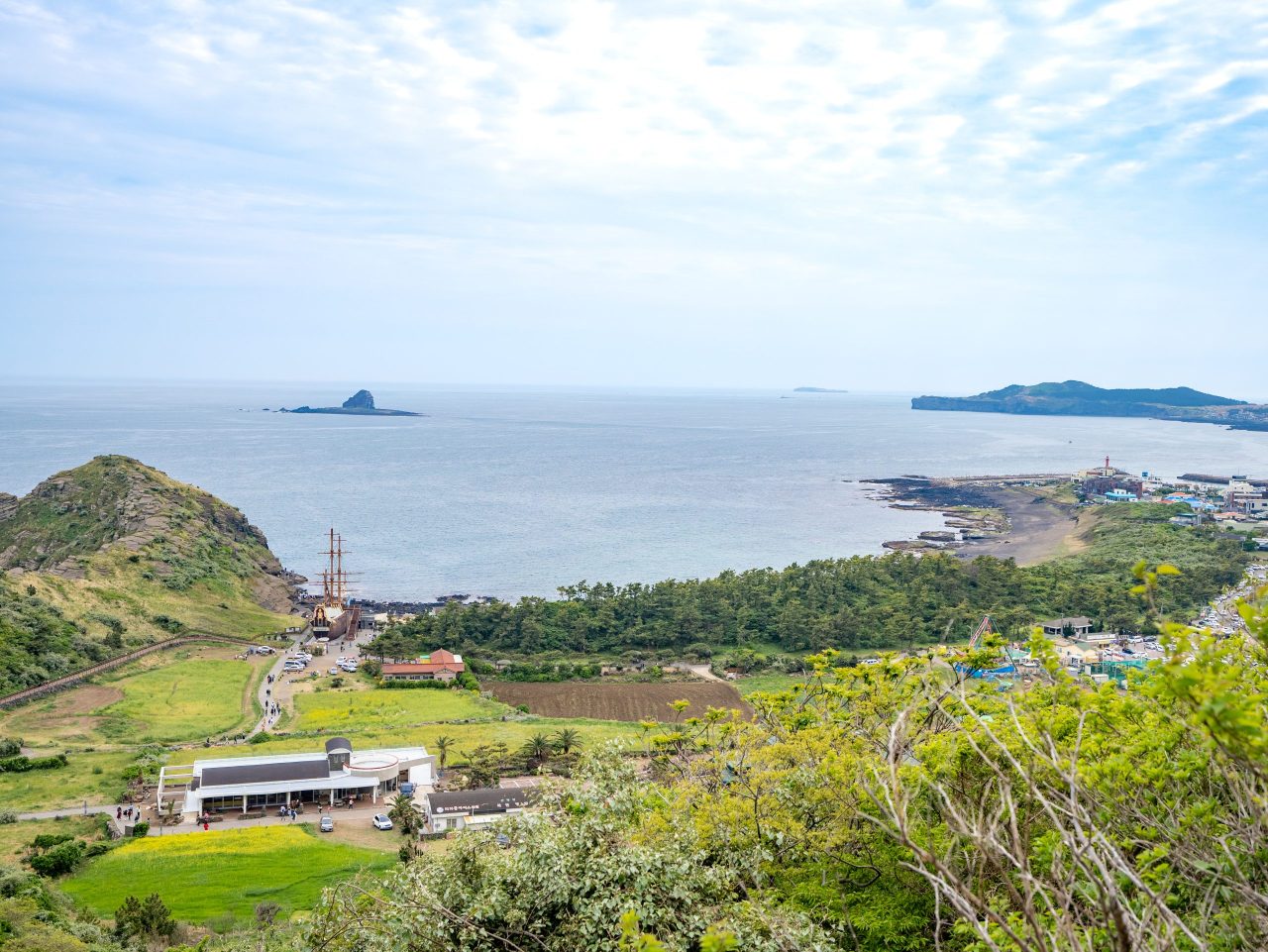
The higher you climb, the wider the sea becomes
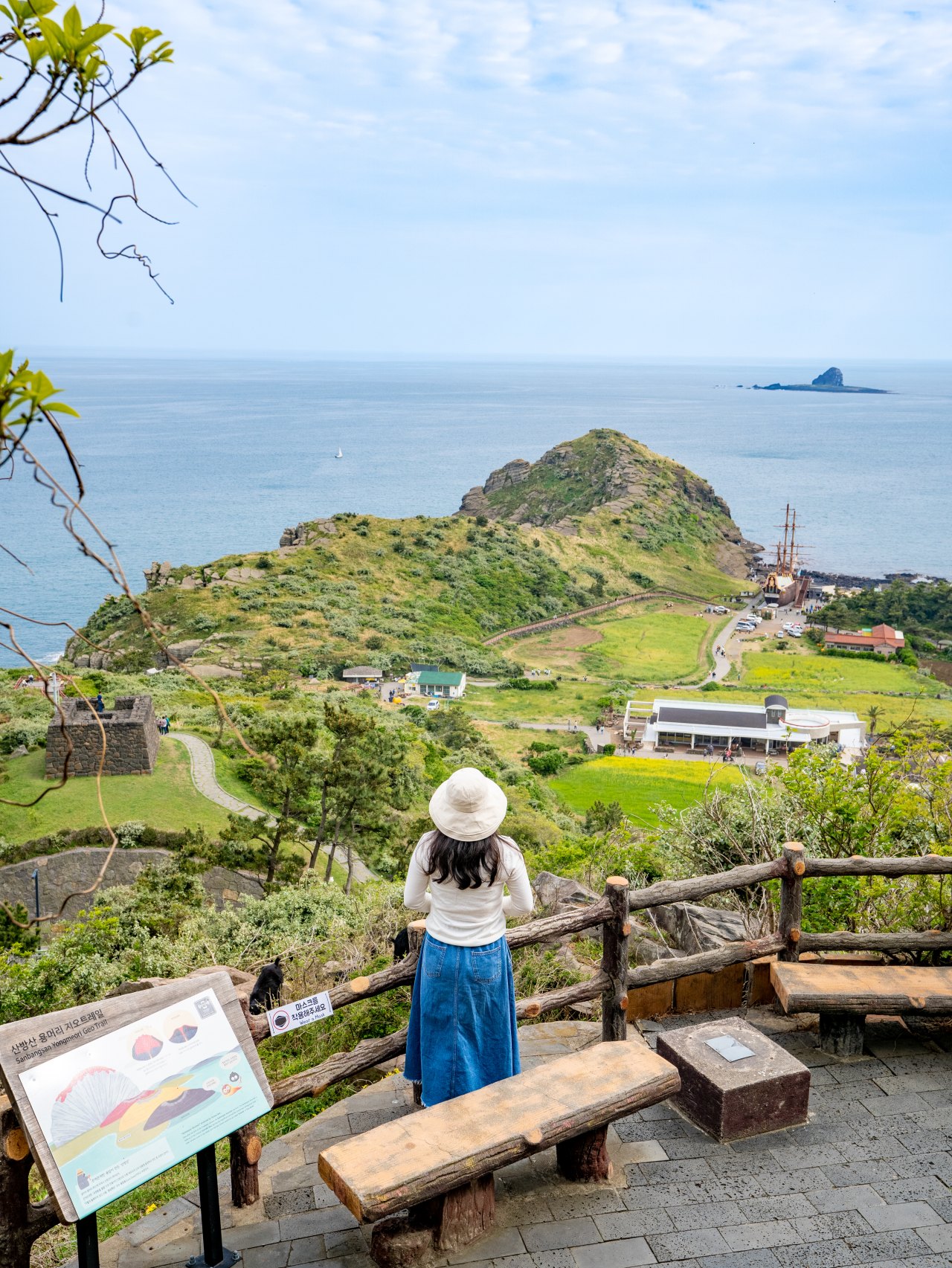
The path to Sanbanggulsa is short, but it leaves a strong impression. With each step up the stairs, the view behind you opens little by little, and at a certain point the southwestern sea of Seogwipo spreads out in a single glance. You can see layers of scenery toward Hyeongje-seom, Songaksan, and Yongmeori Coast—and on a clear day, they say your view can even reach in the direction of Gapado and Marado.
It isn’t an extremely difficult uphill route, but on bright, hot days it’s better to take it slowly and rest as needed. I naturally ended up taking breaks while turning around to take photos. Thanks to that, Sanbanggulsa didn’t feel like “a place you quickly check off and come back down from,” but rather like the climb itself was part of the trip.
A quiet space hidden inside the cliff
As I got closer to Sanbanggulsa, it felt as though the surrounding sounds gradually faded. The wind, footsteps on the stairs, and voices from distant visitors echoed softly as they hit the cliff walls. The cave wasn’t a large or ornate space—it felt more like a place carefully borrowing a natural gap that nature created.
Sanbanggulsa’s natural cave is said to be about 5m high and 10m wide, but in person the atmosphere reaches you before the numbers do. A Buddha is enshrined deeper inside the rock, and visitors naturally lower their voices. Photography inside feels restricted, so I put my camera down and took a moment to take it all in with my eyes.
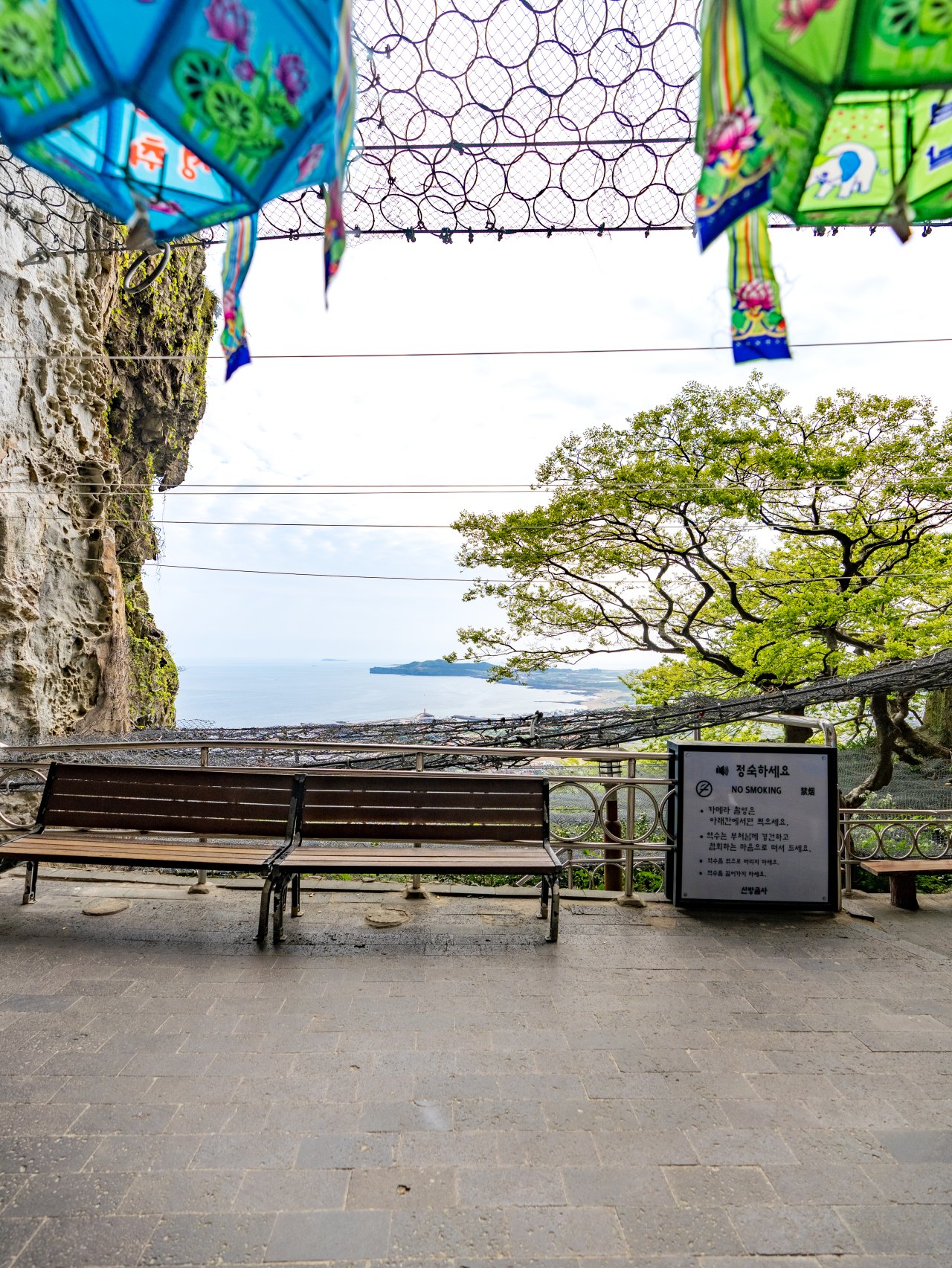
The Sanbangsan cliff plant habitat is designated Natural Monument No. 386, and the surrounding area is also known as part of a UNESCO Global Geopark. Maybe that’s why this didn’t feel like a trip that ends after “just seeing a temple.” Volcanic terrain, ocean views, and an old spiritual space overlapped all in one place.
The legend of Sanbangdeok, and the lingering feeling of falling droplets
What stayed with me most at Sanbanggulsa was the water droplets falling from the rock. There’s a legend that these drops are the tears of Sanbangdeok. When you encounter a legend while traveling, the scenery starts to look a little different. It’s no longer just rock and water—it becomes a place that someone has layered with stories for a very long time.
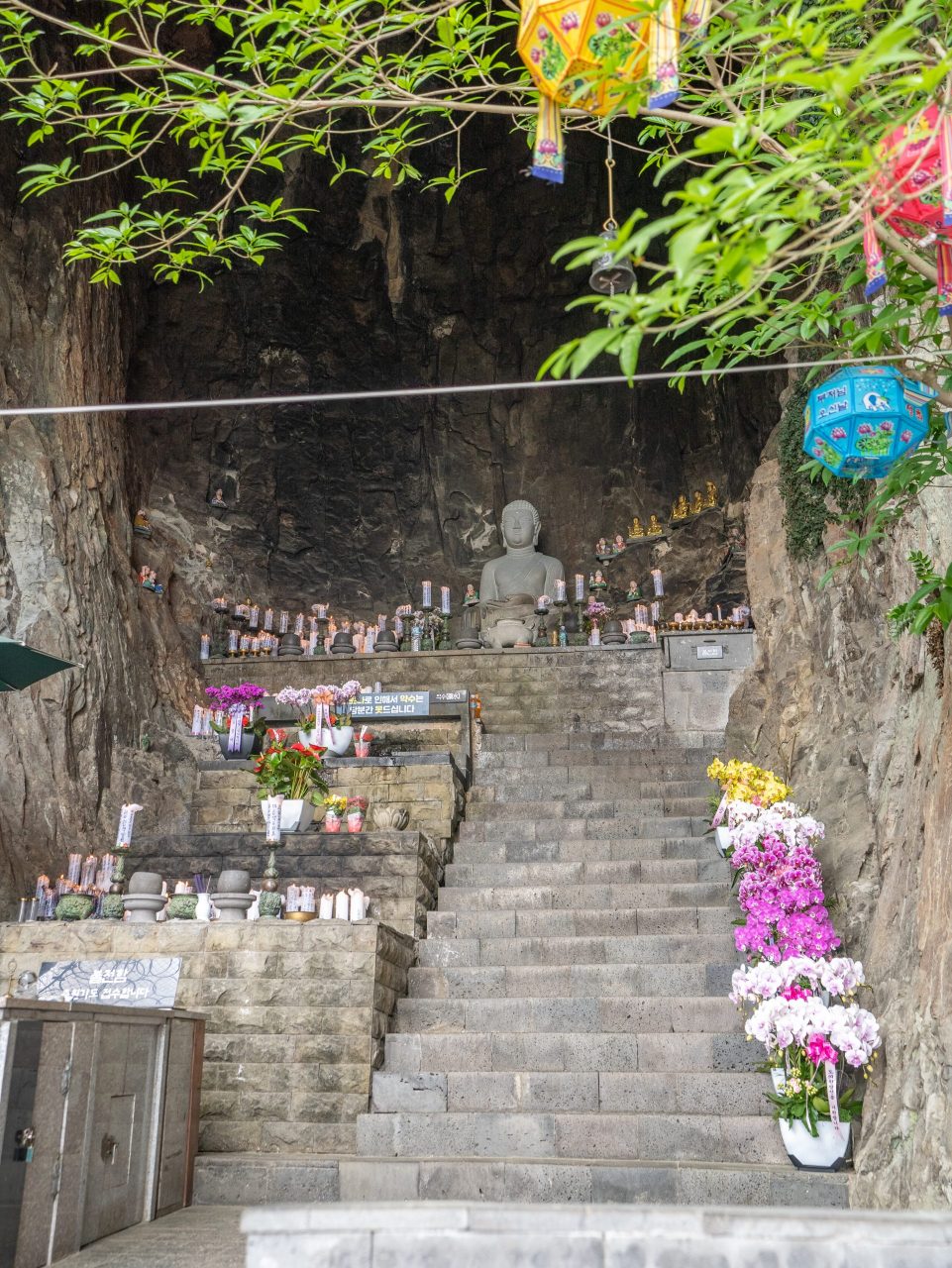
Near the cave there’s also a bell where visitors can make a wish, making it a nice spot to linger for a bit. It typically operates from 9:00 a.m. to 5:00 p.m.; you buy a wish paper, write your name and wish, and then ring the bell. Even if you don’t do the experience, standing there naturally brings at least one quiet wish to mind.
A route that pairs well with Yongmeori Coast
After visiting Sanbanggulsa and coming back down, it’s a good idea to continue your route toward Yongmeori Coast. It feels like walking closer to the sea and cliffs you were just looking down at from Sanbangsan, and seeing both places together makes the charm of western Jeju’s terrain even clearer. That said, access to Yongmeori Coast may be restricted depending on weather and tide conditions, so it’s best to check before visiting.
Good things to know before you go
Sanbanggulsa can usually be visited from 9:00 a.m. to 6:00 p.m., with ticket sales ending at 5:20 p.m. Admission to the Sanbangsan cliff plant habitat is 1,000 won for adults, so it isn’t too burdensome. If you plan to see Yongmeori Coast as well, it’s also worth checking for a combined ticket.
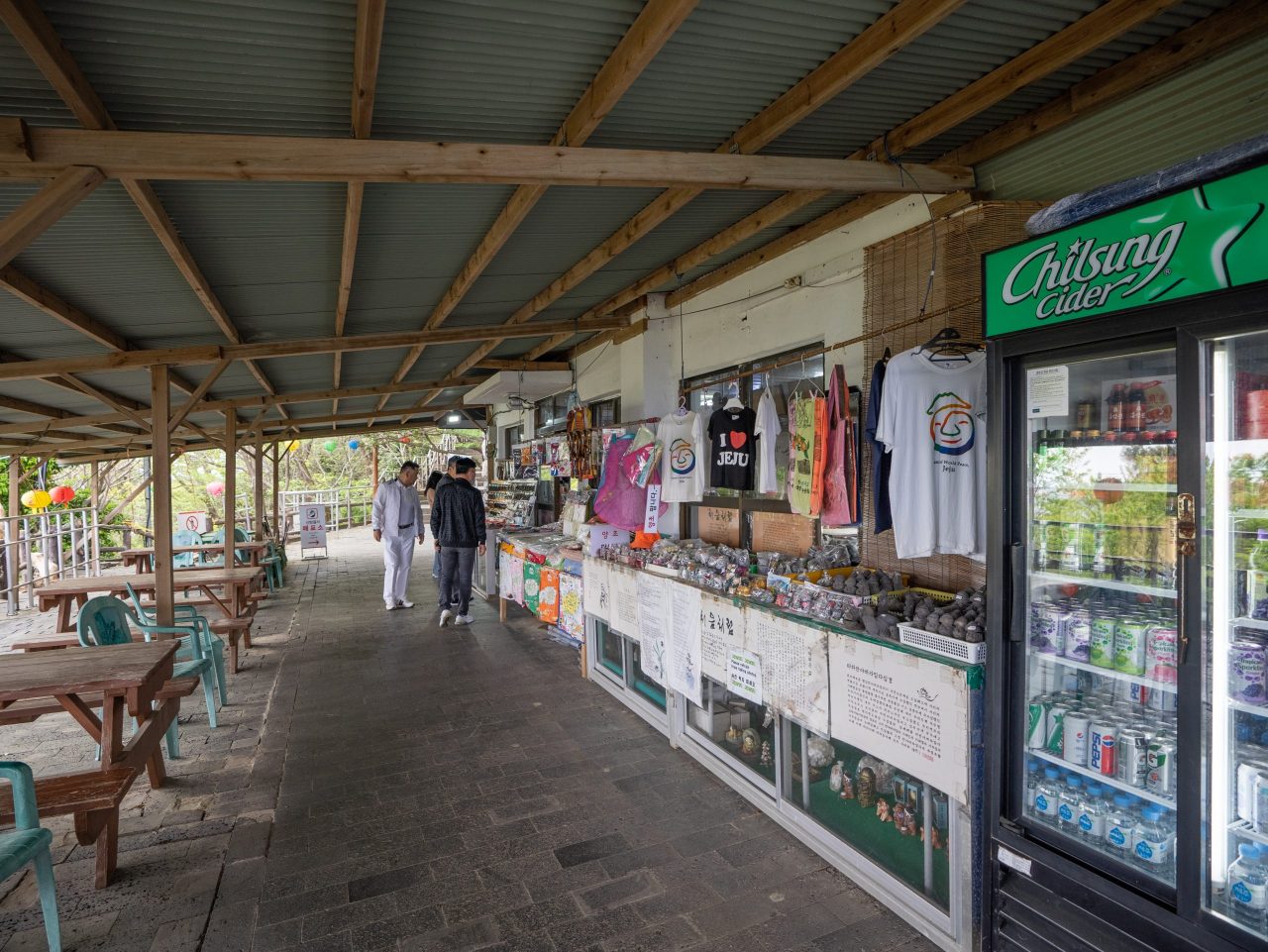
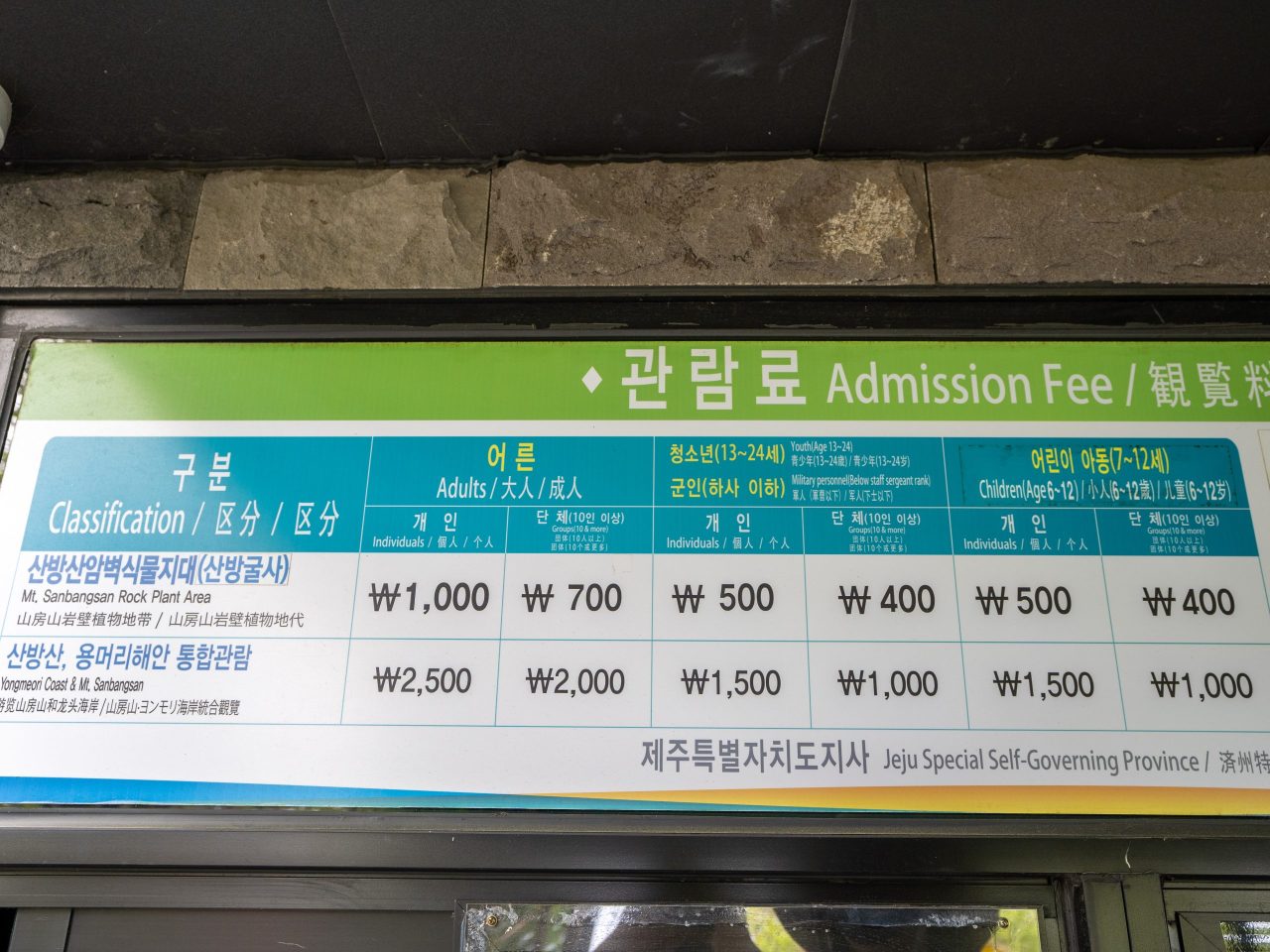
The stair section can be slippery on rainy days or when the wind is strong. There are also falling-rock warnings along the Sanbangsan cliff area, so the most important thing is to stay on the designated paths. Light sneakers are best, and in summer it’s much more comfortable if you bring water.
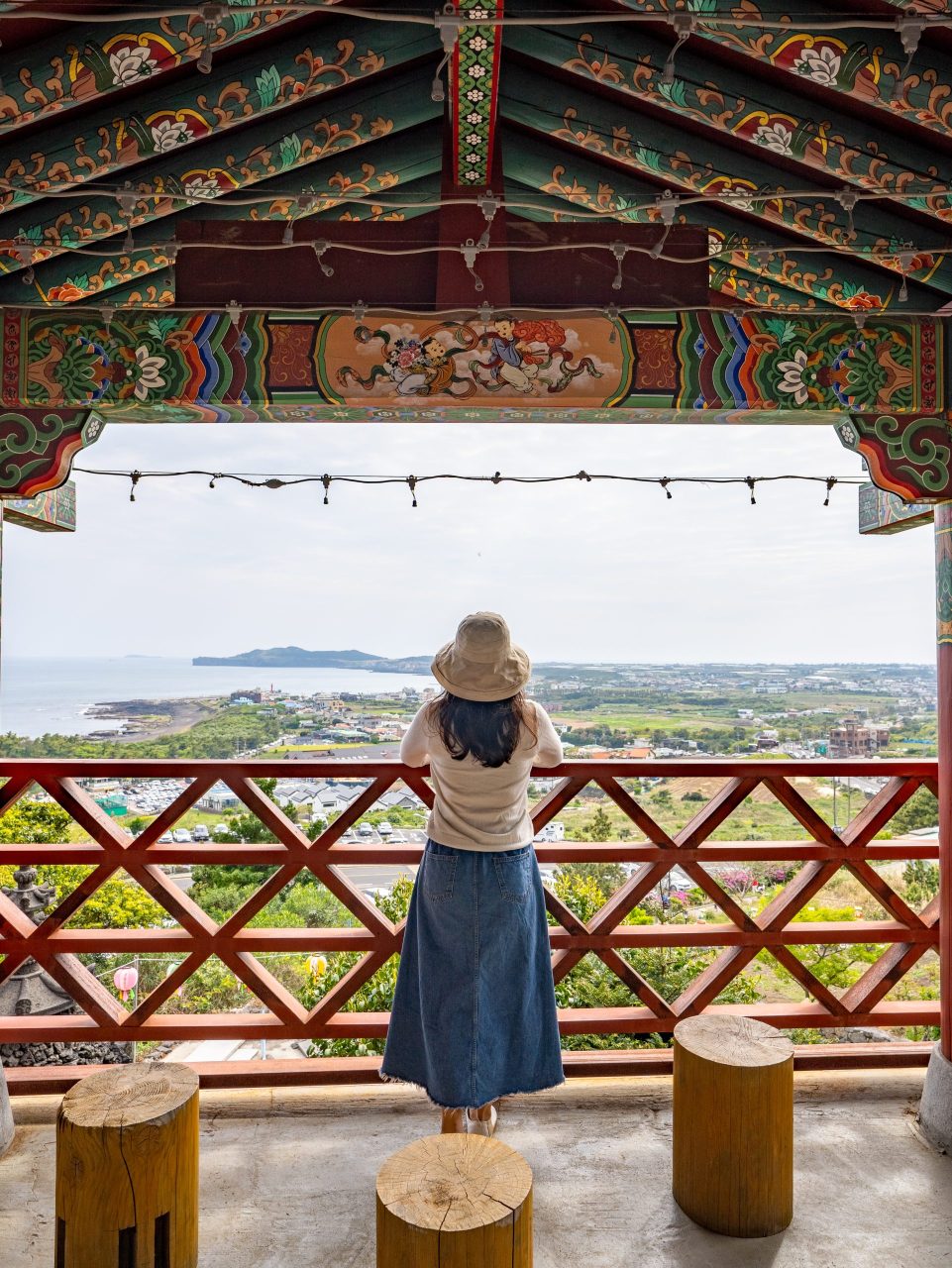
Sanbanggulsa isn’t a tourist spot that overwhelms you with sheer scale. Instead, it’s a place that has you climb slowly, pause to look out at the sea, and naturally lower your heart in front of a small cave tucked into the cliff. In a western Jeju trip, flashy cafes and beaches are great too—but I found myself thinking it’s worth adding an old place like this to your itinerary at least once.
From afar, Sanbangsan looks like a single landscape. But up close, rock and stairs, legend and temple, and ocean views open up one after another. Only after climbing to Sanbanggulsa did I feel like I’d finally peeked into the inside of that scenery.

제주살이 10년 차, 일상 속 여행을 기록하는 크리에이터입니다. 바다와 바람, 낯선 골목에 스며든 제주를 좋아하고, 그 안에서 느꼈던 순간들을 글과 사진으로 전하고 있어요. 여행지보다는 여행의 온도를 담는 일을 합니다.

Comments
0No comments yet.