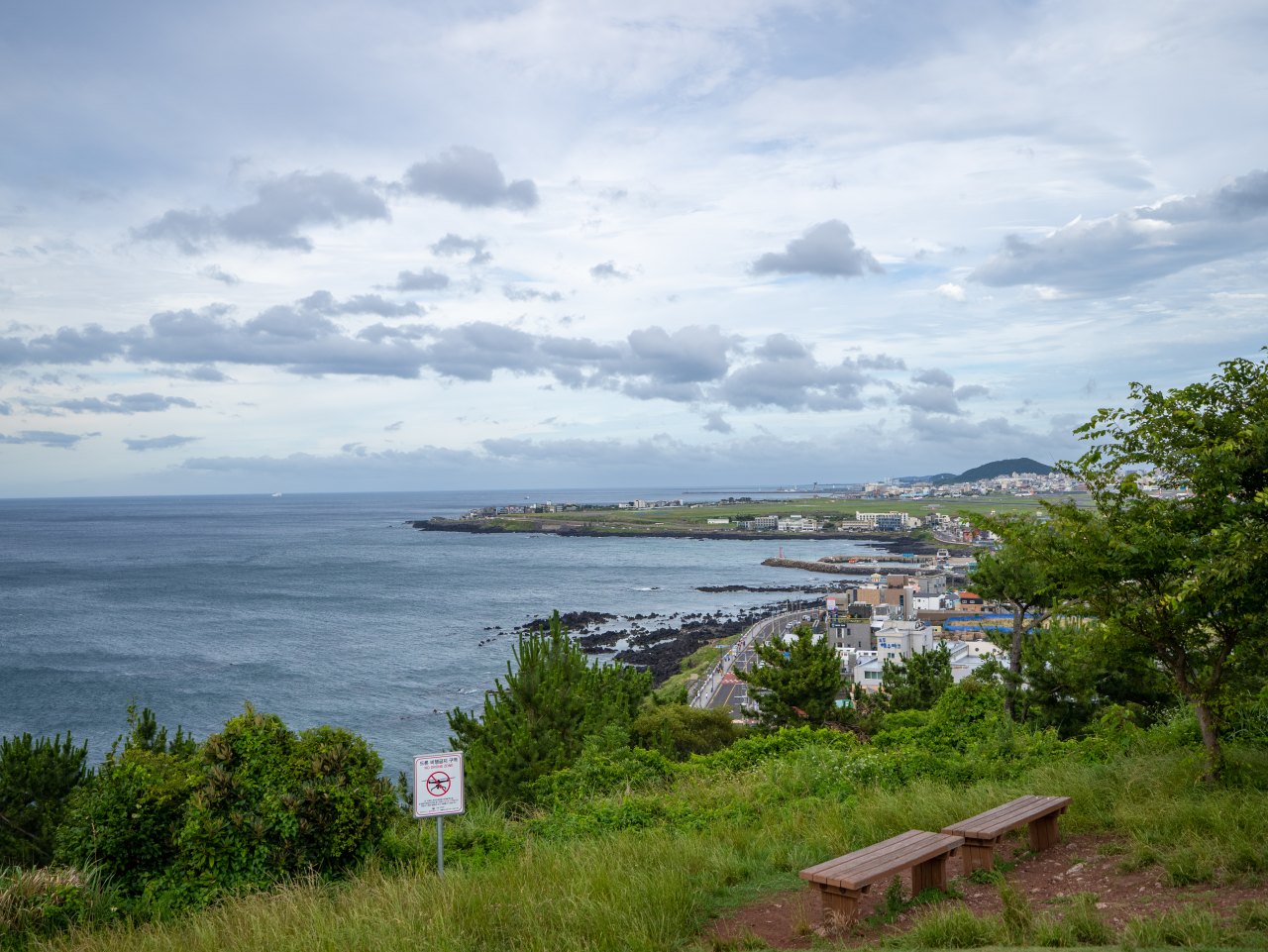
Time seems to pass unusually quickly on the last day of a Jeju trip. You want to stop by just one more café before heading to the airport, and when you see the sea, you feel like pulling over for a moment. After taking it easy like that, you suddenly start to feel rushed the moment you set Jeju Airport as your destination in the navigation system.
However, when traveling by rental car, there is still another step before reaching the airport. You only arrive at the airport after refueling or charging, inspecting the vehicle, completing the return process, and taking the shuttle bus. The time you arrive at the rental car return location is completely different from the time you arrive at the Jeju Airport passenger terminal.
Rental car return times: Remember this first
For domestic flights, plan to arrive at the Jeju Airport passenger terminal 60 minutes before departure.
It is generally best to return your rental car 90–120 minutes before your flight departs.
Returning it 120 minutes early is recommended on weekends and holidays, or when checking baggage or traveling with children.
But isn’t check-in available until 30 minutes before departure?
At Jeju Airport, the deadlines for issuing boarding passes and checking baggage vary by airline. Passengers are generally advised that these services for domestic flights are available until 30 minutes before the scheduled departure time. However, 30 minutes before departure is not a safe airport arrival time; it is closer to the time when check-in may close.
Check-in and boarding deadlines vary by airline, and you will also need time if the security checkpoint is crowded or your boarding gate is far away. Considering that your rental car shuttle bus may not depart immediately, there is no reason to plan an overly tight airport arrival time.
From returning your rental car to boarding your flight
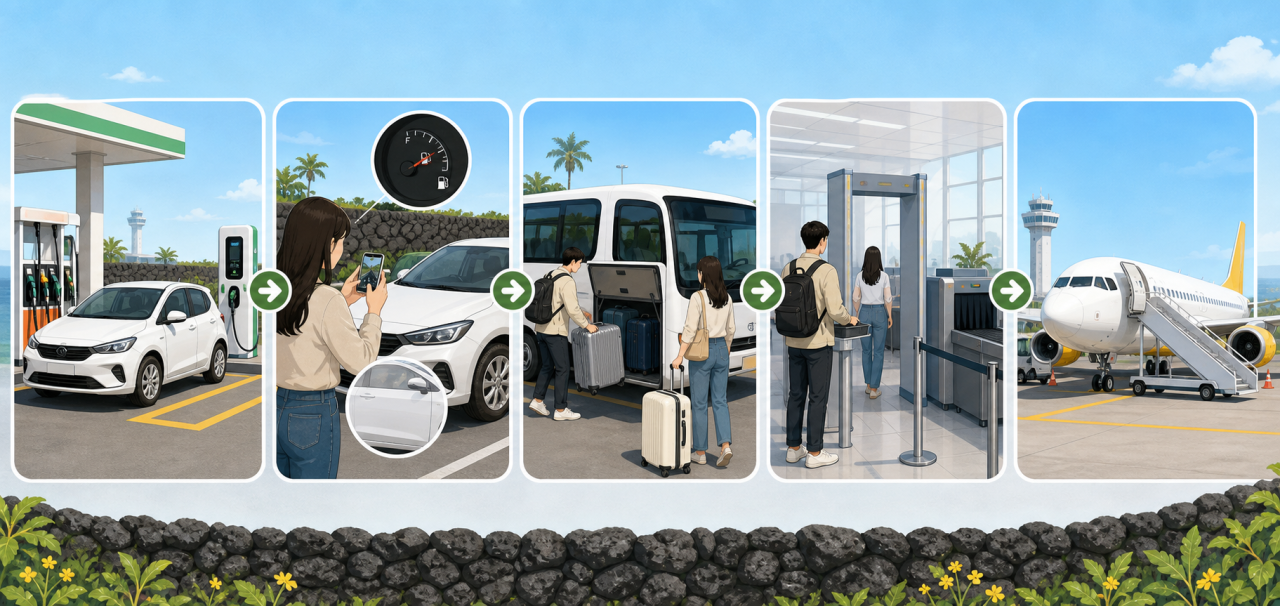
The easiest way to determine your rental car return time is to calculate backward from your flight’s departure time. If you only calculate the travel time from your final stop to the rental car company, you leave out the entire time needed for the shuttle bus and airport procedures.
Formula for calculating your rental car return time
Flight departure time
- 60 minutes for airport procedures
- 20–30 minutes for the shuttle bus ride and waiting time
- 10–20 minutes for vehicle inspection and return processing
- 10–30 minutes for refueling or charging
- 20-minute buffer for traffic congestion
Each step will not always take the maximum amount of time. The idea is to distribute extra time across several stages so that your entire schedule does not fall apart if one step takes longer than expected.
Here’s a sample schedule for a 6 p.m. flight
Let’s assume your final stop is about a 30-minute drive from Jeju Airport.
3:30 p.m. Depart from your final destination
4 p.m. Refuel or charge the car
4:20 p.m. Arrive at the rental car return location
4:30 p.m. Complete the vehicle inspection and return
4:40 p.m. Board the shuttle bus
5 p.m. Arrive at Jeju Airport
This is a comfortable schedule if you are only traveling near the airport. However, if you are departing from a high-traffic area such as Aewol or Jocheon, or driving directly from Seogwipo, it is best to add at least 20 minutes to the navigation system’s estimated time. Even a route that normally takes 30 minutes can take longer than expected during rush hour, on weekends, or on rainy days.
Enter the return location, not Jeju Airport, in your navigation system
This is a common mistake on the last day. If you absentmindedly set Jeju Airport as your destination and then have to drive back to the rental car company, you will waste unnecessary time.
Check the message you received the day before or your rental agreement for the exact return address, entry directions, return deadline, and shuttle bus frequency. Depending on the company, the pickup and return locations may be different, or a separate return location may be designated during peak season.
Check your rental terms before looking at the fuel gauge
Rental cars are generally returned with approximately the same amount of fuel as when they were collected, but settlement methods can vary by company. Just before returning the vehicle, it is a good idea to photograph the fuel gauge and estimated driving range on the instrument panel and keep your fuel receipt.
You do not have to insist on using the gas station closest to the airport. Stations around the airport may also become crowded when many rental cars are being returned. It can actually be more convenient to refuel in advance at a station along your route and then drive the final stretch.
For EVs, check the required return charge level first
EV return conditions vary considerably between rental companies. Some require the vehicle to be returned above a certain charge level, while others separately charge for electricity or require you to connect the charger before the return process is complete.
Therefore, check the required battery percentage when collecting the vehicle, not on the last day of your trip. If you wait until just before returning the car to find a charging station, the charger may be in use or out of order. If a specific charge level is required, it is less stressful to top up the battery during your final meal or café stop.
Photograph the vehicle both at pickup and return
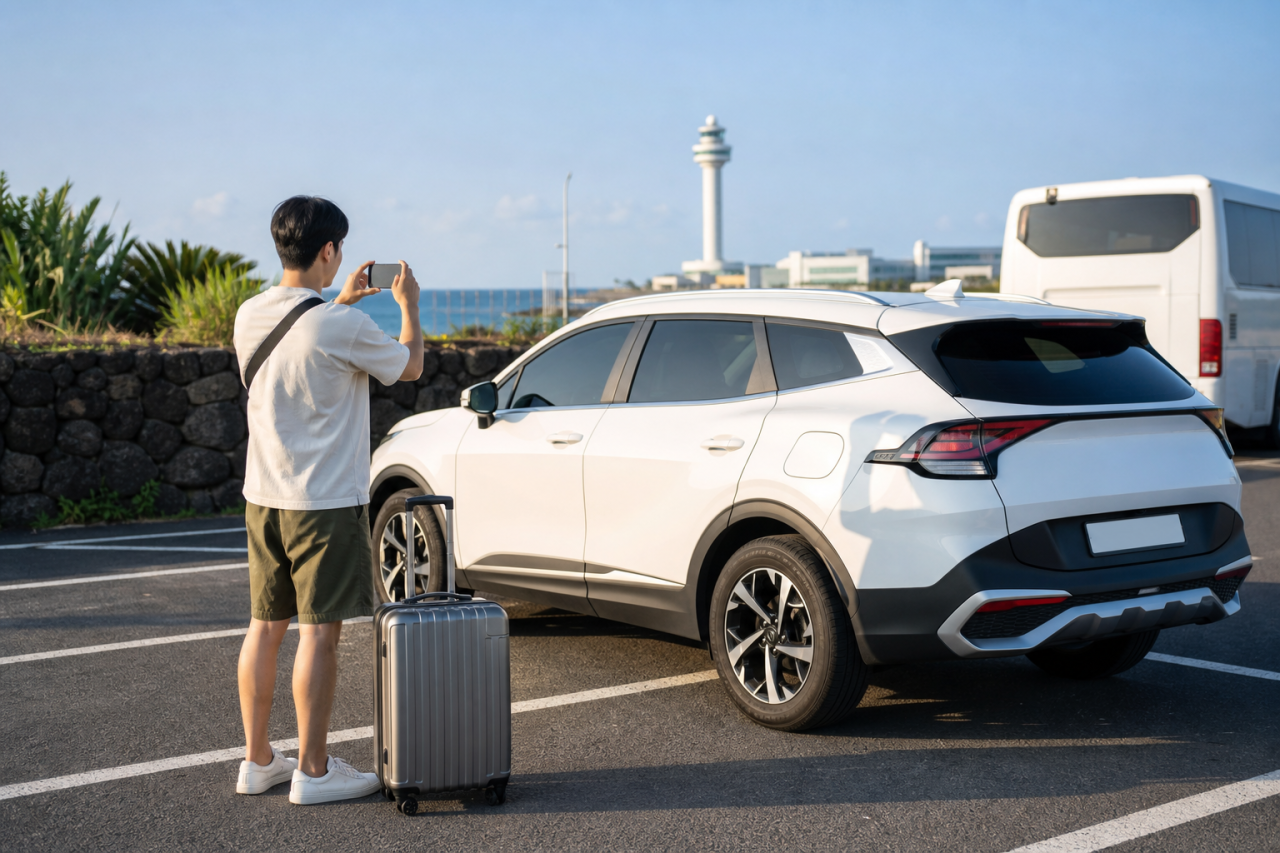
Many people take photos only when collecting the vehicle and simply leave after returning it. However, keeping a record of its condition immediately before return can help if you later need to verify the fuel level or any scratches.
Areas to record on video
Front and rear bumpers, including underneath
Driver’s and passenger-side doors and side mirrors
Wheels, tires, and windshield
Fuel level and mileage on the instrument panel
Vehicle interior and trunk
If an accident or damage occurs, do not wait until returning the car; notify the rental company immediately. Photograph the damaged area and surrounding circumstances, then follow the company’s instructions.
Even products commonly described as full-coverage insurance have different compensation limits and exclusions depending on the company. At the contract stage, check not only the deductible and loss-of-use charges, but also whether single-vehicle accidents, tires and wheels, glass, towing fees, and lost keys are covered. If repair costs are charged, it is advisable to review the supporting documents, including the rental agreement, repair estimate, and maintenance statement.
A final 3-minute check before leaving the car
If you realize that you left something behind after leaving the return lot, it may be difficult to go back. Check your sunglasses and charging cables, rear-seat pockets, the floor and side storage areas of the trunk, around the child seat, cup holders, and door compartments.
If you connected your phone to the navigation system or the vehicle’s Bluetooth, it is also advisable to delete registered devices and call history. It is a small step, but it ensures a clean return without leaving personal information behind.

Think of the rental car return lot as your final destination
On the last day of a Jeju trip, ending your journey on a positive note is more important than visiting one more place. It is far more comfortable to return the car a little early and have a simple meal or organize your photos at Jeju Airport than to spend an extra 20 minutes at a café and then run through the airport.
Returning your rental car is also part of your travel itinerary. If you first subtract 90–120 minutes from your flight’s departure time, you can enjoy the final day’s scenery without rushing. What you should bring back from Jeju may be the feeling of having completed your trip safely and happily, rather than a record of visiting one more place.
※ Check-in and baggage drop deadlines may vary by airline. On the day of departure, check the latest guidance from Korea Airports Corporation for Jeju Airport and the current rules of your airline. Information concerning rental car accidents and returns was prepared with reference to consumer advisories from the Korea Consumer Agency.

제주살이 10년 차, 일상 속 여행을 기록하는 크리에이터입니다. 바다와 바람, 낯선 골목에 스며든 제주를 좋아하고, 그 안에서 느꼈던 순간들을 글과 사진으로 전하고 있어요. 여행지보다는 여행의 온도를 담는 일을 합니다.

Comments
0No comments yet.